
Reviewed · COMMUNISM & WWII HISTORY TOURS
Prague: World War II and Communist History Tour
Prague’s pretty streets carry some very dark memories. This 2.5-hour walk follows the city through Nazi occupation, Czech resistance, Communist rule, the crushed Prague Spring, and Václav Havel’s Velvet Revolution. The most gripping stop is tied to Operation Anthropoid, the plot to assassinate Reinhard Heydrich, the Nazi security chief.
I like the strong storytelling and the way the tour links one period to the next instead of treating World War II and Communism as separate lessons. I also like the small-group feel reported on several departures, plus practical touches such as a tram ticket used to save walking time. The main drawback is that the tour is more about spoken history than a long list of preserved monuments, so people wanting constant museum visits may find the stops limited.
Key points at a glance
- Operation Anthropoid connection: Learn about the Czech resistance plot against Reinhard Heydrich and visit the church and crypt where resistance fighters hid.
- A full 20th-century story: Follow Prague from Nazi rule and the 1945 uprising through the Communist coup, Prague Spring, Normalization, and 1989.
- Major city locations: See Municipal House, the Jewish Quarter, Wenceslas Square, and Dancing House in a historical context.
- Excellent guide-led experience: Past guides including Adam, Tony, Zach, Sean, Amanda, and Analisa were praised for clear storytelling, humor, and command of the subject.
- Walking with some transit: The route covers different parts of central Prague, and one departure included a tram ticket to save time.
- Good value at $34: For 150 minutes with a live English-speaking guide, the price compares well with many specialist history tours.
Prague’s recent past, told on foot
This is not a general introduction to Prague. You will not spend the afternoon on medieval kings, castle architecture, or baroque church interiors. Instead, the tour focuses on the period when modern Czech life was shaped by occupation, dictatorship, protest, and political change.
That focus gives the walk a clear purpose. Prague can look almost untouched as you move through its handsome central streets, yet the guide explains what happened there during the 20th century. A square becomes the scene of a mass demonstration. A church becomes a last refuge. A grand civic building takes on a new meaning when you learn how political power shifted around it.
The tour begins at Týnská 639/4 in Staré Město, or Prague’s Old Town. Check the starting time carefully when booking, since the activity lasts 150 minutes and availability varies by departure. From there, expect a continuous city walk rather than a coach tour or a seated lecture.
You should wear comfortable shoes. The route covers several central districts, and one past group used a tram to save time. That suggests the guide may balance walking with public transport when needed, but the experience is still fundamentally a walking tour.
More recent history in Prague:
- Prague: Communism History and Nuclear Bunker Guided Tour
★ 4.7 · 2,417 reviews - Prague Communism History and Nuclear Bunker Tour
★ 5.0 · 1,742 reviews - Communism & Nuclear Bunker Tour + 70s Canteen Lunch (own expense)
★ 5.0 · 1,036 reviews
From Nazi occupation to Czech resistance
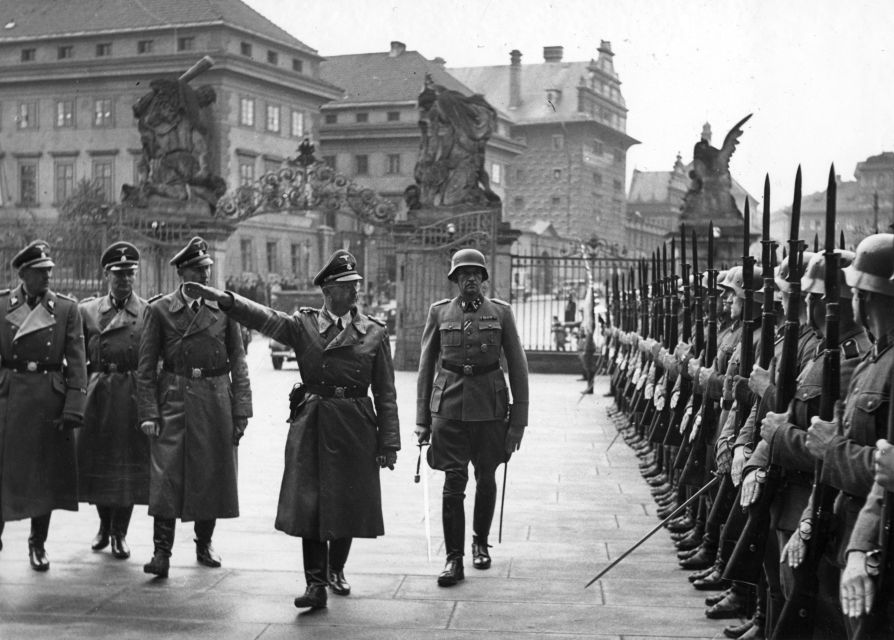
The first part deals with the Nazi occupation and the destruction of Czechoslovakia’s political freedom. The guide sets the period against Prague’s position as one of Europe’s industrial and progressive centers before the war. That contrast matters. You are not just hearing that the city was occupied. You are seeing how quickly a modern society could be forced into fear, obedience, and silence.
The stories focus on local experience rather than only military dates. You hear how Nazi rule affected ordinary people, the resistance, and the country’s political future. The guide also explains the Czech uprising and the consequences that followed acts of resistance.
The most dramatic thread is Operation Anthropoid, the Czech and Slovak resistance mission to assassinate Reinhard Heydrich, a leading Nazi security official. The tour connects the plot with the reprisal that followed and takes you to the church and crypt associated with the resistance fighters.
That visit gives the history physical weight. A lecture about an assassination can feel distant. Standing at the place where resistance members hid makes the danger easier to grasp. The church and crypt are not simply another photo stop. They are tied to the final stage of the operation and to the brutal response by the Nazi regime.
You should expect some difficult material here. The tour deals openly with occupation, retaliation, and persecution. It is not presented as a polished patriotic tale. One of the strongest elements is the willingness to discuss political complicity and the painful choices made by people living under dictatorship.
Municipal House and the political heart of Prague
Municipal House is one of the named stops. Its elegant exterior can seem far removed from wartime terror and Communist control, which is exactly why the location works well in the route. The guide uses familiar public spaces to show how Prague’s political life changed around them.
You may already have seen the building on a standard Old Town walk. Here, the emphasis is not on decorative details or concert-hall trivia. The point is to understand the civic and political setting in which modern Czech history unfolded.
This is a recurring strength of the tour. The buildings do not always provide a large memorial or an obvious plaque. Their value comes from the explanation attached to them. You need to listen closely, because the guide’s account often supplies the meaning that is not visible in the stonework.
That also explains the main limitation. If you expect every stop to contain a preserved room, exhibit, or monument, you may feel the route has fewer physical attractions than advertised. The tour works best for someone who enjoys connecting places with events and can stay engaged during longer stretches of narration.
The Jewish Quarter and the cost of occupation
The route skirts the old Jewish area, giving the guide a chance to discuss the Nazi period in a part of Prague where the history is especially painful. The Jewish Quarter is already one of the city’s most important areas for understanding Nazi persecution, but this tour places it within a wider story of occupation and resistance.
If you have already taken a dedicated Jewish Quarter tour, this section will not replace it. The focus here is broader. You are following the political chain from Nazi control to resistance, the uprising, and the postwar order, rather than touring the quarter’s synagogues and cemetery in detail.
I like this distinction because it helps you choose the right experience. Book this walk to understand how Prague’s wartime story connects with what came after 1945. Choose a separate Jewish Quarter visit if you want extended time inside its museums and religious sites.
The guide’s role matters especially here. Past guides such as Tony, Zach, Sean, and Analisa were praised for making complicated events easy to follow. Their approach appears to be story-led, with enough context to explain cause and effect without turning the walk into a list of dates.
A few more things to do in Prague worth a look
- Prague: Oldtown, Medieval Underground & Dungeon History Tour
★ 4.2 · 8,244 reviews - Prague Old Town, Medieval Underground and Dungeon Historical Tour
★ 4.5 · 3,227 reviews - Prague: Historic City Center Bus Tour with Top Sights
★ 4.4 · 2,360 reviews - Prague Historic Pub Tour with Drinks Included
★ 5.0 · 2,084 reviews
The Communist coup and the long years of control
After World War II, the tour moves into the Communist takeover and the political disappointment that followed. This part gives the walk its larger shape. The story is not simply occupation followed by liberation. It shows how one authoritarian system gave way to another form of political control.
You hear about the Communist coup, life under the regime, and the period known as Normalization. The guide also covers the persecution of the Plastic People of the Universe, an underground music group whose treatment showed how far the state would go to control culture and public expression.
That detail is particularly useful because it moves the story beyond presidents and party leaders. Music, art, and everyday speech became political issues. The discussion of Charta 77 adds another layer, showing how dissidents challenged the regime through a demand that the government respect its own stated obligations.
You may find this section more abstract than the resistance story. The streets do not always offer an obvious visual marker of Communist repression. The guide’s explanation is therefore central, and the best departures have been led by people who can tell a personal-scale story while keeping the political setting clear.
Past guides named Adam, Tony, Zach, and Amanda were repeatedly praised for humor, energy, and vivid delivery. That balance is helpful here. The material is serious, but a guide who can vary pace and explain difficult ideas in plain English keeps the walk from becoming a heavy classroom session.
Wenceslas Square and the Prague Spring
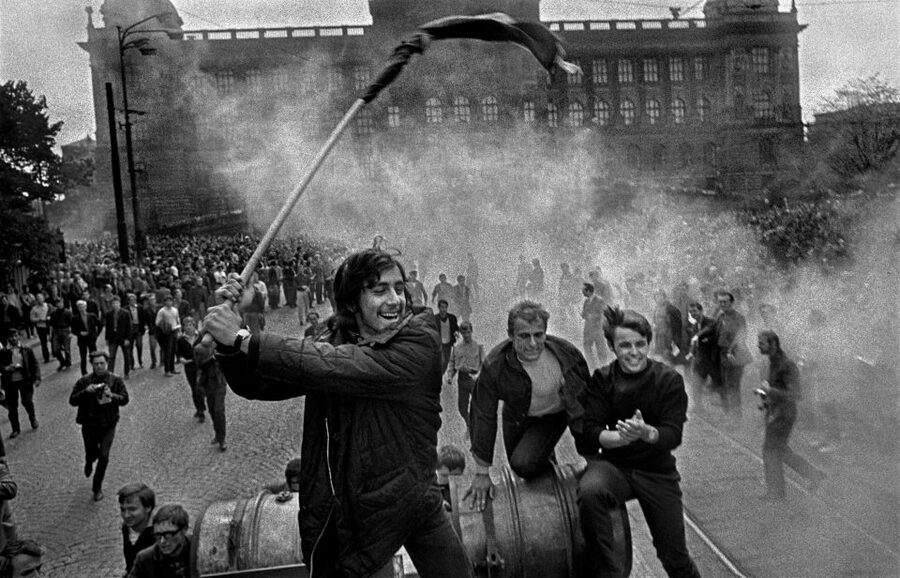
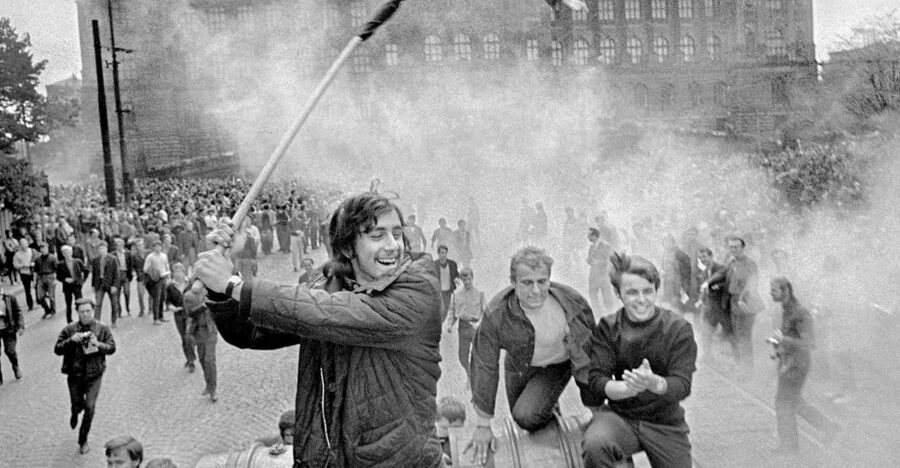
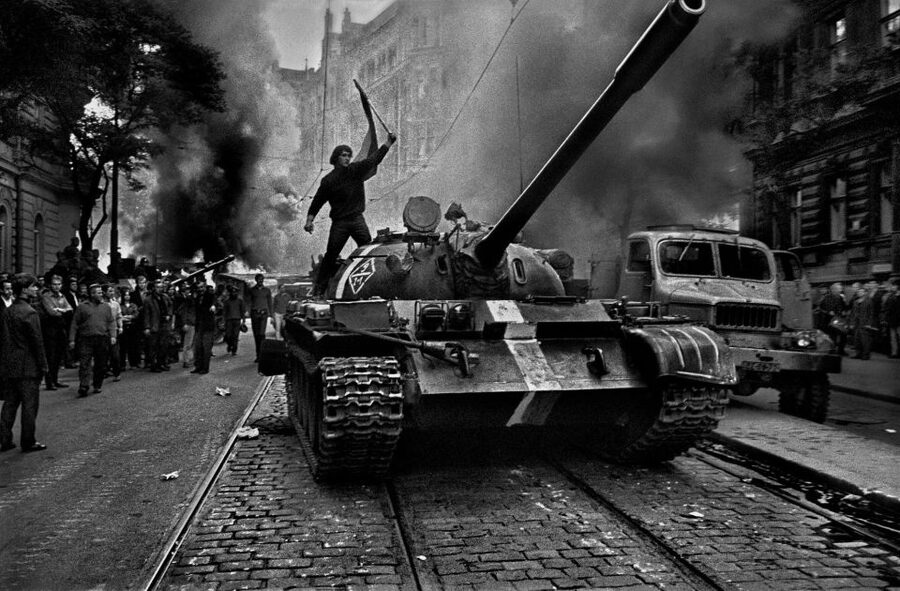
Wenceslas Square gives the tour one of its clearest public stages. This broad central space is closely linked to demonstrations, political speeches, and the changing mood of the city. Here, the guide explains the Prague Spring, the hope for reform, and the trauma of the Warsaw Pact invasion.
The value of this stop is the sense of scale. Political change was not confined to government offices. It spilled into public squares where large crowds gathered and where ordinary people could show support, fear, anger, or defiance.
The tour then moves through the years of Normalization. This helps you understand why the Velvet Revolution of 1989 felt so powerful. The revolution did not appear from nowhere. It followed years of censorship, pressure, compromise, and the quiet work of dissidents.
Wenceslas Square is also a useful point for orientation. It connects the older center with Prague’s newer districts, so the walk feels like a movement through the city rather than a loop around the same few Old Town lanes.
Dancing House and the road to 1989
Dancing House is another named location. Its modern design makes a sharp contrast with the older buildings around the center, and the stop helps bring the story toward the end of Communist rule and the Velvet Revolution.
The guide introduces Václav Havel and the group of dissidents who were swept into power in 1989. The account covers the shift from opposition and censorship to public leadership. You will hear how the revolution changed the country’s direction and why Havel became such an important figure in the new political era.
This final section gives the tour an emotional release after the darker material earlier in the route. It does not suggest that history suddenly became simple or painless. Instead, it shows how public pressure, artistic dissent, and political courage helped make change possible.
The route’s mix of old and modern Prague also makes this part memorable. You are not being shown a single memorial to the Velvet Revolution. You are watching the city’s ordinary streets become a setting for political transformation.
Guide quality makes the difference
The strongest feature of this activity is the guide. A history walk can succeed or fail on delivery, and the past departures give you a useful picture of what to expect from the company’s guiding style.
Guides have included Adam, Tony, Zach, Sean, Amanda, Kevin, Analisa, and others. The most consistently praised traits are clear English, strong command of Czech history, enthusiasm, and a knack for telling stories rather than reciting notes.
Several guides also added humor. That may sound minor, but it helps during a serious 150-minute walk. The best humor does not make light of the suffering. It gives you a pause between difficult subjects and helps the timeline remain memorable.
The guide names do not guarantee who will lead your departure. Still, the repeated praise for different guides suggests that the quality is not tied to one individual alone. If you are lucky enough to have Adam, Tony, Zach, or Analisa, you can expect an animated, question-friendly presentation based on the experiences described for those departures.
Small groups have also made a difference. One person appreciated being able to ask plenty of questions, while another described the group as close to a private tour. Group size can change from day to day, so do not treat that as guaranteed, but the format appears suited to conversation rather than a distant microphone-led lecture.
Is $34 a fair price?
At $34 per person, this is a good value if you want a guided introduction to Prague’s World War II and Communist periods. You receive 150 minutes with a live English-speaking guide, and the route covers several parts of the city rather than keeping you in one small square.
The price is especially reasonable for visitors who would otherwise need to piece the story together from separate museums, books, and self-guided walks. You get a chronological framework, local settings, and the chance to ask questions as the story develops.
The value is less clear if you mainly want interior access or a memorial-heavy itinerary. Some stops depend on the guide’s explanation, and one person felt there were fewer physical landmarks than expected. You are paying for interpretation and connections, not a sequence of ticketed attractions.
A useful follow-up is to watch films about the period. One participant specifically followed the tour with Anthropoid and Munich. Those films are not part of the activity, but they can help you continue the subject after the walk.
The tour includes free cancellation up to 24 hours before the start and allows you to reserve now and pay later. Those policies are useful if your Prague plans may shift, though you should still check the exact departure time and conditions when booking.
Who should book this Prague history walk?
I would choose this tour if you want modern Czech history explained as one connected story. It suits history fans, first-time visitors who want more than postcard Prague, and anyone curious about how occupation, Communism, protest, and revolution shaped daily life.
It also works well as a companion to a standard Old Town or Prague Castle tour. Those experiences introduce the city’s older monuments. This one explains the political events that formed the Prague you see today.
You may want to skip it if you dislike walking, prefer short visits with many interiors, or already have a detailed plan for the Operation Anthropoid and Communist-era museums. It is also not the best choice if you want a light sightseeing stroll. The subject includes execution, persecution, political violence, and fear.
For most visitors with an interest in the 20th century, I would book it early in a Prague stay. The tour gives you context for places you may pass later, and the guide can point you toward films, museums, bars, and restaurants that fit your interests. At $34, it offers a thoughtful, well-focused way to see a less familiar side of the city.
FAQ
How long is the Prague World War II and Communist History Tour?
The tour lasts 150 minutes, or 2.5 hours.
What language is the tour conducted in?
It is conducted in English with a live tour guide.
Where does the tour meet?
The meeting point is Týnská 639/4 in Staré Město, Prague 1, Czechia.
How much does the tour cost?
The listed price is $34 per person.
Which Prague locations are included?
The tour includes locations such as Municipal House, the Jewish Quarter, Dancing House, and Wenceslas Square.
Does the tour cover Operation Anthropoid?
Yes. It explains the Czech resistance plot to assassinate the Nazi security chief and includes the church and crypt associated with the resistance fighters.
Does the tour discuss the Prague Spring?
Yes. The tour covers the Prague Spring and the Warsaw Pact invasion that followed it.
Does the tour cover the Velvet Revolution?
Yes. It explains the rise of Václav Havel and other dissidents during the Velvet Revolution of 1989.
Is public transportation used?
The experience is described as a walking tour. On at least one departure, the guide provided a tram ticket to save time, but the exact use of public transportation may vary.
Can I cancel for a full refund?
You can cancel up to 24 hours in advance for a full refund, according to the stated booking conditions.
Just added in Prague
- World War II 4WD Tour from Prague with Lunch★ 4.4 · 3 reviews
- WWII and Communism History in Prague’s Old Town Private Tour★ 5.0 · 4 reviews
- Prague: Historical Walking Tour with Focus on World War 2★ 4.3 · 12 reviews
- Unique salt cave in Prague★ 4.9 · 10 reviews
- Walking tour of Prague in french: Old Town & Charles Bridge★ 4.9 · 62 reviews
- Prague: Market Tour and Traditional Czech Cooking Class★ 4.7 · 19 reviews
- Ultimate Unlimited Beer Pong with Czech Beer★ 4.6 · 5 reviews
- Walking tour of Prague in French : Nové Město★ 4.9 · 16 reviews
Communism & WWII History Tours, compared.
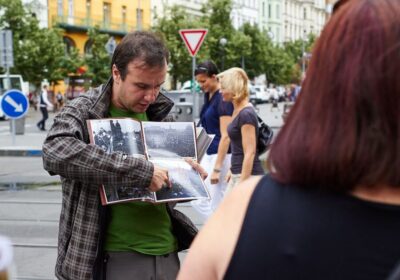
Communism History and Nuclear Bunker Guided Tour
Read our review →
Prague Communism History and Nuclear Bunker Tour
Read our review →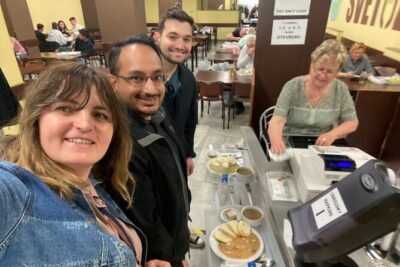
Communism & Nuclear Bunker Tour + 70s Canteen Lunch (own expense)
Read our review →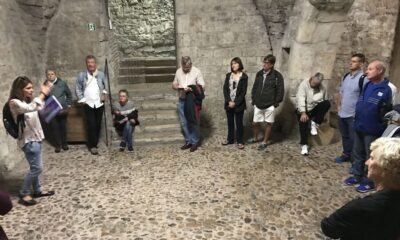
WWII Guided Tour & The Crypt of Operation Anthropoid
Read our review →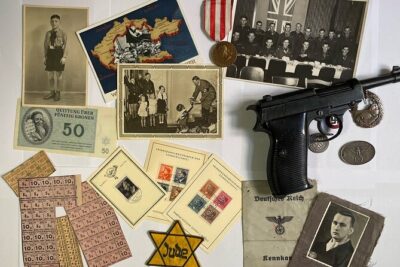
WWII in Prague Tour & The Crypt of Operation Anthropoid
Read our review →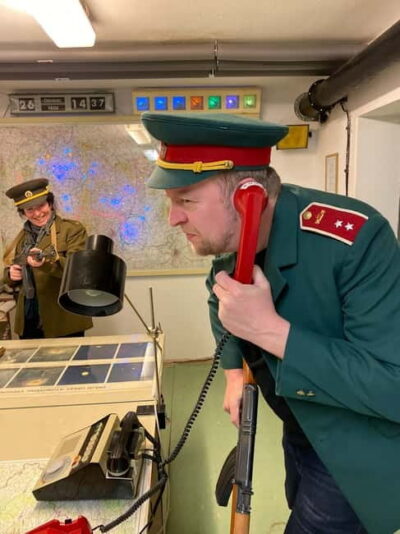
Communism and Bunker Tour with 70s Canteen Lunch
Read our review →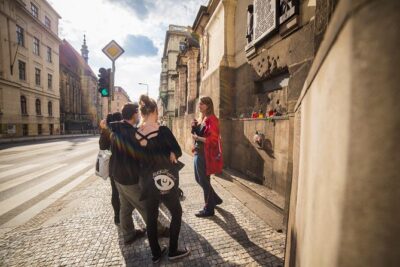
Small-Group World War 2 & Operation Anthropoid Tour in Prague
Read our review →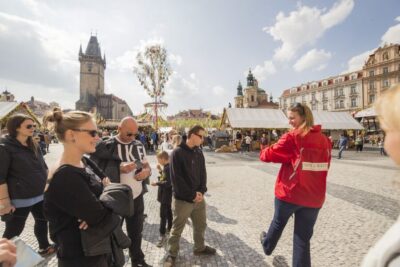
World War 2 and Operation Anthropoid Walking Tour
Read our review →Browse the lists this tour appears in