
Reviewed · COMMUNISM & WWII HISTORY TOURS
Prague: WWII Tour with Local Historian SMALL GROUP
Prague’s WWII story becomes most powerful when you leave the grand squares and follow the footsteps of resistance fighters. This 2.5-hour walk centers on Reinhard Heydrich, the Nazi official who helped shape the Holocaust, and the Czech paratroopers who killed him in Operation Anthropoid.
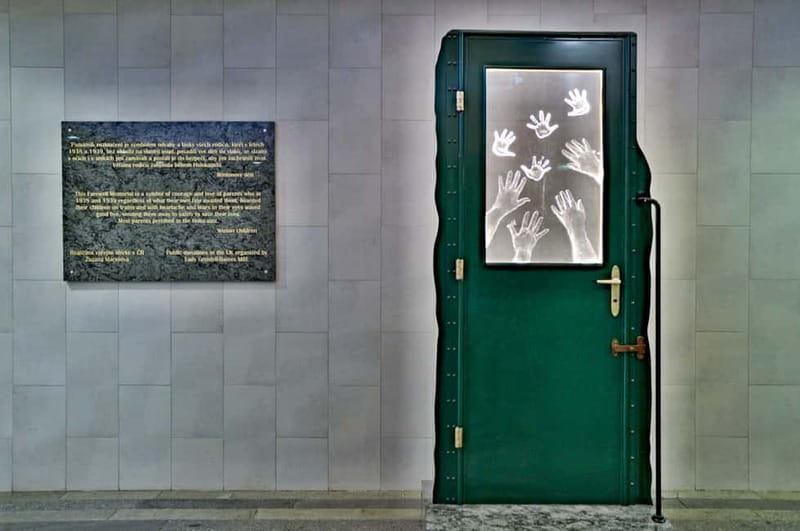
I like the seven-person limit, which gives a historian room to answer questions instead of delivering a speech to a crowd. I also like the mix of famous and less familiar stories, from Nicholas Winton’s rescue of 669 Jewish children to the bombing of Prague and the 1945 uprising.
The main drawback is physical and logistical: this is a walking tour with a church visit, and the information about accessibility is inconsistent. The tour is marked wheelchair accessible in one place, but the detailed notes say it is not suitable for wheelchair users or people with mobility impairments. Confirm before booking.
Key points to know before you book
- Operation Anthropoid takes center stage: Follow the story of the assassination of Reinhard Heydrich, including the church where the paratroopers made their last stand.
- The group is limited to seven people: That suits anyone who wants direct conversation with a local historian.
- The stories reach beyond the battlefield: You’ll hear about Nicholas Winton, the Kindertransports, Prague’s uprising, the American bombing, and the Gestapo.
- Guides Gerry and Jiri bring different personal strengths: Gerry is praised for seeking stories from war survivors, while Jiri is noted for natural storytelling.
- The price is $61 per person: For a 2.5-hour specialist tour with public transport, entrance, and water included, the value is strongest for history-focused visitors.
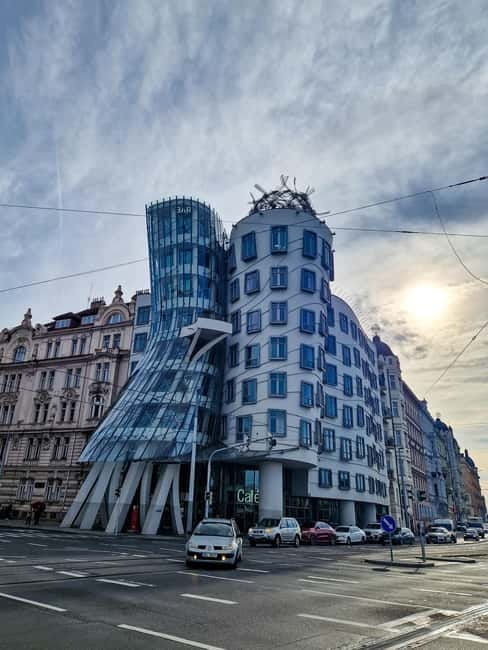
- The route needs clarification: The listed finish is the Dancing House, while the meeting information says the activity ends back at the starting point.
Why Operation Anthropoid gives this walk its force
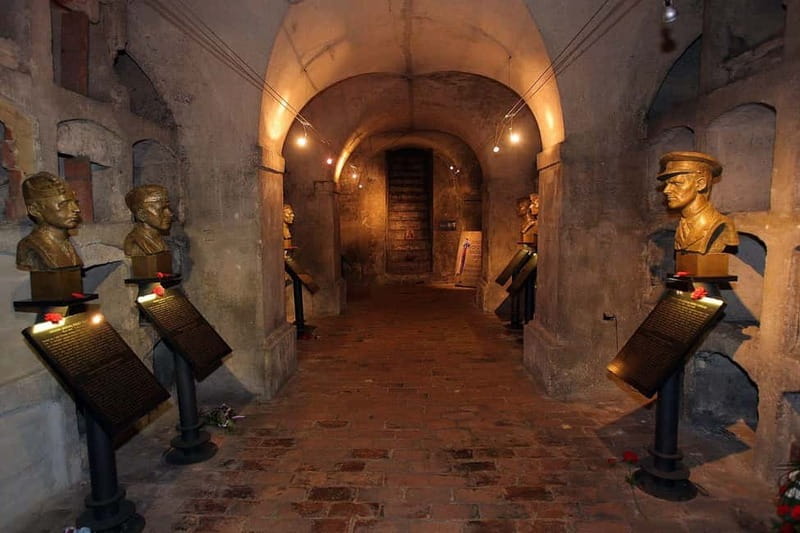
Many Prague history walks touch on World War II only briefly. This one builds its central story around Operation Anthropoid, the 1942 assassination of Reinhard Heydrich.
Heydrich was one of the most senior Nazi officials killed during the war. He helped organize the machinery of Nazi persecution and was a leading figure behind the Holocaust. In Prague, he became known as the Butcher of Prague during his rule over occupied Bohemia and Moravia.
That context matters. You are not simply hearing about a wartime killing. You are following an attempt to strike at the Nazi leadership and a brutal German response. The tour connects a single event to the wider occupation, resistance, and political stakes of the time.
The guide leads you through the story of the Czech and Slovak paratroopers sent to carry out the attack. You’ll hear how the operation unfolded and why it became one of the most important acts of resistance in occupied Europe.
For me, this is the strongest reason to choose the tour. Operation Anthropoid has enough drama to carry a film, but the real places give the story weight that a screen cannot. The route turns Prague streets into evidence rather than scenery.
More recent history in Prague:
- Prague: Communism History and Nuclear Bunker Guided Tour
★ 4.7 · 2,417 reviews - Prague Communism History and Nuclear Bunker Tour
★ 5.0 · 1,742 reviews - Communism & Nuclear Bunker Tour + 70s Canteen Lunch (own expense)
★ 5.0 · 1,036 reviews
Saint Wenceslas Square is a practical starting point
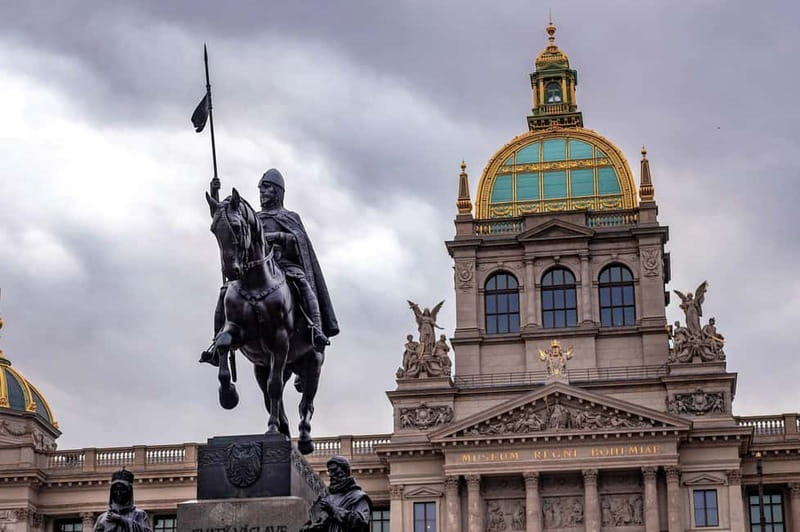
The meeting point is the Statue of Saint Wenceslas in Wenceslas Square, directly in front of the National Museum. A nearby McDonald’s is given as an easy landmark, which is useful in a busy central square.
Starting here puts you in one of Prague’s most recognizable public spaces. It also gives the guide a natural place to set the scene before the group moves into the wartime story.
You should arrive with enough time to locate the statue and identify the guide. The group is small, so there is no large tour flag or big crowd to make the meeting point obvious. The exact starting time depends on the date you select.
The route then continues through Prague on foot, with a public transport ticket included. That small detail matters. You are not expected to purchase a separate ticket during the tour, and the guide can use the city’s transport system as part of the route.
The tour is conducted in English. Since the subject depends on names, dates, and political context, clear spoken English will make a difference. This is not a casual sightseeing stroll where you can simply admire the buildings if you lose the thread.
The paratroopers’ church is the emotional center
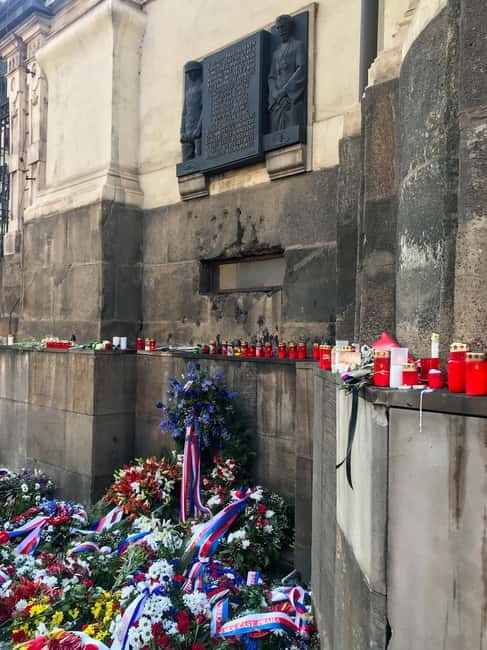
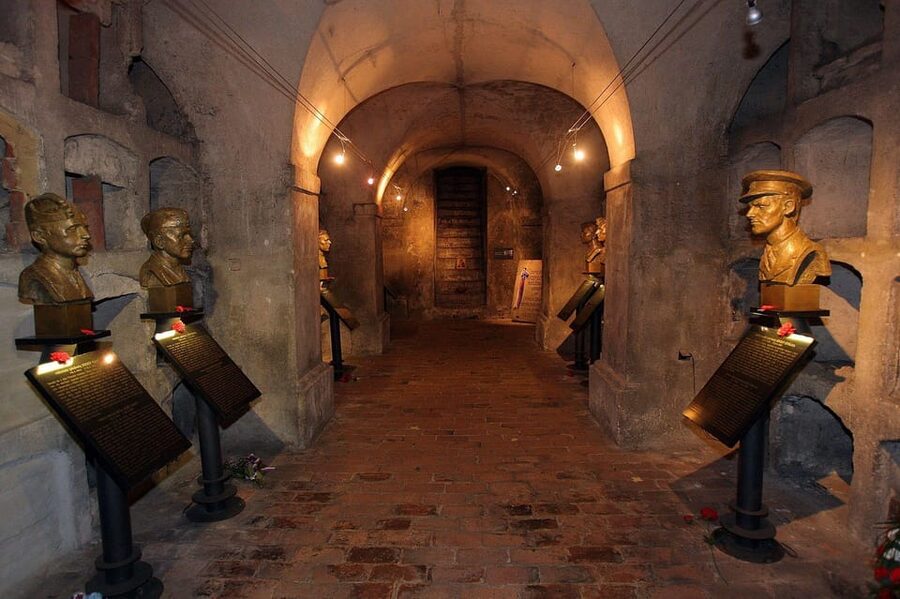
The church connected with Operation Anthropoid is the most important stop on the route. Entrance is included, and the guide points out distinctive bullet holes connected with the final battle involving the paratroopers.
This is where the tour moves from political history to a physical place of sacrifice. The church is not just a backdrop for the story. Its walls show the marks of the fighting, giving you something concrete to focus on while the guide explains what happened.
Expect the mood to become more serious here. The story involves resistance, military retaliation, and the final stand of the men involved in the operation. A good guide needs to explain the sequence without turning the site into a theatrical performance.
The small group should help. With no large crowd pressing through the space, you can listen, look closely, and ask questions. The entrance is already included in the $61 price, so you do not need to weigh an extra admission cost at the door.
The church visit may also explain why the tour is not ideal for everyone. The notes specifically say it is not suitable for pregnant women, children under 10, or people with mobility impairments. The information also gives conflicting wheelchair guidance, so ask the operator for a clear answer before paying.
Prague under occupation, told through people rather than dates
A good WWII tour must do more than list Nazi policies and military events. This experience brings the period closer through individual stories.
The guide discusses Czech resistance and the lives of people caught under occupation. The account of the assassination gives you a view of organized resistance, while the stories of civilians and rescuers show how the war affected people away from the battlefield.
Gerry and Jiri are named as guides connected with the experience. Gerry has been especially praised for bringing forward accounts gathered from war survivors. That detail appeals to me because survivor testimony can add human scale to events that otherwise feel remote.
Jiri is described as a natural storyteller who makes places and events feel personal. Those are useful qualities for this subject. The tour covers difficult material in a short time, so the guide must keep the story moving while explaining why each event mattered.
You should not expect an academic seminar with lengthy document analysis. The format is a guided walk, and the strength lies in connecting places, people, and decisions. If you want a specialist who can answer detailed questions about military equipment or every political faction, ask the guide what depth is possible at the start.
Same streets, a different kind of outing:
- Prague: 50-Minute Sightseeing Evening Cruise
★ 4.2 · 33,780 reviews - Prague: Medieval Dinner with Unlimited Drinks
★ 4.4 · 19,847 reviews - Prague: Skip-the-line Castle Ticket and Optional AudioGuide
★ 4.3 · 11,121 reviews - Prague: Castle Tour with Local Guide and Entry Ticket
★ 4.6 · 10,422 reviews
Nicholas Winton adds a very different wartime story
The tour also covers Nicholas Winton and the rescue of 669 Jewish children through the Kindertransports. This part gives the walk an important change of scale and tone.
Operation Anthropoid is a story of armed resistance and deadly risk. Winton’s work shows another form of courage: organizing the transport of children out of danger before the war closed escape routes. The story also connects Prague to Britain and to the wider fate of Jewish families during the Nazi period.
The number, 669 children, gives the story a clear human measure. You are not hearing only about policy or population figures. You are hearing about individual children who were moved to safety while many others remained trapped.
The subject has received wider attention through the film One Life, but you do not need to know the film beforehand. The guide places the story within Prague’s wartime setting and explains why the Kindertransports mattered.
I appreciate this inclusion because it prevents the tour from becoming a single story about violence. You get resistance, rescue, persecution, and civilian courage. Together, those themes give you a fuller view of what life and moral choice looked like during the occupation.
The 1945 uprising and the bombing of Prague
The final phase of the war in Prague receives attention through the national uprising in 1945. This helps explain that liberation was not simply something that happened to the city from outside. Czech people also took part in the struggle to regain control.
The tour also covers the American bombing of Prague. That is a useful reminder that even a city often thought of as spared the worst destruction of the war was not untouched by air raids and wartime confusion.
These subjects broaden the tour beyond Operation Anthropoid. If you already know that story well, the uprising and bombing may be the parts that give you the most new information.
The exact amount of time spent at each subject will depend on the guide and the group’s questions. A 2.5-hour tour can cover a surprising amount, but it cannot explain every phase of the occupation in equal detail. I would treat this as a focused introduction with several strong case studies, not a complete history of Prague from 1938 to 1945.
The former Gestapo headquarters adds a darker layer
The route includes the former Gestapo headquarters, a place associated with interrogation, surveillance, and repression. Even when little visible remains, the location helps show how occupation worked at street level.
This stop is valuable because it shifts attention from heroic resistance to the machinery used against ordinary people. The tour does not present the war as a simple contest between a few brave fighters and a distant enemy. It shows the institutions that made fear part of daily life.
You may find this part less visually dramatic than the church with its bullet holes. That is also the point. A headquarters can look like an ordinary city building, yet its function transformed the lives of people brought inside.
A local historian can make such a stop useful by explaining what happened there and how it fitted into the occupation. Without that context, the building would be easy to pass without noticing.
What the seven-person format changes
The group limit is one of the tour’s strongest practical features. Seven participants is small enough for eye contact and questions, but large enough to provide a little group energy.
I like this format for a serious subject. You can ask for clarification when names become difficult, and the guide can adjust the pace if the group wants more detail about the assassination or the uprising. A large coach group rarely offers that flexibility.
The personal approach also matters because the tour deals with painful subjects. A historian can read the mood and avoid reducing tragedy to a list of dramatic facts. The best moments are likely to come from small details and follow-up questions rather than from a memorized speech.
There is a tradeoff. A small-group tour can feel less predictable than a tightly scripted one. The guide may spend more time on a question that interests the group, leaving less time for another topic. If you want every listed subject covered in equal depth, mention your priorities early.
Is $61 a fair price for 2.5 hours?
At $61 per person, this is not the cheapest way to see Prague. You are paying for a specialist subject, a small group, a live English-speaking guide, entrance to the church, public transport, water, and taxes.
The value depends on your interests. If WWII history is a major reason you came to Prague, the price is reasonable for a group limited to seven. A private tour would normally cost more, while a large general tour would likely offer less direct contact with the historian.
If your interest is only casual, the cost may feel high for a 2.5-hour walk. Prague offers plenty of free streets and memorials to explore on your own, but you would not get the same connected explanation of Heydrich, the paratroopers, Winton, the Gestapo, and the 1945 uprising.
The included public transport ticket is a useful extra, though it is not the main reason to book. The real value is the guide’s ability to connect separate places into one story.
Free cancellation up to 24 hours before the start and the option to reserve now and pay later make the booking less rigid. Those policies are helpful if your Prague schedule is still shifting.
Who should book this Prague WWII walk?
I would choose this tour if you like history presented through real locations and individual lives. It suits adults, older teenagers, and anyone who wants more than a general overview of Prague’s famous architecture.
It is particularly useful for visitors who know little about Operation Anthropoid but want a serious introduction. It also works for people who already know the assassination story and want to add Winton, the uprising, the bombing, and the Gestapo to the picture.
The tour is not designed for children under 10. The subject matter is grim, and the walking format may not suit very young children even if they are interested in military history.
You should also think about the physical demands. The notes exclude people with mobility impairments and wheelchair users, despite a separate wheelchair-accessible label. Contact Local Historian Tours before booking if access is important to you.
The end point needs checking, too. The route information names the Dancing House, while the meeting details say the activity ends back at the meeting point. That is a straightforward question to ask before you build another reservation around the finish time.
Should you book this tour?
Book it if you want Prague’s WWII story told by a local historian in a group small enough for real conversation. The strongest features are the Operation Anthropoid focus, the church and bullet holes, the personal stories associated with Gerry and Jiri, and the addition of Nicholas Winton’s rescue work.
Skip it if you want a light city walk, a broad overview of Prague’s architecture, or an activity suited to young children. The material is serious, the walking conditions need checking, and the route details should be confirmed because the stated finish points do not match.
For the right visitor, $61 buys more than transport between landmarks. It buys a focused look at how occupation, resistance, rescue, and liberation shaped Prague. Ask about accessibility and the final stop before booking, then choose this experience if those details fit your plans.
FAQ
Where does the tour start?
It starts at the Statue of Saint Wenceslas in Wenceslas Square, in front of the National Museum. A nearby McDonald’s is provided as an additional landmark.
How long does the tour last?
The guided experience lasts 2.5 hours.
What language is the tour conducted in?
The live tour guide speaks English.
How many people are in the group?
The group is limited to seven participants.
Is entrance to the paratroopers’ church included?
Yes. Entrance to the paratroopers’ church is included in the price.
Is public transport included?
Yes. A Prague public transport ticket is included.
Is the tour suitable for children?
It is not suitable for children under 10 years old.
Where does the tour finish?
The route information lists the Dancing House as the finish, while the meeting details say the activity ends back at the starting point. Confirm the exact finish with Local Historian Tours before booking.
Just added in Prague
- World War II 4WD Tour from Prague with Lunch★ 4.4 · 3 reviews
- WWII and Communism History in Prague’s Old Town Private Tour★ 5.0 · 4 reviews
- Prague: Historical Walking Tour with Focus on World War 2★ 4.3 · 12 reviews
- Unique salt cave in Prague★ 4.9 · 10 reviews
- Walking tour of Prague in french: Old Town & Charles Bridge★ 4.9 · 62 reviews
- Prague: Market Tour and Traditional Czech Cooking Class★ 4.7 · 19 reviews
- Ultimate Unlimited Beer Pong with Czech Beer★ 4.6 · 5 reviews
- Walking tour of Prague in French : Nové Město★ 4.9 · 16 reviews
Communism & WWII History Tours, compared.
Communism History and Nuclear Bunker Guided Tour
Read our review →
Prague Communism History and Nuclear Bunker Tour
Read our review →
Communism & Nuclear Bunker Tour + 70s Canteen Lunch (own expense)
Read our review →
WWII Guided Tour & The Crypt of Operation Anthropoid
Read our review →
WWII in Prague Tour & The Crypt of Operation Anthropoid
Read our review →
Communism and Bunker Tour with 70s Canteen Lunch
Read our review →
Small-Group World War 2 & Operation Anthropoid Tour in Prague
Read our review →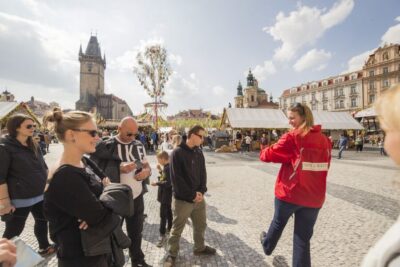
World War 2 and Operation Anthropoid Walking Tour
Read our review →Browse the lists this tour appears in