
Reviewed · TEREZÍN CONCENTRATION CAMP TOURS
Private Half-Day Tour To Terezin Concentration Camp
Terezín is not a light day out. Inside this former fortress town, you move through a Gestapo prison, a Jewish ghetto, cramped cells, a hidden synagogue, and a crematorium. The tour connects those places into one clear account of persecution, courage, and survival. The private format lets you ask questions as you go, and guides such as Eva and Peter have been singled out for warmth, patience, and strong command of the subject.
I like the door-to-door pickup and the fact that transport, admissions, and a private guide are bundled together. I also like the range of languages and the chance to see both the Small Fortress and the Ghetto Museum in one half-day. The main consideration is emotional: this is a serious memorial visit, and five hours can feel tight if you want to read every museum panel or spend long periods in quiet reflection.
Key points to know before booking
- Two separate sites tell two different stories: the Small Fortress was a Gestapo prison, while the Big Fortress held the Jewish ghetto.
- The tour includes private transport: pickup can be arranged at a hotel, square, airport, or another suitable place.
- The Small Fortress route is unusually detailed: it includes cells, wall tunnels, a shooting range, the fourth courtyard, and a short Nazi propaganda film.
- The Ghetto Museum gives special attention to children: the entire ground-floor section covers children who lived and died in Terezín.
- You will visit a hidden synagogue and a working cultural space: the Magdeburg Barracks show dormitories and the artistic life forced into being inside the ghetto.
- The crematorium and mass graveyard provide a sobering finish: they lie outside the main walls and complete the picture of how Terezín functioned.
Why Terezín needs a guided visit
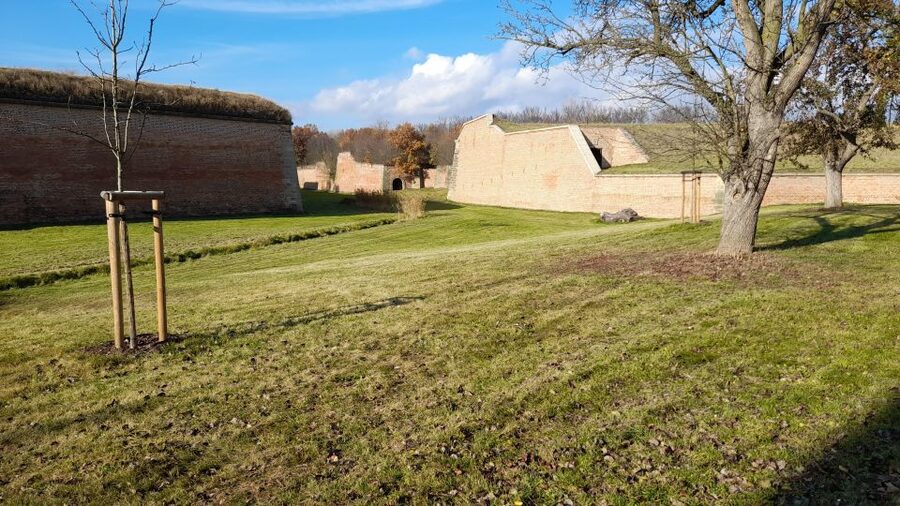
Terezín began as an 18th-century military fortress, not as a camp built for the Holocaust. That earlier purpose matters because the walls, courtyards, tunnels, barracks, and military layout shaped what happened there later.
During World War II, the site had two main functions. The Small Fortress became a Gestapo police prison in June 1940, while the much larger fortified town, known as the Big Fortress, became a ghetto for Jews from November 24 onward. These were connected places, but they were not the same institution.
That distinction is easy to miss if you visit alone. A guide can help you understand how the prison and ghetto operated, who was held in each, and how Terezín fitted into the wider Nazi system. I would choose a guided visit here because the buildings rarely explain themselves. A bare courtyard can look simple until you learn who was forced to sleep there and why the space was altered.
The subject is painful, but the visit is not only about death. The tour also addresses courage, self-sacrifice, religious practice, music, art, and attempts to protect others. That wider focus keeps Terezín from becoming a list of numbers. It shows how people tried to retain dignity in a place designed to remove it.
Other memorial visits from Prague:
- From Prague: Terezin Concentration Camp Guided Tour w/ Audio
★ 4.5 · 1,959 reviews - Terezin Concentration Camp Day Tour from Prague
★ 4.0 · 1,007 reviews - From Prague: Terezín and Ghetto Museum Guided Tour
★ 4.3 · 571 reviews
The Small Fortress and its Gestapo prison
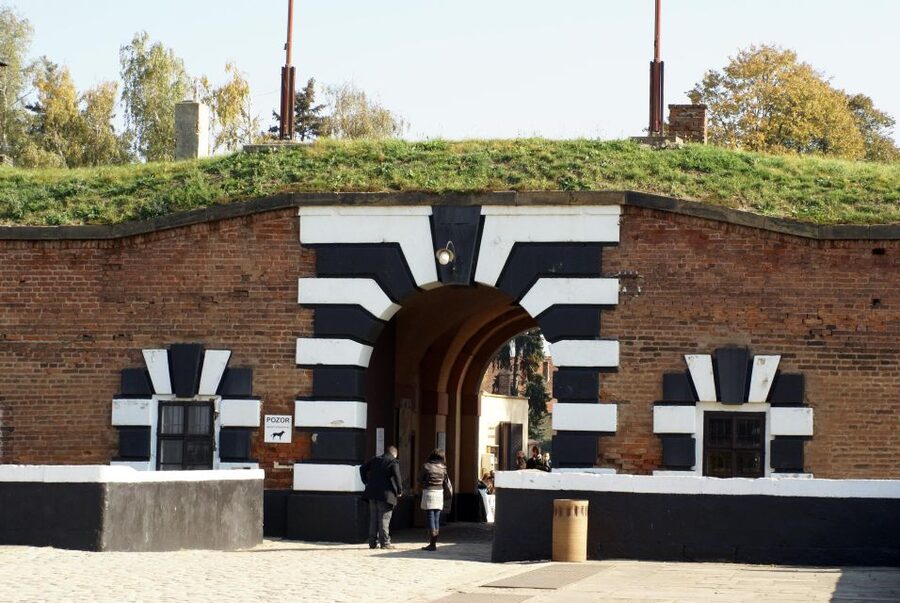
The Small Fortress is usually the first major stop. From June 1940 until May 8, 1945, it served as a Gestapo prison after the main prison in Prague became overcrowded. About 35,000 people passed through its gates during those five years.
The prison held political prisoners, prisoners of war, Jews, Roma, disabled people, and ordinary criminals. The mix is important. Terezín was part of a system aimed at many groups, not only the Jewish population, although the persecution of Jews forms a central part of the wider visit.
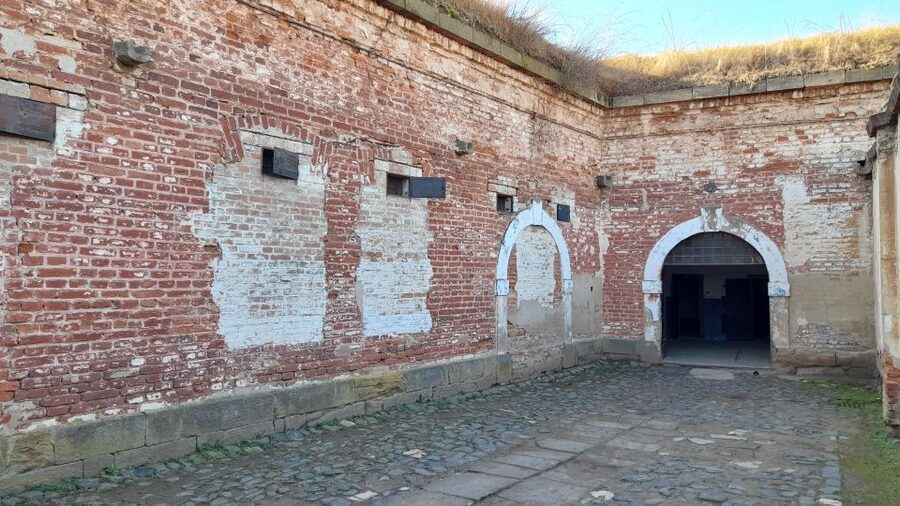
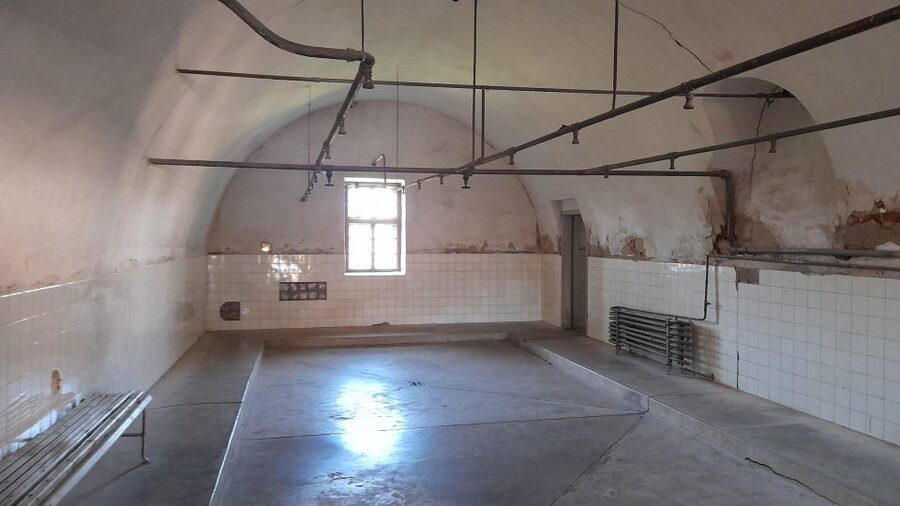
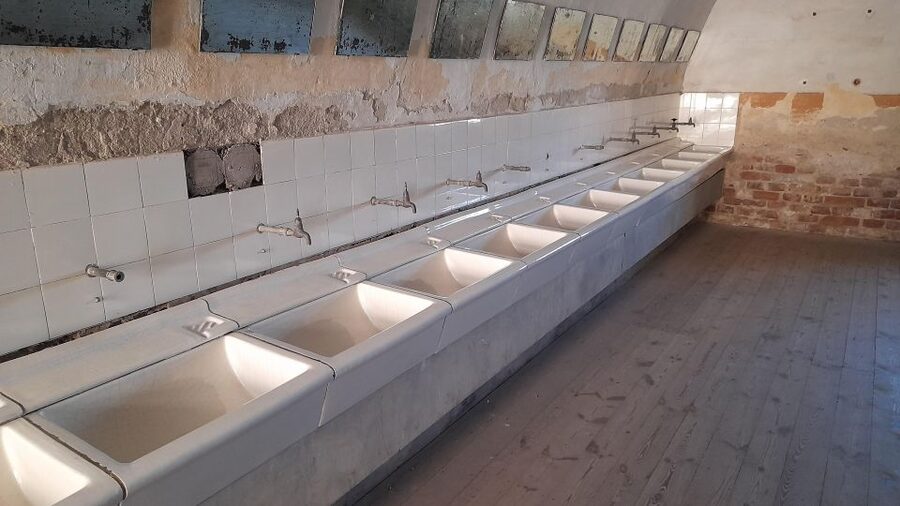
Your guide begins at the administrative court, where new prisoners arrived. You then see the commander’s office before walking through the men’s section. The route includes mass cells, a Jewish cell, and solitary cells. These details make the visit physical and immediate. You are not simply hearing that conditions were harsh. You are seeing the rooms built to contain people under brutal conditions.
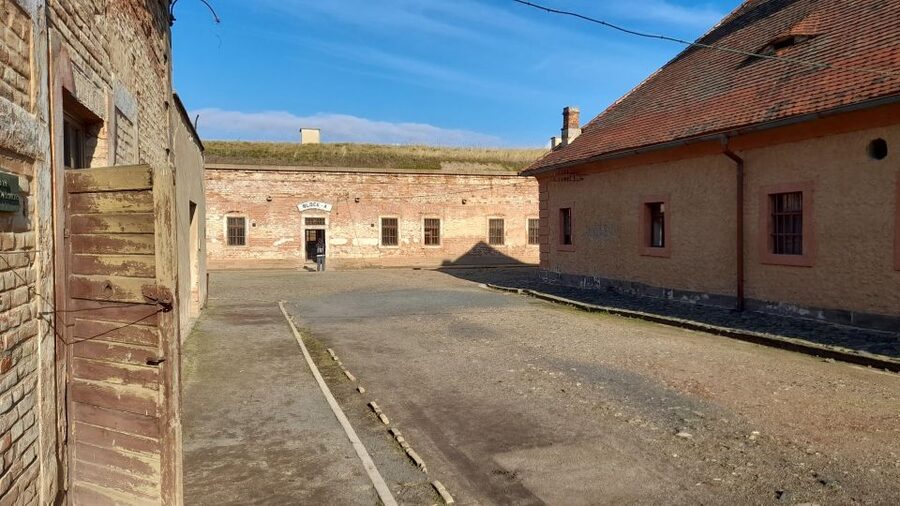
The wall tunnels add another layer. They show the fortress as a military structure and help you understand how the prison occupied the old defensive works. You also visit the shooting range and the fourth courtyard, where larger mass cells were later added because the original prison no longer had enough space.
The short, 10-minute propaganda film made by the Nazis for the International Red Cross is especially important to approach with care. It was created to present a false picture of prison life. Its value today is not entertainment. It shows how the Nazi authorities tried to control what outsiders saw and how visual evidence could be manipulated.
Because the film is brief, it fits into the five-hour schedule without taking over the day. Still, the Small Fortress section can feel dense. If you need time to pause, ask questions, or read every sign, tell your guide early. A private tour gives you more control than a large group, but the route still has a set amount of time.
Crossing to the Big Fortress and the Jewish ghetto
The Big Fortress lies about one mile from the Small Fortress. It became a ghetto for Jews beginning on November 24, and it operated in that role for roughly three and a half years.
About 155,000 Jews passed through Terezín during that period, according to the historical figures presented for the site. Sixty-three transports left for extermination camps in Poland, carrying 87,000 prisoners. Only 3,600 survived the war. About 35,000 people died inside the ghetto itself, with disease and malnutrition among the main causes.
These numbers are difficult to grasp in isolation. The buildings make them more understandable. The Big Fortress was not simply a holding point on a map. It was a crowded place where daily life was shaped by hunger, illness, forced movement, separation, and the constant threat of deportation.
The private guide is useful here because you can stop and ask how the ghetto functioned. You can also connect the museum exhibits to the buildings you see later. The best approach is to listen for the human scale of the story: where people slept, how children were treated, and how prisoners used music, drawing, education, and religion to preserve a sense of self.
The Ghetto Museum and its children’s section
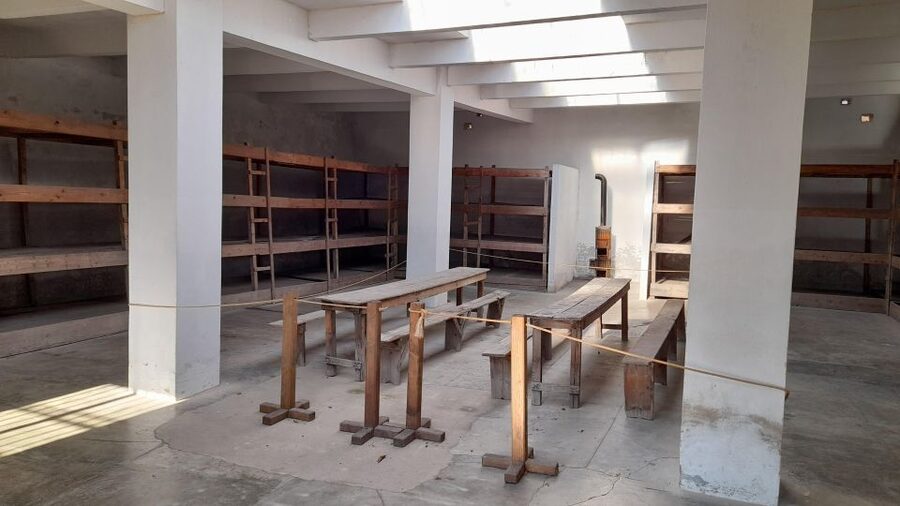
The Ghetto Museum occupies former barracks for boys. It provides the broad historical framework for the Jewish ghetto and the Holocaust, then brings the story down to individual lives and experiences.
The entire ground-floor section is devoted to children who lived and died in Terezín. That focus gives the museum a different weight from a general historical display. You are confronted with the fact that children were not a side issue in the ghetto. They were part of its daily population, and their drawings, writing, and memories help show what life looked like from their point of view.
The final section covers extermination camps. This helps explain what happened to people deported from Terezín and places the ghetto within the larger Nazi machinery of murder.
One practical point matters here: the guide is expected to lead you through the Terezín sites, but one recent experience specifically wished for more guide support upstairs in the museum. If museum interpretation matters greatly to you, ask how much time your guide plans to spend inside and whether they will accompany you through all sections. With a private tour, it is worth making your preference clear.
A few more things to do in Prague worth a look
- From Prague: Half-Day Coach Tour to Kutná Hora
★ 4.4 · 372 reviews - Small-Group Half-Day Prague Walking Tour
★ 4.5 · 99 reviews - Private Half-Day Tour From Prague To Terezín Concentration Camp
★ 5.0 · 78 reviews - Half-Day WWII Prague Walking Tour
★ 5.0 · 68 reviews
The hidden synagogue and Magdeburg Barracks
The hidden synagogue is one of the most striking stops because it is so modest. It occupies a storage room and was concealed because Jewish religious signs were forbidden by the Nazis. Terezín had six such hidden synagogues, and this one shows how religious practice continued in secret despite the danger.
Do not expect a grand place of worship. Its importance comes from the fact that people created it at all. A small room can tell you a great deal about the effort to maintain faith and identity when the authorities tried to erase both.
The tour then continues to the Magdeburg Barracks. Here you see what the dormitories looked like and learn about cultural life in the ghetto. Many Jewish prisoners were accomplished artists, and culture became one of the ways people asserted their humanity.
This part helps balance the visit. Terezín was a place of suffering, but it was also a place where people made art, performed music, taught children, practiced religion, and supported one another. None of that lessens the horror. It shows the strength of people living under it.
If you prefer a visit focused only on buildings and military history, this section may feel less direct. If you want to understand how prisoners responded to their conditions, it is essential.
The crematorium and mass graveyard
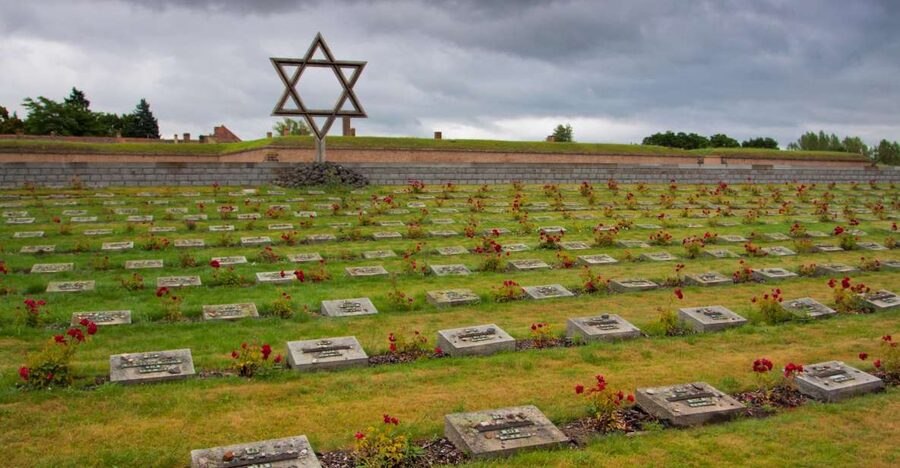
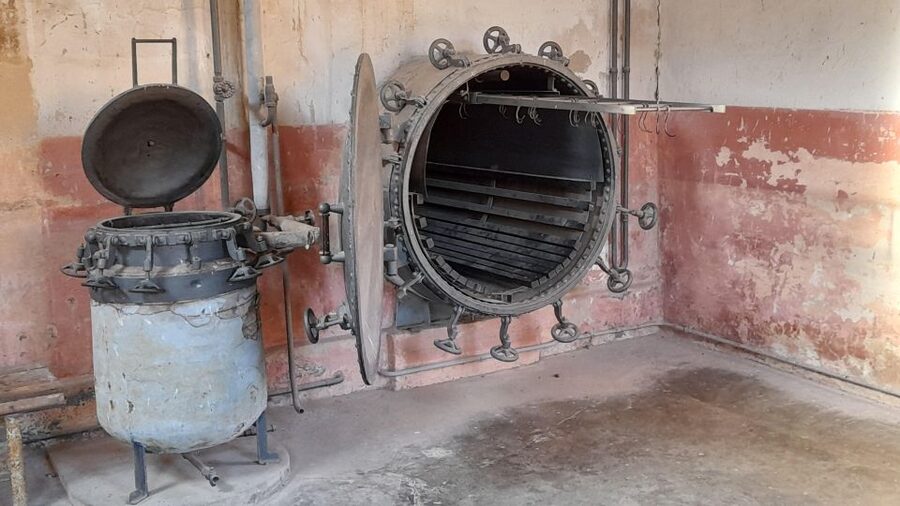
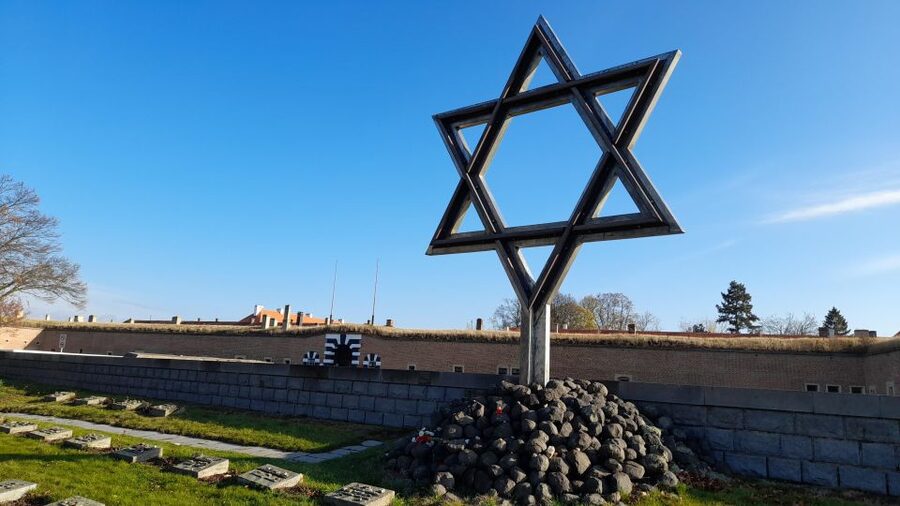
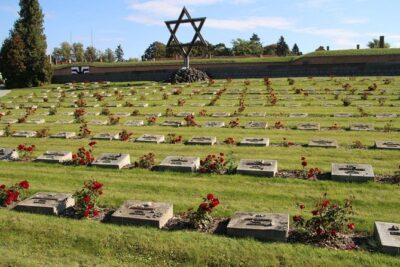
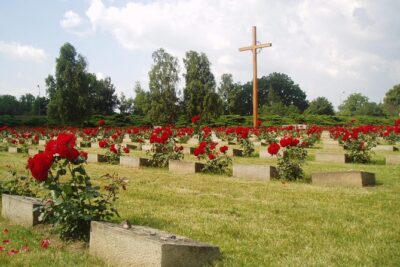
The final stop is the crematorium outside Terezín’s walls. Built in 1942, it was used to cremate victims’ bodies. A mass graveyard lies beside it.
This is a quiet and serious way to end the tour. After seeing the prison, barracks, cells, museum, and places of worship, you arrive at the physical evidence of mass death. The location outside the main walls also reminds you that Terezín’s story extends beyond the fortifications themselves.
I would not plan another major attraction immediately after this visit. The schedule is only five hours, but the emotional impact can last longer. You may want a calm meal or an unstructured afternoon rather than another tightly timed stop.
What the private format adds
A private group changes the feel of the visit. You travel by private car or minivan with a driver and guide, rather than managing a public bus connection or joining a large group. Pickup is available at a place that suits you, including a hotel, square, or airport.
That flexibility is practical if you have limited time in Prague. It also helps if your party includes people with different needs. The experience is wheelchair accessible, and the private setup lets you discuss pacing directly with the guide.
The tour is offered in English, Spanish, French, Russian, Italian, Czech, and German. A live guide is included, not simply an audio device or printed route. Guides named in the feedback include Eva, Peter, and Petr, with particular praise for warm explanations, patience, and personal knowledge of Czech life.
One guide also shared memories of everyday life in Czechoslovakia before, during, and after the Velvet Revolution. That kind of personal context can add a useful modern Czech perspective, although it is not the core of the Terezín history. You should see it as a possible extra layer rather than a promised part of every departure.
The private format is also good for questions. Terezín includes dates, institutions, deportations, and terminology that can blur together. Being able to stop and ask for clarification is worth paying for, especially if this is your first serious Holocaust memorial visit.
Is $316 per person good value?
The listed price is $316 per person. That is a substantial cost for a five-hour outing, but it includes the private guide, driver, car or minivan, and entrance to the Terezín Memorial.
The value depends on what you would otherwise arrange yourself. If you want door-to-door transport, a dedicated guide, several separate sites, and the freedom to ask questions throughout, the price can make sense. You are paying for time and coordination as much as for admission.
It is less attractive if you only want to see one building, prefer independent museum visits, or are trying to keep daily costs low. The half-day length also means the per-hour figure feels high compared with a simple public excursion.
I would consider this most worthwhile for people who care about clear historical explanation and comfortable logistics. It is especially useful if your schedule in Prague is short, your group wants a guide in a specific language, or someone in your party benefits from private transport.
The reserve-now-and-pay-later option keeps your plans flexible, and cancellation is free up to 24 hours before the tour for a full refund. Those terms are useful when you are arranging several Prague day trips, but they do not change the basic question of value: you should want a guided memorial visit, not simply a quick outing beyond the city.
Who should book this Terezín tour?
You should book it if you want to see both the Gestapo prison and the Jewish ghetto in one organized visit. It suits first-time visitors who want the site explained in plain language, families with older children who can handle difficult history, and anyone who prefers private transport over arranging a connection alone.
It also works well for people who value flexibility. You can arrange pickup at a convenient location, choose from several guide languages, and ask questions without a large group setting.
I would think twice if you want a cheerful sightseeing day, dislike memorial museums, or need a slow, unhurried pace for reading every display. Five hours covers a lot, and the subject matter requires attention. The tour is best approached as a serious historical appointment, not a casual stop between Prague attractions.
FAQ
How long does the Terezín tour last?
The tour lasts five hours.
Is transportation included?
Yes. A driver and private car or minivan are included.
Where can pickup take place?
Pickup can be arranged at a suitable location, including a hotel, square, airport, or another agreed place.
Is the tour private?
Yes. The experience is for a private group.
Which languages are available?
Live guiding is available in English, Spanish, French, Russian, Italian, Czech, and German.
What parts of Terezín are included?
The visit includes the Small Fortress, the Ghetto Museum, the hidden synagogue, the Magdeburg Barracks, the crematorium, and the mass graveyard. Entrance to the Terezín Memorial is included.
Is the tour wheelchair accessible?
Yes, the activity is listed as wheelchair accessible.
Should you book it?
Book this tour if you want a serious, well-organized visit to both sides of Terezín, with private transport and a guide who can explain the site in your language. The Small Fortress cells, hidden synagogue, children’s museum section, and crematorium create a full picture that is difficult to gain from a quick independent visit.
Skip it if the price is beyond your budget or if you want to explore slowly over a full day. For most people with limited time in Prague, though, the private format offers a practical way to reach Terezín and understand what you are seeing. Go prepared for a sobering experience, and leave enough quiet time afterward to think about it.
Just added in Prague
- World War II 4WD Tour from Prague with Lunch★ 4.4 · 3 reviews
- WWII and Communism History in Prague’s Old Town Private Tour★ 5.0 · 4 reviews
- Prague: Historical Walking Tour with Focus on World War 2★ 4.3 · 12 reviews
- Unique salt cave in Prague★ 4.9 · 10 reviews
- Walking tour of Prague in french: Old Town & Charles Bridge★ 4.9 · 62 reviews
- Prague: Market Tour and Traditional Czech Cooking Class★ 4.7 · 19 reviews
- Ultimate Unlimited Beer Pong with Czech Beer★ 4.6 · 5 reviews
- Walking tour of Prague in French : Nové Město★ 4.9 · 16 reviews
Terezín Concentration Camp Tours, compared.

Terezin Concentration Camp Guided Tour w/ Audio
Read our review →
Terezin Concentration Camp Day Tour from Prague
Read our review →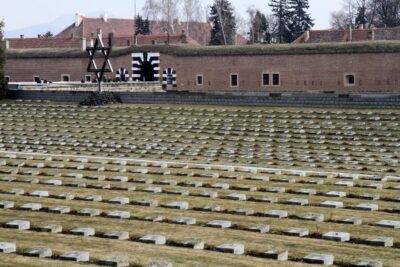
Terezin & Bohemian Switzerland from Prague: Bastei, Narnia & Café
Read our review →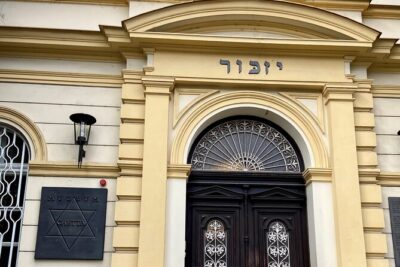
Terezin In-Depth Holocaust Tour From Prague’s Center (max 7 pax)
Read our review →
Browse the lists this tour appears in