
Reviewed · COMMUNISM & WWII HISTORY TOURS
Back to Communism Walking Tour
Prague’s communist past comes into sharp focus on this compact walk through places tied to state surveillance, public protest, and the Velvet Revolution. At the former secret police headquarters, Wenceslas Square, and Národní třída, you get history on the very streets where it happened, not from behind a museum case.
I like the small-group format, limited to 15 people, because it leaves room for questions. I also like that local guides can connect public events with daily life under communism, including memories from people who lived through at least part of that period. The main drawback is the pace: two hours covers a lot, so you will hear more than you can fully absorb in one sitting.
Key points to know before booking
- Three central Prague locations: Visit Bartolomějská, Wenceslas Square, and Národní třída.
- Personal local perspective: Guides such as Petr, Daniel, and Marek have shared firsthand or family-era insight into communist Czechoslovakia.
- A walking tour with real emotional weight: Expect stories about surveillance, Cold War tension, protest, and the Velvet Revolution.
- Small group, maximum 15 people: This makes it easier to ask about politics, daily life, and details you do not understand.
- About two hours outdoors: Wear comfortable shoes and check the weather before setting out.
- $44.22 per person: The price is fair if you want interpretation and conversation, rather than simply passing these sites on your own.
Prague’s communist past is told on the street
This is not a general tour of Prague. It focuses on the period when Czechoslovakia was under communist rule and on the transition that followed. The route uses central streets and public spaces to explain how power worked, how people responded, and how the past still shapes the city.
That approach matters. You can walk through Wenceslas Square alone and see a grand urban boulevard, shops, trams, and historic buildings. A good guide helps you understand why this space carried such force during moments of crisis. You can also pass Národní třída without noticing a modest memorial on a wall. Here, the guide gives the site a human and political meaning.
The tour is offered in English and lasts about two hours. It is suited to anyone who prefers a focused walk over a long museum visit. You will not be asked to spend hours indoors, and the stops do not require admission tickets. The tradeoff is that the subject is serious. This is not a light sightseeing stroll with a few amusing stories added for color.
More recent history in Prague:
- Prague: Communism History and Nuclear Bunker Guided Tour
★ 4.7 · 2,417 reviews - Prague Communism History and Nuclear Bunker Tour
★ 5.0 · 1,742 reviews - Communism & Nuclear Bunker Tour + 70s Canteen Lunch (own expense)
★ 5.0 · 1,036 reviews
Bartolomějská and the former secret police headquarters
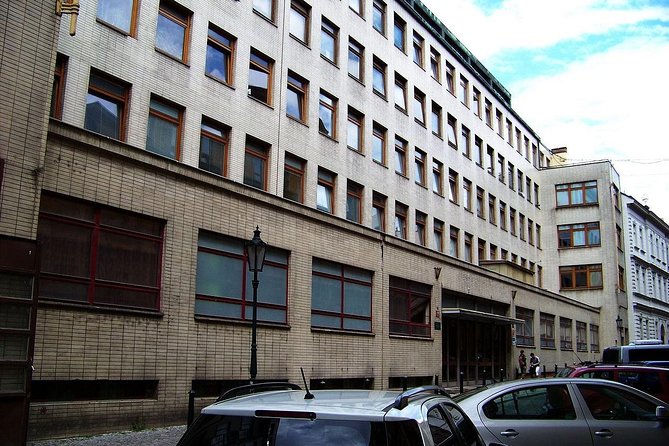
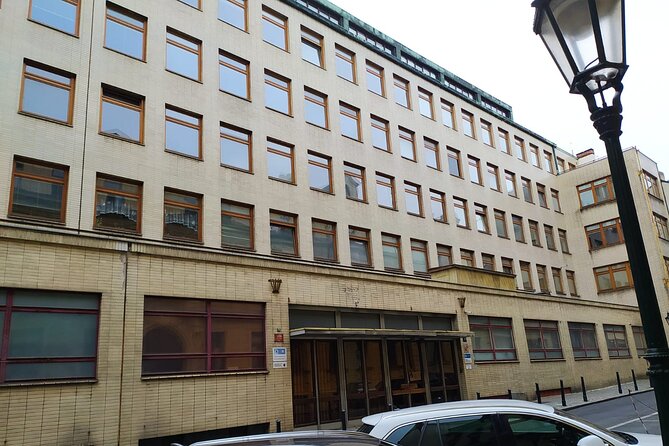
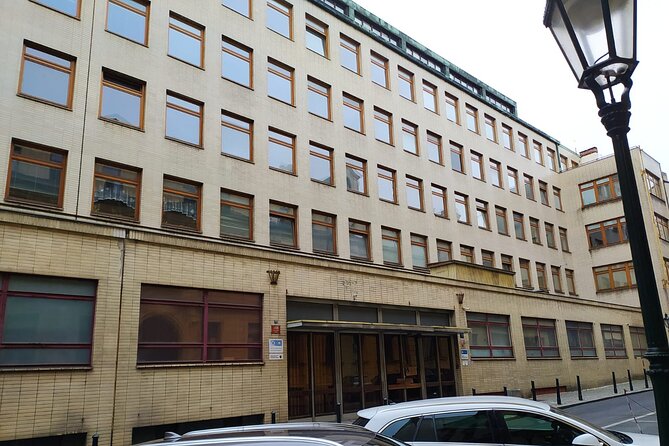
The first stop is Bartolomějská, home to the former headquarters of the Czechoslovak secret police. You spend about five minutes here, with no admission charge.
Five minutes may sound brief, but the location gives the tour its direction. The building represents the machinery of surveillance and political control. Your guide can use it to explain the atmosphere of suspicion that shaped life under the communist system, then connect that system to the public events you see later in the walk.
Do not expect to enter the headquarters or explore a preserved interior. The value is in the explanation given on the street. That makes the guide especially important. The strongest part of this tour is not a rare object or a dramatic display. It is the chance to ask how this system affected ordinary people and how its presence was felt in daily life.
Several guides named in past tour accounts include Petr, Daniel, and Marek. Their strengths appear to be clear explanations and personal familiarity with the era. One guide was described as having experienced part of that period, while another was praised for explaining Cold War subjects in detail. Since guide assignments can change, treat those names as examples rather than a promise of who will lead your walk.
Wenceslas Square and the public memory of crisis
The walk then reaches Wenceslas Square for about 15 minutes. This is the longest stop, and it deserves the extra time. The square has witnessed many important moments in modern Czech history, making it a natural place to discuss how public space can become a stage for fear, hope, protest, and political change.
A guide can help you read the square in a different way. Instead of seeing only a broad central avenue, you begin to think about crowds, speeches, demonstrations, and the pressure placed on people during major national events. The point is not just what happened here, but how people experienced those events while they were unfolding.
This is also where the personal style of the tour matters most. A textbook can give you dates and names. A local guide can explain what it meant to grow up with the Cold War in the background, or how the end of communist rule was understood by people who lived through it. The personal connection does not replace historical facts, but it can make them easier to grasp.
You should also expect some interpretation. Communism and its aftermath remain political subjects, and the tone of this tour is clearly critical of communist rule. That is not a hidden feature. If you want a neutral survey of twentieth-century Czech history, you may prefer a museum or academic lecture. If you want a direct account of repression, protest, and lived experience, the approach is likely to suit you.
Národní třída and the hands-reaching-out memorial
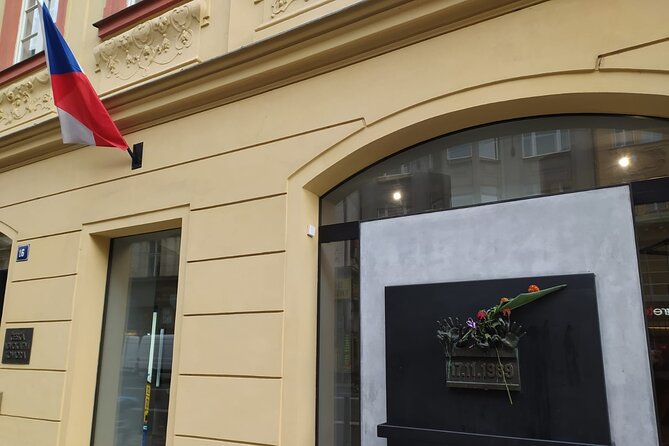
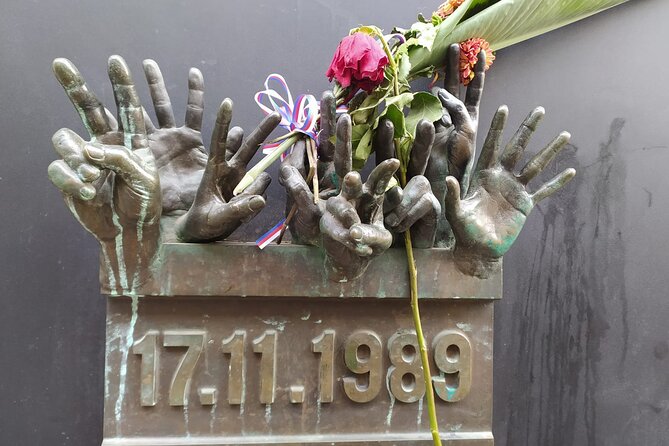
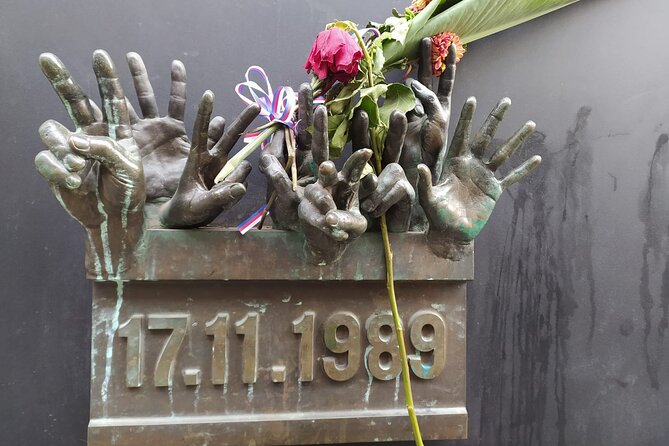
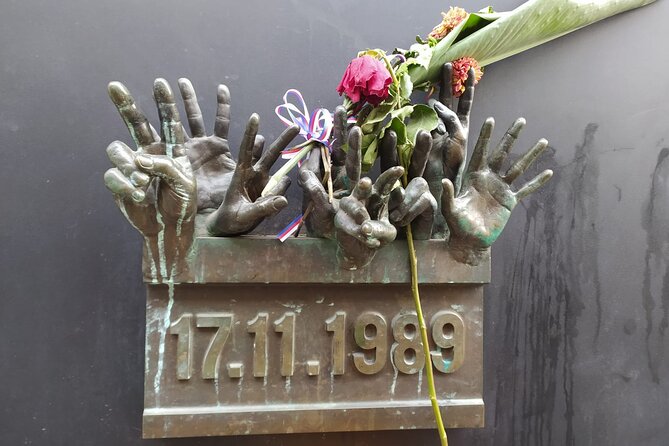
The final listed stop is on Národní třída, where hands reach out from a wall in a memorial connected with the victims of the so-called Velvet Revolution. You spend about 10 minutes here.
The memorial is small, but that is part of its power. You do not need a large monument to mark a decisive moment. The guide explains what happened at this location and why the Velvet Revolution remains one of the strongest moments in modern Czech history.
This stop also brings the tour’s themes together. Bartolomějská represents state control. Wenceslas Square shows how public space can hold national memory. Národní třída turns that memory toward protest and change. The route is short, but it has a clear arc.
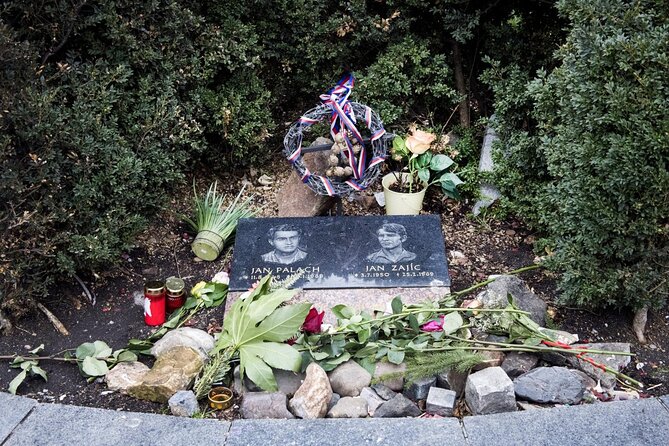
The walk also touches on physical traces of the past. One account describes seeing scratches left by Soviet bullets. That detail gives you a useful reason to look closely rather than simply listen. Prague’s political history is not always marked by large signs. Sometimes it survives in damaged surfaces and small memorials that are easy to miss.
More walking routes in Prague:
- Prague: 3-Hour Walking Tour of Old Town & Prague Castle
★ 4.7 · 5,696 reviews - Prague: Ghost Walking Tour Where Legends Come To Life
★ 4.4 · 5,253 reviews - Prague: Jewish Quarter Walking Tour with Admission Tickets
★ 4.7 · 3,729 reviews - Prague Guided Walking Tour and Cruise with Authentic Czech Lunch
★ 5.0 · 3,627 reviews
What the guide adds to the experience
The strongest reason to pay for this walk is the guide. All three main stops are free to visit. You can reach them without a tour, so the price must be justified by the explanation, structure, and chance to ask questions.
The English-language guides have been described as clear, enthusiastic, and well informed. Petr was praised for a detailed explanation, Daniel for unusual facts about the era, and Marek for his understanding of communism after living through part of it. One guide also led a session in very good German, but this particular experience is offered in English.
That personal link is useful, but it has limits. A guide’s memory is not the same as a complete history. You should listen for the distinction between personal experience, family memory, and documented fact. The small group gives you a chance to ask that kind of question without holding up a large crowd.
The guide can also adjust the emphasis to your interests. You might ask about daily life, the secret police, Cold War divisions, protest, or the political meaning of the Velvet Revolution. The tour description specifically encourages questions, and a maximum group size of 15 makes that realistic.
Is $44.22 a fair price?
At $44.22 per person, this is not the cheapest way to see central Prague. You are paying for about two hours of a professional local guide, not entry to a museum or a special viewing platform. Because the sites are free, the value depends almost entirely on the quality of the explanation.
I think the price is reasonable if you want context and conversation. A self-guided walk can show you the same streets, but it will not easily explain why Bartolomějská matters, how Wenceslas Square became tied to political memory, or what makes the Národní třída memorial significant.
The small group improves the value. With no more than 15 people, you are less likely to feel like a face in a crowd, and questions should be manageable. If the group is full, the walk may still feel personal, but it will not be private.
The tour is also booked an average of 78 days in advance. That suggests you should not leave it until the last minute if the date matters to you. Confirmation arrives when you book, and free cancellation is available until 24 hours before the start time. Changes or cancellations inside that 24-hour window are not accepted for a refund.
Who will enjoy this walk most
I would choose this experience if you have a serious interest in modern European history, Cold War politics, or the way ordinary people lived under authoritarian rule. It is also a good fit if you prefer learning through conversation and place rather than through a long indoor exhibit.
It works well for active visitors who like to explore on foot. The route is in central Prague, starts near public transportation, and ends back at the meeting point on Na Příkopě 864/28. Most people can take part, and service animals are allowed.
Families can join, but children must be accompanied by an adult. Think about your child’s interest and attention span before booking. The topic includes surveillance, repression, protest, and political violence, so it may be better for older children and teenagers than for very young ones.
You should also prepare for the weather. The whole experience is a walking tour with outdoor stops. The short duration helps, but cold or wet conditions can affect your comfort. The vivid word used in several accounts is freezing, both for the weather and for the subject matter. Wear shoes you can walk in and bring suitable clothing.
A few limits to keep in mind
The tour covers only three main stops in about two hours. That is enough for a strong introduction, but not enough for a full history of communist Czechoslovakia. You should not book it expecting a museum-length account of every political leader, policy, or decade.
The short stop at Bartolomějská may feel thin if you want architectural or interior details. The emphasis is on what the site represents, not on a long visit inside. Wenceslas Square receives more time, while Národní třída offers a brief but meaningful memorial stop.
The tone is also direct. The guides present communism as a warning about power and political control, and the commentary can connect past events with concerns about the present and future. That makes the experience more than a list of dates, but it may feel too opinionated if you want a strictly detached presentation.
Still, the directness is part of its appeal. Prague’s recent past is not a distant tale from ancient history. It is within living memory, and the best moments of this walk come from asking what that means for people who were there.
Should you book the Back to Communism Walking Tour?
Book it if you want a focused, human account of Prague’s communist era and the Velvet Revolution. The route is short, the sites are central, and the small group gives you a fair chance to ask questions. Guides such as Petr, Daniel, and Marek have brought personal experience and clear explanations to the subject.
Skip it if you want a broad sightseeing tour, a museum visit, or a completely neutral political overview. The walk is serious, outdoors, and built around interpretation rather than admission-ticket attractions.
For the right visitor, $44.22 buys something useful: a way to look at familiar Prague streets and understand the pressure, fear, protest, and change connected to them. I would pair it with a separate visit to a museum or historical site if you want more documents and dates. As a compact introduction, this walk earns its place in a Prague itinerary.
FAQ
How long does the Back to Communism Walking Tour last?
The tour lasts approximately two hours.
What language is the tour offered in?
The experience is offered in English.
Where does the tour begin?
It begins at Na Příkopě 864/28, Nové Město, 110 00 Praha 1, Czechia.
Where does the tour end?
The activity ends back at the meeting point.
How large can the group be?
The tour has a maximum of 15 people.
Are children allowed to join?
Yes. Children must be accompanied by an adult.
Can I cancel for a full refund?
Yes, if you cancel at least 24 hours before the experience start time. Cancellations or changes made less than 24 hours before the start time are not accepted for a refund.
Just added in Prague
- World War II 4WD Tour from Prague with Lunch★ 4.4 · 3 reviews
- WWII and Communism History in Prague’s Old Town Private Tour★ 5.0 · 4 reviews
- Prague: Historical Walking Tour with Focus on World War 2★ 4.3 · 12 reviews
- Unique salt cave in Prague★ 4.9 · 10 reviews
- Walking tour of Prague in french: Old Town & Charles Bridge★ 4.9 · 62 reviews
- Prague: Market Tour and Traditional Czech Cooking Class★ 4.7 · 19 reviews
- Ultimate Unlimited Beer Pong with Czech Beer★ 4.6 · 5 reviews
- Walking tour of Prague in French : Nové Město★ 4.9 · 16 reviews
Communism & WWII History Tours, compared.
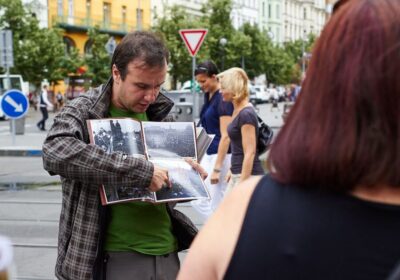
Communism History and Nuclear Bunker Guided Tour
Read our review →
Prague Communism History and Nuclear Bunker Tour
Read our review →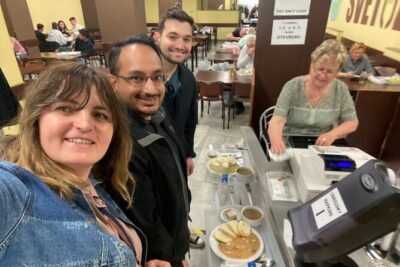
Communism & Nuclear Bunker Tour + 70s Canteen Lunch (own expense)
Read our review →
WWII Guided Tour & The Crypt of Operation Anthropoid
Read our review →
WWII in Prague Tour & The Crypt of Operation Anthropoid
Read our review →
Communism and Bunker Tour with 70s Canteen Lunch
Read our review →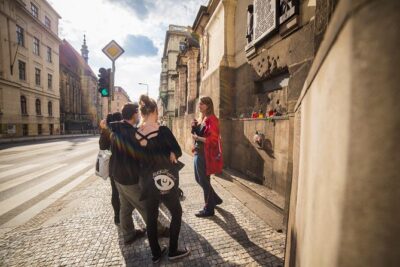
Small-Group World War 2 & Operation Anthropoid Tour in Prague
Read our review →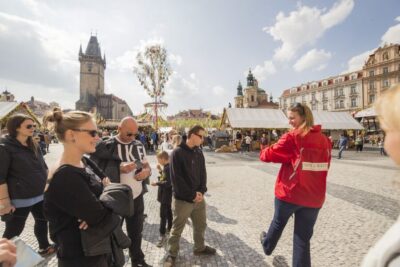
World War 2 and Operation Anthropoid Walking Tour
Read our review →Browse the lists this tour appears in