Reviewed · TOURS IN PRAGUE
Discover Prague’s most Photogenic Spots with a Local
Prague packs a remarkable amount of visual drama into a short walk, and this experience aims to show it all in one 90-minute photo tour. You move from Frank Gehry’s twisting Dancing House to David Černý’s strange sculptures, then on toward Old Town, Charles Bridge, Kampa, and Letná Park.
I like the small group of up to eight and the chance to shape the route around your interests and walking pace. I also like the mix of famous sights and odd local details, from the rotating Kafka head to Sigmund Freud hanging above a street. The main concern is simple: this is a lot of Prague to cover in a short time, so some stops may feel like quick photo pauses rather than proper visits.
What to know before booking
- Eight people maximum: A small group gives you more room to ask questions and request photo stops.
- A striking modern-to-historic route: You’ll see Dancing House, Old Town Square, Charles Bridge, and Letná Park in one outing.
- David Černý appears more than once: The rotating Kafka head and crawling bronze Babies add Prague’s playful, odd side.
- The route finishes at Letná Park: Expect city views and the Metronom Monument at the end, not a return to the starting point.
- Public transport is not included: Entry tickets, transport, and personal spending are yours to cover.
- Best for walkers with a camera or phone: The experience is not recommended for people with impaired mobility.
From Dancing House to Prague’s Open-Air Art
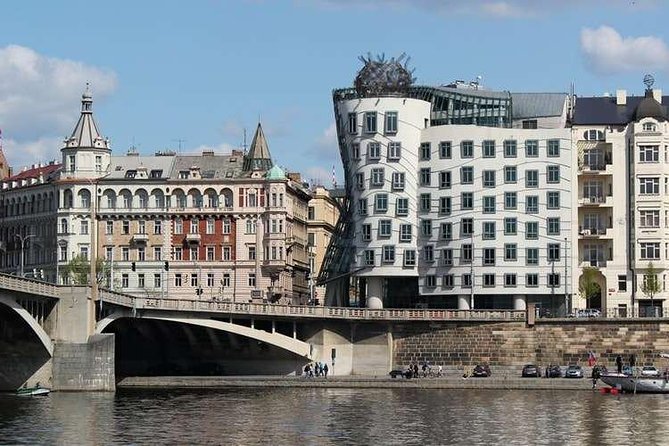
You begin at Jiráskovo náměstí in Prague’s New Town, near the Dancing House. This is a smart starting point because the building gives you an immediate lesson in how Prague mixes old streets with modern design.
The Dancing House looks as if two buildings are leaning into a dance. Its unusual shape makes it one of the city’s easiest modern structures to photograph, especially if you enjoy lines, curves, reflections, and unusual angles. You’ll hear how the building challenges older ideas about what a city center should look like.
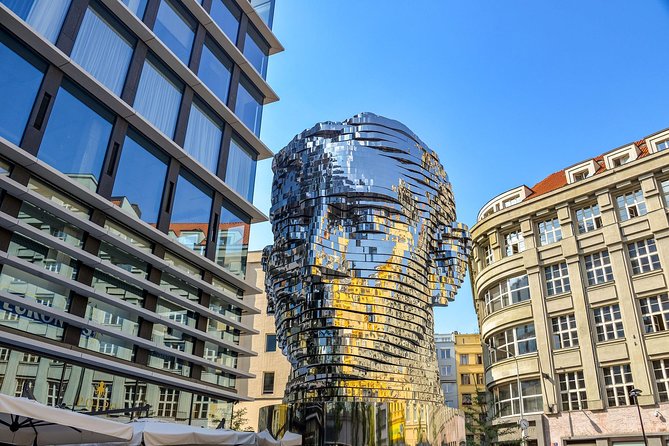
From there, the route turns toward two of Prague’s most memorable public artworks by David Černý. The first is the 11-meter metallic head of Franz Kafka. Its 42 moving layers rotate and shift, turning a portrait into a mechanical puzzle.
The Kafka sculpture works best as a short viewing stop. You can watch the layers change the face, then move around it for different compositions. If you want a detailed explanation of Kafka’s writing, ask directly. The tour promises local recommendations and context, but the amount of historical detail can depend greatly on the person leading your group.
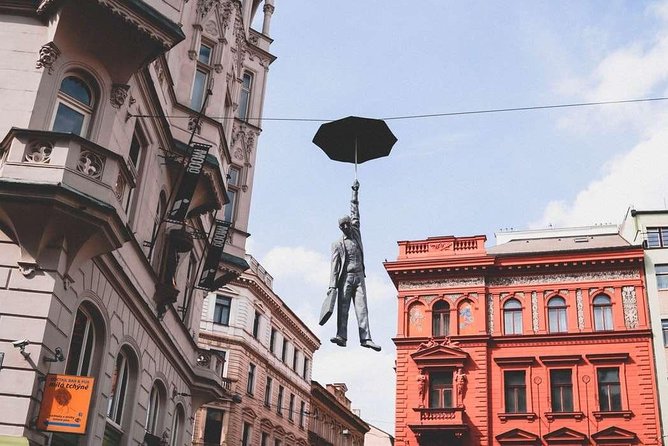
You’ll also look up for Man Hanging Out, Černý’s sculpture of Sigmund Freud suspended above the street. It is easy to miss if you are focused on shopfronts and traffic, which is exactly why having someone point it out helps.
This section gives the tour its strongest personality. Prague is not only a city of castles, churches, and old stone. It also has a dry, strange sense of humor in its public art. I like that the route includes pieces you might pass without noticing on your own.
Other trips people book in Prague:
- Prague: 50-Minute Sightseeing Evening Cruise
★ 4.2 · 33,780 reviews - Prague: Medieval Dinner with Unlimited Drinks
★ 4.4 · 19,847 reviews - Prague: Skip-the-line Castle Ticket and Optional AudioGuide
★ 4.3 · 11,121 reviews
Old Town Square and the Astronomical Clock
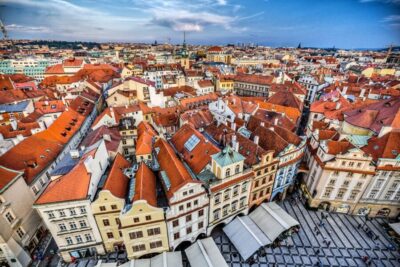
Old Town Square brings you into Prague’s grand historic center. The square gathers several centuries of architecture in one open space, making it a natural place to pause and take in the larger picture.
The Astronomical Clock is the main attraction here. You’ll see its moving figures in action if the timing works, though the experience does not promise a specific viewing time. The clock is more than a timepiece. It is a compact display of medieval ideas about the heavens, the calendar, and the passage of time.
This stop can be rewarding for photographs, but it may also be one of the busiest parts of the route. Keep your belongings secure and stay aware of the group. A small group helps, but public squares can still make it easy to lose sight of people.
You’ll also get some historical background about the square and the events that took place here. The information may be broad rather than academic. One past outing led by a guide named Stefan was praised for prompt arrival and clear text messages about meeting arrangements, but criticized because the explanations felt vague and some answers seemed uncertain. That is useful context when setting expectations: this is a local photo walk, not a specialist lecture in Prague’s political history.
If you want more detail, prepare a few questions before you go. Ask about the clock, the buildings around the square, or the events connected with the area. A good question can turn a passing explanation into a more useful conversation.
Charles Bridge and the River Crossing
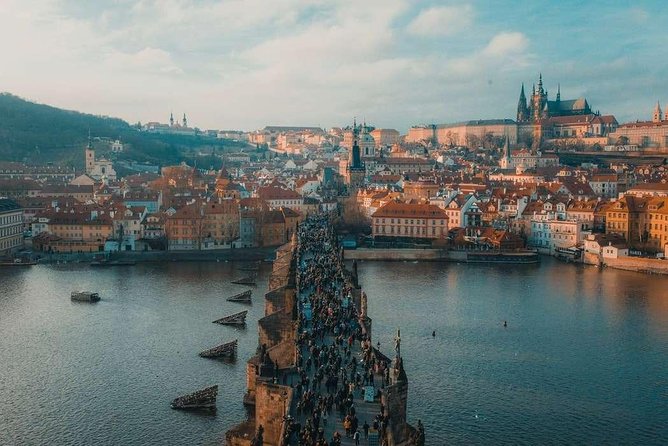
Charles Bridge is the route’s most famous stop. Built in the 14th century, it crosses the Vltava River and links Prague’s Old Town with the area around Malá Strana and Prague Castle.
The bridge is lined with statues and offers strong views along the river. You can photograph the stone arches, the towers at either end, and the row of religious figures that give the bridge its distinctive look. Your guide can also explain why the bridge matters to Prague’s identity and how it fits into the city’s past.
The trade-off is time. Charles Bridge deserves a slow crossing, but this tour also includes many other stops. You may have to choose between taking a careful set of pictures and keeping pace with the group.
The bridge is also a place where walking speed matters. If you stop often for photographs, tell your local guide. The route is designed to adjust to the group’s pace, but the guide cannot know what you want unless you say so.
I would treat this as a photo-and-orientation visit, not your only experience of Charles Bridge. Use the tour to learn the layout and spot the best angles. Then return later if you want a quieter crossing or more time with the statues.
Lennon Wall and Kampa’s Crawling Babies
The Lennon Wall brings a different mood. It is a changing display of painted messages connected with freedom and peace, and it continues to evolve as new writing and images appear.
Because the wall changes, your photographs will record a particular moment rather than a fixed monument. Look for color, handwriting, overlapping messages, and small details around the larger paintings. It is a good place to step away from formal architecture and see how public space can carry personal ideas.
Nearby, you’ll encounter Černý’s Babies, bronze figures crawling around Kampa Island. Their oversized forms are eerie and amusing at the same time. They are the sort of public sculptures that reward a second look, especially if you enjoy art that is not tidy or easily explained.
The Kampa section is one of the more appealing parts of the route because it links two different kinds of public expression. The Lennon Wall changes through human messages, while the Babies remain fixed but intentionally unsettling. Together, they show a less polished side of Prague.
Do not expect museum entry or an indoor art discussion. The attraction here is seeing these works in their public setting. Entry fees for museums and monuments are not included, and the route itself focuses on outdoor stops.
Same streets, a different kind of outing:
- Prague: Castle Tour with Local Guide and Entry Ticket
★ 4.6 · 10,422 reviews - Prague Castle 2.5-Hour Tour Including Admission Ticket
★ 4.7 · 8,927 reviews - Prague: Oldtown, Medieval Underground & Dungeon History Tour
★ 4.2 · 8,244 reviews - Prague: Vltava River Night Cruise with Buffet
★ 4.3 · 7,338 reviews
Pařížská Street and Prague’s Polished Side
Pařížská Street offers a sharp change in tone. This broad, prestigious boulevard is known for luxury shops, grand facades, and a strong connection between fashion and historic city design.
It is useful to include because Prague is not one single visual experience. You move from medieval architecture to modern sculpture, then to a street where elegant buildings frame high-end storefronts. Even if you have no interest in shopping, the street gives you good material for photographs.
The value of this stop depends on your taste. If you like architecture, shop windows, and urban detail, you will find plenty to notice. If you want longer historical explanations or more time inside attractions, this may feel like a quick walk through an expensive shopping area.
The route does not include personal expenses, so any purchases are up to you. I would treat Pařížská as a streetscape stop rather than a shopping excursion.
Letná Park and the Final City View
The experience ends at Letná Park, in the area of Holešovice. This finish changes the pace again, moving from dense central streets into a broad green setting with views over Prague.
The Metronom Monument is the key landmark here. It gives the park a strong visual focal point and fits the tour’s interest in unusual public art. You’ll also have a chance to look across the city from a higher position and connect the places you have just seen.
Ending in Letná Park is practical if you want to continue exploring Prague’s parks or Holešovice afterward. It is less convenient if you expect to finish near the original meeting point, so plan your next stop from the ending address rather than the start.
The final view also gives the route a natural pause. After a quick series of central stops, you can step back and see Prague as a whole. Still, the park deserves time of its own if you want a long walk, a relaxed break, or careful city photography.
What the 90-Minute Schedule Really Means
The tour lasts about an hour and a half, yet the route includes nine major areas or sights. That tells you how to use it. You are getting a fast introduction to Prague’s photo-friendly highlights, not a slow city walk with extended time at every monument.
The itinerary may adapt to weather, interests, and walking pace. Stops can also vary. This flexibility is helpful, but it means you should not treat every listed stop as guaranteed in the same order or with equal time.
Transportation tickets are not included. The tour information does not specify which parts use public transport, so ask the local guide about the day’s route if you want to budget for tickets. Museum and monument entry is also extra.
The meeting point is Jiráskovo náměstí, and the final point is Letenské sady 173. Check both addresses before setting out. Since the route crosses several parts of Prague, arriving at the wrong end of the city could cost you valuable time.
Confirmation is provided at booking, and mobile tickets are accepted. Service animals are allowed, and the route is near public transport. The activity is not recommended if you have impaired mobility, which makes sense given the amount of walking, uneven city surfaces, and changing pace.
Is $76.46 a Fair Price?
At $76.46 per person, this is not a cheap way to see Prague’s outdoor sights. The value depends on what you want from the hour and a half.
The price makes more sense if you value a small group, a local host, personalized suggestions, and help finding sculptures that are easy to miss. You also get a ready-made route through several parts of the city, which can be useful during a short first visit.
The price is harder to justify if you mainly want a guide with detailed historical expertise. The available experience with Stefan suggests that explanations may be general, and that answers to difficult questions may not always be precise. You should book this for orientation, photography, and local perspective rather than a formal history lesson.
The small group is the strongest value point. With no more than eight people, you have a better chance of asking for a photo pause or adjusting the pace than you would on a large coach tour. Still, the tour does not include transport, admissions, or personal purchases, so the final cost may be higher than the headline price.
Who Will Enjoy This Photo Walk Most?
I would recommend this experience to a first-time visitor who wants to see a wide range of Prague quickly. It also suits anyone who likes modern public art, unusual statues, and city views as much as traditional churches and old squares.
It may work well for solo visitors who want company without joining a large group. Couples and small parties can also use the walk to get their bearings and collect ideas for places to revisit later.
You should be comfortable walking at a reasonable pace. The tour is not recommended for people with impaired mobility, and the changing route may be tiring if you need frequent long breaks.
Photographers should bring a phone or camera with enough battery for repeated stops. The experience centers on visual opportunities, but it does not promise technical photography instruction. You are getting access to locations and local direction, not a dedicated camera workshop.
The tour is less suitable if you want indoor visits, long time at each monument, or a specialist guide focused on Prague’s full historical story. Its strength is range and visual variety.
Should You Book It?
Book it if you want a quick, small-group introduction to Prague’s most photogenic public spaces, especially if Kafka’s rotating head, Černý’s sculptures, Lennon Wall, and Letná Park appeal to you. The route offers a useful mix of famous sights and stranger corners that you might not connect on your own.
Think twice if $76.46 feels high for a 90-minute outdoor walk or if you expect detailed, carefully researched answers about every stop. Ask for the day’s exact route, confirm how transport will work, and tell the guide how much time you want for photographs.
Free cancellation is available up to 24 hours before the start time. After that, the amount paid is not refunded, and last-minute changes are not accepted. That gives you a reasonable window to check the forecast and decide if a walking photo tour fits your Prague plans.
FAQ
How long does the experience last?
The experience lasts approximately 1 hour and 30 minutes.
Where does the tour begin?
It begins at Jiráskovo náměstí, Jiráskovo náměstí, Nové Město, 120 00 Praha-Praha 2, Czechia.
Where does the tour end?
It ends at Letenské sady 173, 170 00 Praha 7-Holešovice, Czechia.
How many people can join the group?
The group has a maximum of eight travelers.
What language is the experience offered in?
The experience is offered in English.
Are public transportation tickets included?
No. Public transportation tickets are not included.
Are museum and monument entry tickets included?
No. Entry tickets for museums and monuments are not included.
Can the route change?
Yes. The route can adapt to participants’ interests and walking pace, and stops may vary with weather conditions.
What is the cancellation policy?
You can cancel at least 24 hours before the start time for a full refund. Cancellations or changes made within 24 hours are not refunded or accepted.
Just added in Prague
- World War II 4WD Tour from Prague with Lunch★ 4.4 · 3 reviews
- WWII and Communism History in Prague’s Old Town Private Tour★ 5.0 · 4 reviews
- Prague: Historical Walking Tour with Focus on World War 2★ 4.3 · 12 reviews
- Unique salt cave in Prague★ 4.9 · 10 reviews
- Walking tour of Prague in french: Old Town & Charles Bridge★ 4.9 · 62 reviews
- Prague: Market Tour and Traditional Czech Cooking Class★ 4.7 · 19 reviews
- Ultimate Unlimited Beer Pong with Czech Beer★ 4.6 · 5 reviews
- Walking tour of Prague in French : Nové Město★ 4.9 · 16 reviews
Tours in Prague, compared.
Castle Tour with Local Guide and Entry Ticket
Read our review →
Prague Castle 2.5-Hour Tour Including Admission Ticket
Read our review →
Oldtown, Medieval Underground & Dungeon History Tour
Read our review →