
Reviewed · COMMUNISM & WWII HISTORY TOURS
Small-Group World War 2 & Operation Anthropoid Tour in Prague
Prague’s WWII story comes into sharp focus at the end of this walking tour, inside the crypt of St. Cyril and Methodius Cathedral. This is where Czech paratroopers hid after killing Reinhard Heydrich, the Nazi official known as the Butcher of Prague, and where their final stand unfolded. The crypt is the emotional centerpiece, not just another stop on a sightseeing route.
I like two things right away: the tour connects grand political events to ordinary streets, and it takes you to places you would likely pass without knowing their importance. The roughly three-hour route also fits neatly into a Prague afternoon. The trade-off is that much of the experience involves standing while your guide explains events and shows photographs, so it suits history-minded walkers more than anyone seeking nonstop sightseeing.
Key details before you book
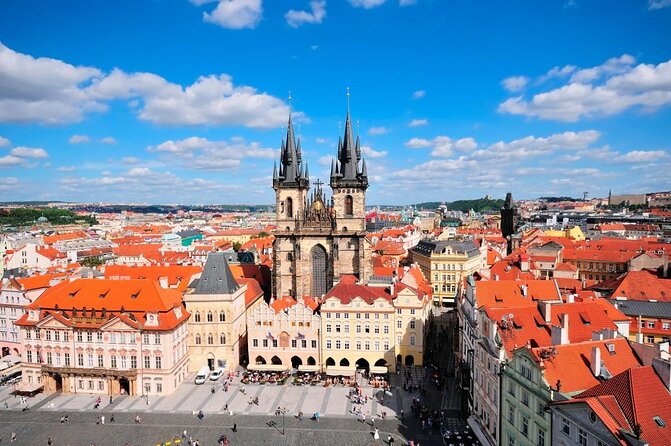
- The route ends in the resistance crypt: St. Cyril and Methodius Cathedral and the National Memorial to the Heroes of the Heydrich Terror provide the tour’s most powerful locations.
- You get the full timeline: The guide begins with the Treaty of Versailles, the Munich Agreement, and the rise of Hitler before reaching the 1942 assassination plot.
- Several locations are easy to miss alone: Resistance safehouses, Gestapo headquarters, wartime hotels, and buildings linked to the Prague Uprising appear along the route.
- The tour is mainly explained on foot: Some stops have little to see today, so photographs, storytelling, and context do much of the work.
- It is a small-group experience: The maximum is 30 people, with many tours led by guides such as Allen, Daniel, Dana, Martin, Robin, or Pablo.
- The meeting point matters: Start outside Týnská 627/7 at 1:30 p.m., not inside the shop.
Why Prague’s WWII story needs a walking tour
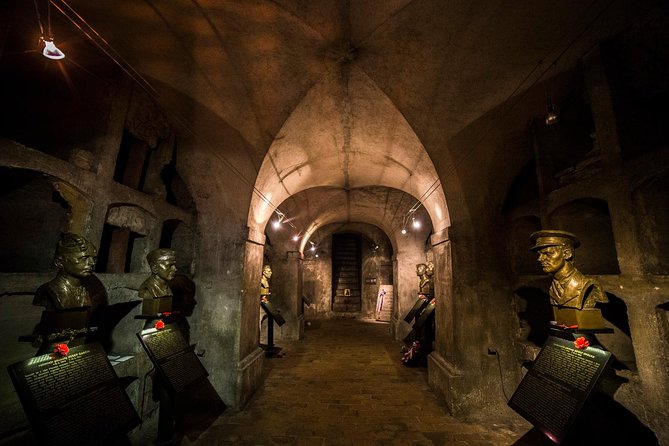
Prague does not present WWII in the same way as cities marked by vast ruins, preserved battlefields, or former ghettos. Much of the historic center looks beautifully intact. That can make the occupation easy to miss unless someone points out what happened behind familiar façades.
This route fills that gap. It explains how the post-World War I settlement, economic collapse, nationalism, and Hitler’s rise shaped Czechoslovakia’s fate. You then move through the Munich Agreement, the creation of the Protectorate of Bohemia and Moravia, Nazi rule, Czech resistance, Heydrich’s assassination, and the May 1945 uprising.
I appreciate that the tour begins before 1939. Without that groundwork, the Munich Agreement and the loss of Czech sovereignty can seem like isolated events. Instead, you get a cause-and-effect story, followed by specific buildings and streets where the larger story played out.
This is also a tour about people. You hear about the resistance networks, the exiled government in London, parachutists sent into occupied territory, families who offered hiding places, and the civilians caught in the Nazi response. The subject is grim, but the guide’s job is to explain it clearly and respectfully rather than turn it into spectacle.
More recent history in Prague:
- Prague: Communism History and Nuclear Bunker Guided Tour
★ 4.7 · 2,417 reviews - Prague Communism History and Nuclear Bunker Tour
★ 5.0 · 1,742 reviews - Communism & Nuclear Bunker Tour + 70s Canteen Lunch (own expense)
★ 5.0 · 1,036 reviews
Starting in Old Town with the road to occupation
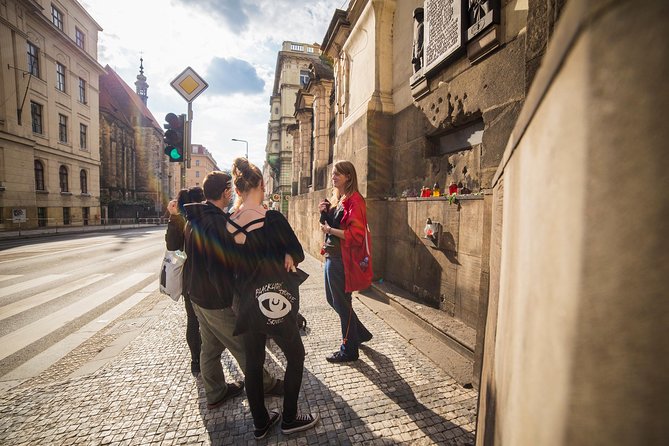
Meet your guide outside McGee’s Trips & Tickets at Týnská 627/7 in Prague 1. The meeting point is near the Old Town center, but make sure you locate the exterior spot in advance. One booking problem came from arriving at the wrong place, and the guide waited only a limited time before leaving, so this is not an appointment to approach casually.
The first historical stop is U Budovce. Here, the guide sets up the political and economic conditions after World War I. You learn about the Treaty of Versailles, the fall of major empires, the creation of new countries including Czechoslovakia, inflation, the Great Depression, and the growth of nationalist movements.
That opening talk lasts about eight minutes. It may feel broad compared with the later Prague locations, but it gives you the basic map of the period. If you already know European history well, this section may repeat familiar material. If you do not, it prevents the rest of the tour from becoming a parade of names and dates.
At Stone Bell House, the focus shifts to the Sudeten German Party, the Munich Agreement, and the creation of the Protectorate of Bohemia and Moravia. The nearby Gothic church adds a visual reminder that this is still the Old Town you came to see, even as the subject turns to the loss of national independence.
Old Town Hall and the daily reality of Nazi rule
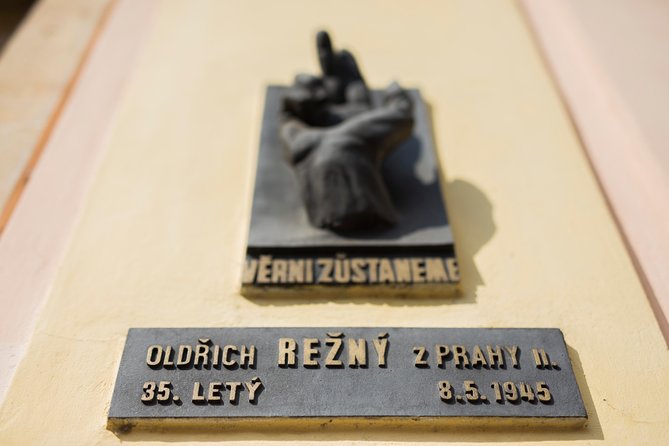
At Staroměstská radnice, you see the section of the Old Town Hall damaged during the Prague Uprising in 1945. The guide explains daily life during the occupation and the May uprising that helped bring the war in Prague to an end on May 8.
This is one of the route’s useful contrasts. The tour is not only about secret agents and dramatic attacks. It also asks what occupation meant for people living in the city: pressure from the authorities, changes in public life, fear, and the constant presence of Nazi power.
Celetná Street brings the story to November 17, 1939, when Czech students were executed and the universities were closed. The guide also discusses Konstantin von Neurath and Reinhard Heydrich, who arrived in September 1941 and changed the course of the Protectorate.
You should expect a lot of spoken explanation here. Some buildings look much as they do on any Prague walk, and there are no battle scenes waiting around the corner. The value comes from learning what occurred at or near these locations and seeing period photographs that help connect the present street to the wartime one.
Resistance safehouses and the road to Operation Anthropoid
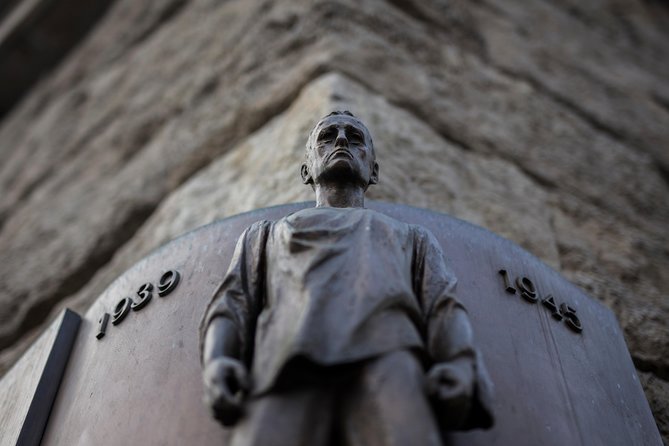
At Melantrichova, the tour turns toward the Czech resistance and the exiled government in London. You hear about Operation Benjamin, the Silver A and Silver B missions, and the apartment connected with Josef and Marie Svatoš.
The building served as an important resistance hideout. It is the sort of place that can disappear into the city unless a guide identifies it. You will not necessarily find a grand memorial or a dramatic façade. Instead, you stand before an ordinary building and consider the danger involved in sheltering people hunted by the Nazi authorities.
This stop is especially useful because it shows that Operation Anthropoid was not simply a two-man attack. The paratroopers needed communications, shelter, food, transport, local contacts, and people willing to accept enormous risks. The wider network made the operation possible, and the wider network also suffered when the Nazis began searching for those responsible.
At the Baťa department store, the guide explains the assassination of Heydrich and the use of the store to display objects found at the scene. It is another reminder that the event was investigated and publicly manipulated by the Nazi regime. The setting is commercial and familiar, which makes the story feel close to everyday Prague rather than sealed away in a museum.
Same streets, a different kind of outing:
- Prague: 50-Minute Sightseeing Evening Cruise
★ 4.2 · 33,780 reviews - Prague: Medieval Dinner with Unlimited Drinks
★ 4.4 · 19,847 reviews - Prague: Skip-the-line Castle Ticket and Optional AudioGuide
★ 4.3 · 11,121 reviews - Prague: Castle Tour with Local Guide and Entry Ticket
★ 4.6 · 10,422 reviews
Wenceslas Square, Lidice, and the cost of reprisal
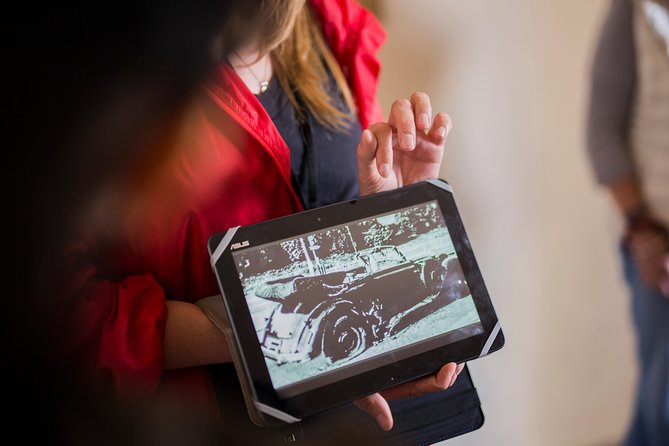
Wenceslas Square introduces the destruction of Lidice. On June 10, 1942, the men of the village were executed and the women were sent to concentration camps. Lidice itself ceased to exist.
This is a difficult section, and the tour does not soften the consequences of Heydrich’s assassination. The subject includes collective punishment, terror, and the attempt to erase a community. It also explains why Operation Anthropoid must be understood alongside the Nazi retaliation, not as an isolated tale of military daring.
The Esplanade Hotel follows with a glimpse of the occupying power’s social world. It was a favored hotel of the Nazis during the occupation. That detail helps show the separation between those who controlled the city and those who endured their rule.
At Petschek Palace, you learn about the Gestapo headquarters where Czechoslovaks were interrogated, tortured, and killed. The guide also covers Karel Čurda’s betrayal on June 16, 1942, which became a turning point in the search for the resistance fighters.
This is one of the more sobering locations because the building’s role was not symbolic. It was a working center of Nazi repression. You may find that the route’s impact grows through these connections: a safehouse, the attack site, a place of public display, a destroyed village, and an interrogation center all become part of one chain of events.
New Town, covert missions, and Prague under attack
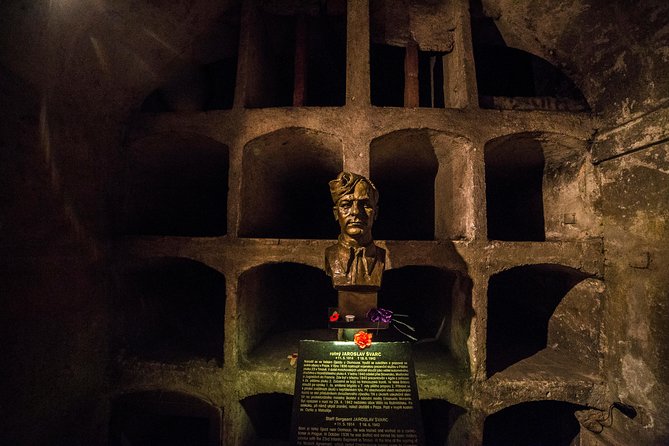
The route passes the National Museum and continues through Vodičkova in Prague’s New Town. At Vodičkova, the guide covers two unsuccessful covert operations, Tin and Bioscop.
These stops show that the resistance story included more than Operation Anthropoid. Some missions failed, some participants were betrayed, and many efforts never became famous. That wider view keeps the tour from treating the assassination as the only meaningful act of Czech resistance.
At Karlovo náměstí, the subject turns to the bombing of Prague in 1945. Compared with cities that suffered much heavier wartime destruction, Prague’s physical survival can make its wartime experience seem less severe. This stop corrects that impression without pretending the city endured the same scale of damage as places hit by prolonged battles.
The New Town section also changes the rhythm of the walk. By this point you have spent considerable time listening, standing, and moving between locations. Wear comfortable shoes and expect a moderate level of physical activity. The route is not described as strenuous, but it is not a seated museum visit either.
St. Cyril and Methodius Cathedral: the tour’s strongest stop
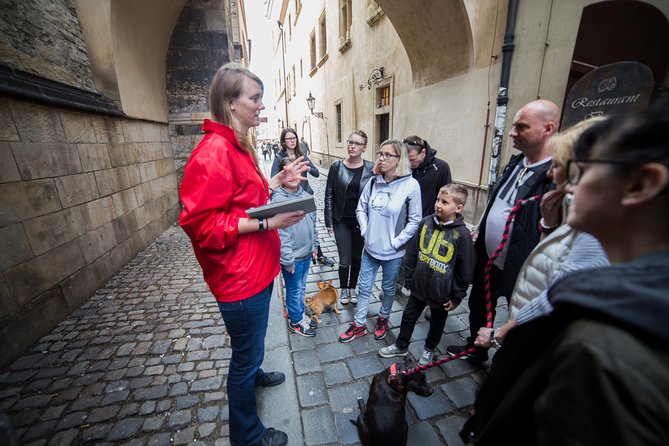
The visit to St. Cyril and Methodius Cathedral is included in the price and lasts about 15 minutes with the guide. This is the most important interior stop and the point where the earlier explanations come together.
The cathedral was the last hiding place of the Czech and Slovak paratroopers involved in the resistance effort after Heydrich’s assassination. The church and crypt carry the weight of the Nazi search, the betrayal, and the fighters’ final defense.
The visit is atmospheric without needing decoration. The space itself, combined with the story already built during the walk, gives the operation a human scale. You are no longer hearing only about a political decision in London or a name in a textbook. You are standing in the place where the consequences reached their end.
The tour finishes at the National Memorial to the Heroes of the Heydrich Terror, including the crypt where the paratroopers made their last stand. Allow yourself time to take in the memorial rather than treating it as a quick photo stop. The crypt is the part I would least want to rush.
One practical point: the tour ends at Resslova 9a in New Town, not back at the Old Town meeting point. That is helpful if you are continuing through Prague, but plan your next appointment from the cathedral rather than from Týnská.
Guide style and group experience
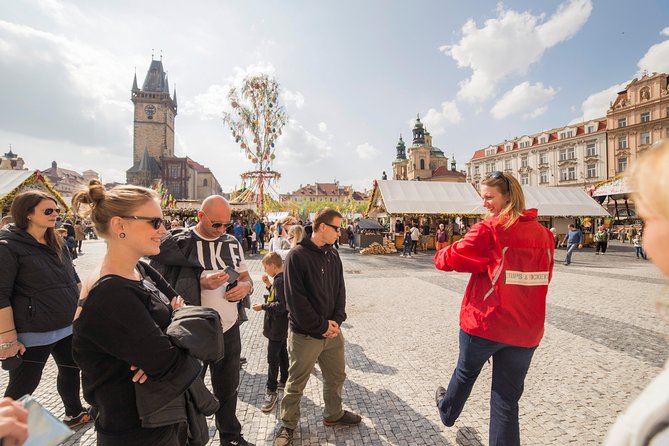
The guide makes a real difference here because much of the route depends on explanation. The strongest guides named in the available feedback include Allen, Daniel, Dana, Martin, Robin, Pablo, Richard, and Rafek. Allen and Daniel are repeatedly described as enthusiastic and well prepared, while Dana is praised for patience and friendliness. Robin is noted for clear English and strong storytelling.
That does not mean every guide will deliver the same experience. One account describes a very earnest presentation that felt too slow and fact-heavy, with too much time spent standing at the first stop. Another points out that the tour can include many family names and details. Those are fair cautions for anyone who prefers a lighter, faster walk.
On the other hand, the format can work very well if you want detail. A small group may give you room to ask questions, and one guide adapted the route for people who had an evening concert. The advertised maximum is 30 people, so the exact group size can vary.
Because the tour is in English, you should be comfortable following a sustained historical explanation. Several guides are praised for clear English, but the subject includes many Czech names, resistance groups, military terms, and dates. Taking a few notes on your phone may help you keep the people and operations straight.
Price, timing, and practical value
At $33.88 per person, this is a good value if you want a guided account of Prague’s WWII history rather than simply visiting the cathedral on your own. You pay for about three hours of guiding, the route through central Prague, and admission to St. Cyril and Methodius Cathedral and the memorial crypt.
The price is less compelling if you want a tour packed with visual attractions. Several stops are streets, buildings, or exteriors. The guide may show photographs or explain what happened where little physical evidence remains. You are paying for context and access, not for a succession of large museum displays.
The start time is 1:30 p.m., which leaves your morning free for Prague Castle, the Jewish Quarter, or Old Town sightseeing. The tour’s end in New Town also makes it easy to continue with nearby plans, though you should not schedule something tightly because the experience lasts around three hours.
Wear shoes suitable for walking and standing. Food and drinks are not included, and hotel pickup is not provided. Children up to age six are free, but the subject matter is not recommended for small children. Children must be accompanied by an adult, and service animals are allowed.
Free cancellation is available up to 24 hours before the start time. If the minimum number is not met and the tour is canceled, you are offered another date or experience, or a full refund.
Who should book this Prague WWII walk
I would choose this tour if you want to understand how Prague moved from interwar uncertainty to Nazi occupation, resistance, reprisal, and liberation. It is particularly useful if you have seen the film Anthropoid, visited related memorials, or simply want to put Czech wartime history into its actual streets.
It also works for people who are not self-described history enthusiasts, provided they are willing to listen for three hours. The route has enough human stories to keep the subject grounded, and the crypt gives the experience a clear emotional focus.
I would skip it if you want a relaxed architecture walk, a short introduction to Prague, or a route with little standing. The material is serious, the names and dates come thickly, and some stops depend almost entirely on the guide’s delivery.
Should you book the Operation Anthropoid tour?
Book it if the story of Czech resistance interests you and you value places over polished displays. The walk’s greatest strength is its connection between ordinary Prague streets and extraordinary risks taken inside them. The cathedral crypt at the end gives the tour a memorable purpose.
Before booking, confirm the meeting point and leave enough time to find Týnská 627/7. If you can handle a detailed, sometimes heavy presentation, the $33.88 price is fair for three hours of guiding and access to the resistance memorials. If you prefer a quicker or more visual experience, visit the cathedral independently and choose a shorter city walk instead.
FAQ
How long does the World War 2 and Operation Anthropoid tour last?
The tour lasts approximately three hours, including the walking route, the cathedral visit, and the memorial crypt.
Where does the tour start?
It starts outside McGee’s Trips & Tickets at Týnská 627/7 in Prague 1. The listed start time is 1:30 p.m.
Where does the tour end?
The tour ends at the Orthodox Cathedral of Saints Cyril and Methodius and the National Memorial to the Heroes of the Heydrich Terror at Resslova 9a in Prague 2.
Is the tour offered in English?
Yes. English is the listed tour language.
What is included in the price?
The price includes a local guide and a visit to St. Cyril and Methodius Cathedral. Food, drinks, hotel pickup, and hotel drop-off are not included.
Is the tour suitable for young children?
The experience is not recommended for small children because it covers serious WWII events. Children up to age six are free, and children must be accompanied by an adult.
How many people can join the tour?
The maximum group size is 30 people.
Can I cancel for a full refund?
You can cancel for a full refund up to 24 hours before the experience begins. Cancellations or changes made less than 24 hours before the start time are not accepted for a refund.
Just added in Prague
- 1 hour boat cruise with fragrant coffee and homemade strudel★ 4.3 · 27 reviews
- A delightful wine tasting in the scenic countryside with lunch★ 5.0 · 74 reviews
- 2 Hours Wine Tasting in a Historical Cellar in Krizikova★ 5.0 · 51 reviews
- From Prague: Karlstejn Castle Skip-the-Line Ticket and Tour★ 4.2 · 117 reviews
- Prague: Karlštejn Castle Guided Tour with Entry Ticket★ 4.3 · 139 reviews
- Wine Tasting and Walking Tour of Prague★ 5.0 · 157 reviews
- Karlovy Vary Day Trip from Prague★ 4.0 · 147 reviews
- Prague-Vienna One-Way Sightseeing Day Tour★ 5.0 · 108 reviews
Communism & WWII History Tours, compared.
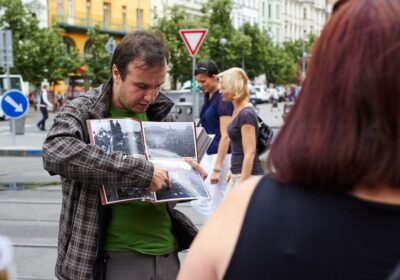
Communism History and Nuclear Bunker Guided Tour
Read our review →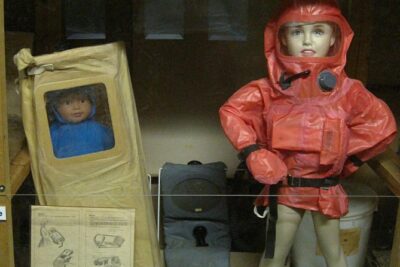
Prague Communism History and Nuclear Bunker Tour
Read our review →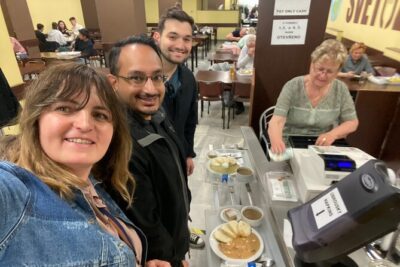
Communism & Nuclear Bunker Tour + 70s Canteen Lunch (own expense)
Read our review →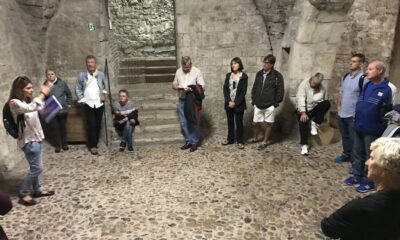
WWII Guided Tour & The Crypt of Operation Anthropoid
Read our review →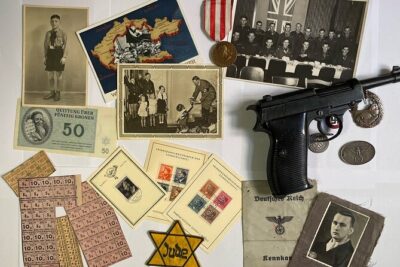
WWII in Prague Tour & The Crypt of Operation Anthropoid
Read our review →
Communism and Bunker Tour with 70s Canteen Lunch
Read our review →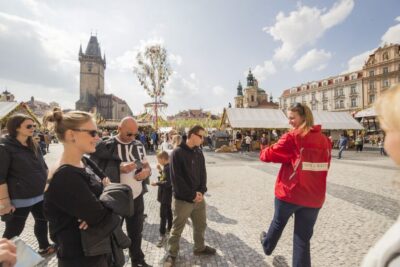
World War 2 and Operation Anthropoid Walking Tour
Read our review →Browse the lists this tour appears in