
Reviewed · COMMUNISM & WWII HISTORY TOURS
Second World War & Communism (Tip-based 3 hour tour)
Prague’s prettiest streets often hide its hardest stories. This three-hour walk follows the city from Nazi occupation and the destruction of Czech Jewish communities to the Prague Uprising, Communist rule, the 1968 invasion, and the Velvet Revolution. It finishes in the crypt where the soldiers of Operation Anthropoid made their last stand.
I like the clear timeline and the way the tour links major events instead of treating WWII and Communism as separate subjects. I also like the ending at Saints Cyril and Methodius Cathedral, where the free museum entry gives the story a physical, solemn finish. Guides including Kamil, Václav, Katerina, and Kuba have been praised for clear storytelling and personal insight.
The main caution is the walking. The route covers about 5 kilometers, much of it on city streets, and group size may vary. Although the activity is presented as a private experience, one departure had 24 people, so confirm the expected group size if that matters to you.
Key points before you book
- A 100-year Czech story in three hours: The route connects independence, Nazi occupation, WWII resistance, Communism, 1968, and the Velvet Revolution.
- The strongest stop comes last: Entry to the Museum of Anthropoid Operation is included at the cathedral crypt.
- Tip-based pricing changes the value calculation: The listed price is only $3.60 per person, but you decide what the guiding was worth.
- Several guides lead the tour: Kamil, Václav, Katerina, and Kuba are named in the feedback, with particular praise for clear explanations and strong storytelling.
- Expect a serious walking tour: The route is roughly 5 kilometers and is not recommended for people with mobility problems.
- The group size needs checking: One departure had 24 people despite an advertised limit of eight.
Why this walk gives Prague’s recent past a shape
Many Prague sightseeing walks focus on the castle, medieval lanes, and grand churches. This one shifts your attention to the last century, when the city passed through independence, occupation, dictatorship, Soviet pressure, and democratic change.
That sequence matters. You hear how Czechoslovakia became independent after the First World War, why Hitler occupied it so early, and what happened to Czech soldiers during WWII. Later stops show how the end of the war did not bring a simple return to normal life. Instead, the political vacuum helped Communism take hold.
I like that the route moves through ordinary city spaces. Wenceslas Square is not just a broad boulevard for photographs. It becomes the setting for Communist rule, the 1968 invasion, and Jan Palach’s self-immolation. Národní třída is not just a shopping street. It becomes the place where the Velvet Revolution gained force.
The format also suits people who learn best through movement. You are not sitting in one museum for three hours. You move from monument to synagogue, square, public art, riverfront landmark, and cathedral. The city itself becomes the teaching tool.
More recent history in Prague:
- Prague: Communism History and Nuclear Bunker Guided Tour
★ 4.7 · 2,417 reviews - Prague Communism History and Nuclear Bunker Tour
★ 5.0 · 1,742 reviews - Communism & Nuclear Bunker Tour + 70s Canteen Lunch (own expense)
★ 5.0 · 1,036 reviews
Starting at Klárov: independence, occupation, and resistance
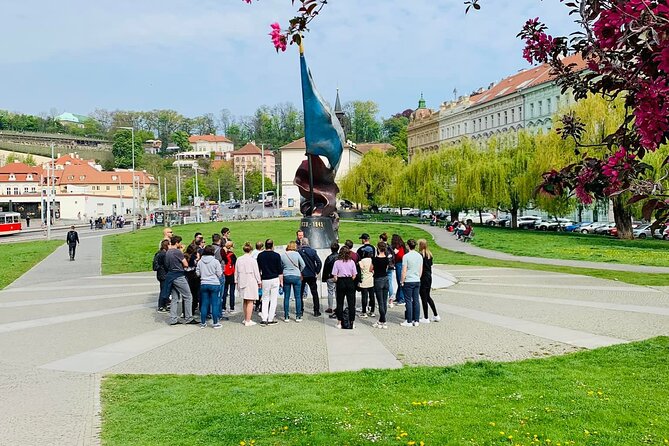
The tour begins at Metrocafe Klárov in Malá Strana, near two monuments: the Memorial to the Second Resistance and the Winged Lion Memorial. This opening gives the guide room to explain how modern Czechoslovakia began after the First World War.
The first 20 minutes set the political stage. You learn why Czechoslovakia was among the first countries occupied by Hitler and what became of its soldiers during WWII. That background is useful because it prevents the rest of the walk from becoming a string of disconnected dates.
The monuments also help ground the subject. Rather than starting with a lecture in a hotel lobby, the guide begins beside public memorials tied to war and resistance. I would arrive a few minutes early, since this is a busy part of Prague and the exact meeting point is a café address rather than a famous monument name.
Pinkas Synagogue and the fate of Czech Jewish communities
At Pinkas Synagogue, the subject turns from national politics to individual lives. The guide explains what happened to Czech Jewish people during WWII, how many managed to emigrate, and what happened to those who remained.
The stop lasts about 15 minutes. That may sound brief, but the subject is heavy, and the walk’s wider purpose is to place Jewish persecution within the story of occupation and resistance. You should expect a focused explanation rather than a long indoor visit. Admission to this stop is listed as free, while the included museum entry comes later at the Anthropoid memorial.
This section is important because it keeps the war from being told only through military events. The tour also asks what occupation meant for families, communities, and people forced to make impossible choices.
Old Town Square and the Prague Uprising
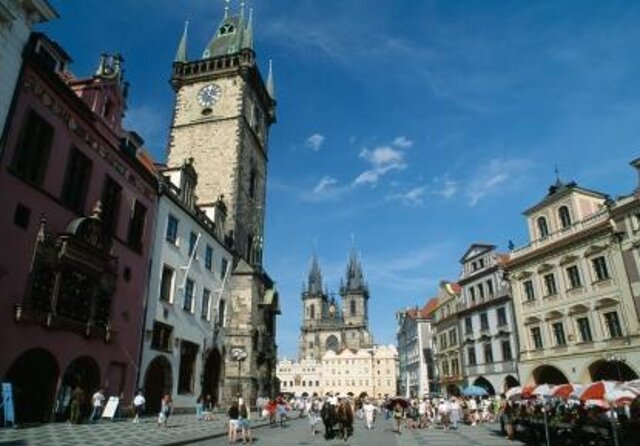
At Staroměstské náměstí, beside the Old Town Hall, the guide explains the Prague Uprising and the final phase of WWII. The stop takes about 20 minutes.
The key value here is the connection between military defeat and political change. The end of the war did not simply restore the old order. The guide explains how the events of 1945 helped create the conditions for the rise of Communism in Czechoslovakia.
Old Town Square can be crowded and noisy, so staying close to the guide will matter. A larger group may make this stop harder, especially when the square is full. One strength of the route is also a practical challenge: you are hearing serious history in some of Prague’s busiest public spaces.
A few more things to do in Prague worth a look
- Prague: 3-Hour Walking Tour of Old Town & Prague Castle
★ 4.7 · 5,696 reviews - Prague: 3-Hour Old Town and Prague Castle Tour in German
★ 4.8 · 5,671 reviews - 3-hour Complete Prague Bike Tour
★ 5.0 · 3,674 reviews - Prague 3-hour Afternoon Walking Tour including Prague Castle
★ 5.0 · 1,899 reviews
Wenceslas Square: Communist rule, 1968, and Jan Palach
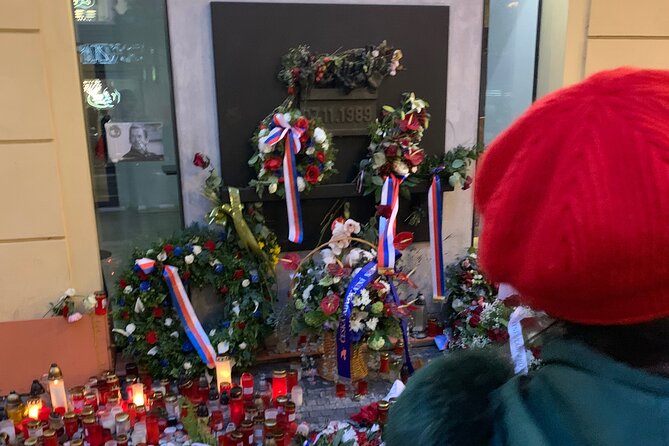
Wenceslas Square receives about 20 minutes and carries some of the tour’s most recognizable political stories. Here you learn what happened after Communism began, why Warsaw Pact armies invaded Czechoslovakia in 1968, and where Jan Palach set himself on fire.
This stop is especially useful if your knowledge of the Cold War is broad but not very Czech-specific. The guide connects government decisions, foreign military intervention, and public resistance in one place.
The square also shows how Prague’s modern political memory remains part of daily life. It is a major urban space, not a sealed memorial site. You might be standing among shops, traffic, and passing pedestrians while hearing about events that changed the country’s direction.
Guides have received particular praise for explaining this period in a linear way. That is valuable here, since the sequence can otherwise become confusing: Communist consolidation, the reform movement of 1968, the invasion, later repression, and the protest that followed Jan Palach’s death.
Kafka’s rotating head and art under Communism
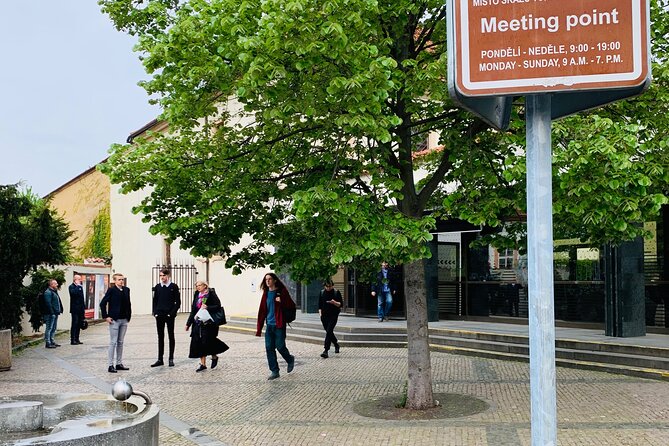
At OC Quadrio, the tour pauses for about 15 minutes beside the Rotating Head of Kafka. The sculpture provides a visual change after the political weight of Wenceslas Square.
The guide uses the artwork to discuss art during Communism. This is a good reminder that political control affects more than elections and newspapers. Artists also had to work within, around, or against official expectations.
The stop is short, but it adds range to the tour. You are not only hearing about governments and soldiers. You are also considering how culture responded to life under a restrictive system.
Národní třída and the Velvet Revolution
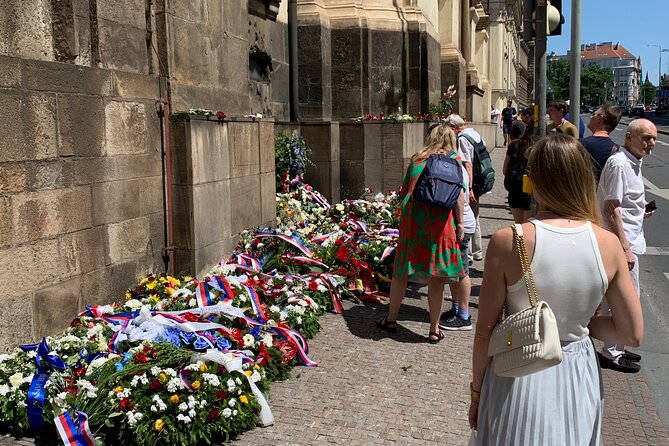
The next stop is the sculpture of hands reaching from a wall on Národní třída. The subject is the Velvet Revolution and the fall of Communism, with about 15 minutes devoted to the story.
This section brings the tour closer to the present. The guide explains how public opposition grew and how the Communist system ended. The location makes the change feel immediate because Národní třída is still a central city street rather than a remote historical site.
I like the way this stop follows the art discussion. The sculpture gives you a public symbol of protest, while the guide supplies the political events behind it. You get both the place and the meaning.
The National Theatre and Václav Havel
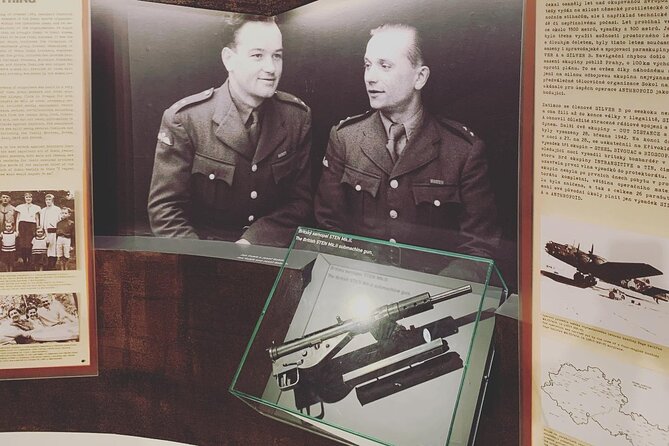
At the National Theatre, the guide introduces Václav Havel and explains his role during the Velvet Revolution. The stop lasts around 10 minutes.
Havel matters here not just as a later president, but as a writer and dissident who became a major figure in the movement against Communist rule. The guide places him in the story of 1989 and explains his role as Czechoslovakia moved toward democracy.
This is a short stop, so you should not expect a full biography. Its purpose is to give a human face to the political transition and connect the street protests with the leadership that followed.
Dancing House and the Valentine’s Day bombing
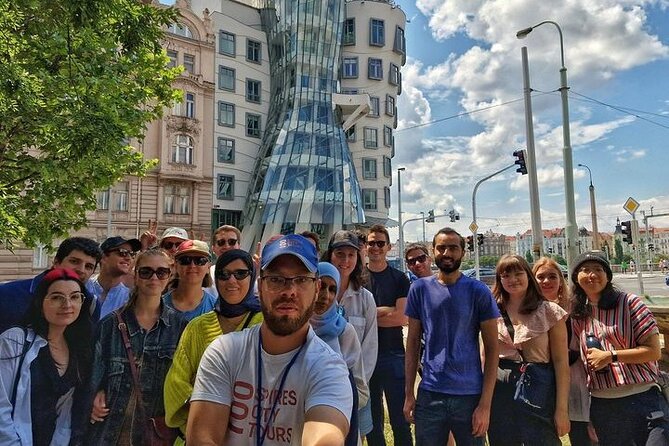
The walk continues to the Dancing House for about 10 minutes. The guide shows you the landmark and tells the story of the Valentine’s Day bombing.
This is one of the route’s more unexpected turns. The Dancing House is usually treated as modern architecture, but the tour uses it to add another chapter to Prague’s wartime story. It also gives you a change of pace before the final and most emotionally serious stop.
The cathedral crypt is only about a minute from the Dancing House or Charles Square, so the route remains practical at this stage. If you have limited stamina, this is also a useful point to understand how close you are to the finish.
Operation Anthropoid at Saints Cyril and Methodius Cathedral
The tour ends at the Orthodox Cathedral of Saints Cyril and Methodius on Resslova Street. The final section lasts about 20 minutes and covers Operation Anthropoid, described as the most important achievement of the Czechoslovak resistance during WWII.
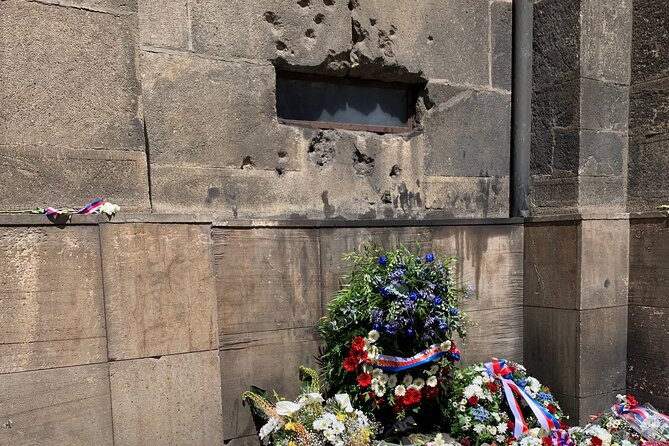
The experience includes entry to the Museum of Anthropoid Operation. The tour ends in the crypt, which served as the hideout for the soldiers involved in the operation. This is more than a final lecture stop. You enter the actual memorial space connected to the story.
For many people, this will be the most memorable part of the walk. The earlier stops explain the country’s political setting, while the crypt brings the resistance story down to a human scale. You finish not with a broad political summary, but with a specific place, a dangerous mission, and the consequences faced by those who took part.
Animals are not allowed inside the war memorial, although service animals are allowed on the tour generally. Keep this distinction in mind if you are traveling with an animal.
The guides and the storytelling style
The strongest praise has gone to the guides’ ability to make difficult material easy to follow. Kamil is described as especially strong on historical detail and personal passion. Václav has been praised for presenting the story clearly and in order, while also managing a fairly large group in city streets.
Katerina is noted for covering WWII, Communism, and the present day in an entertaining way. One account also points to first-hand stories about life under Communism. Kuba is described as informative and easy to follow.
Guide assignments can change, so you should not assume a particular person will lead your departure. Still, the pattern is clear: this tour depends heavily on the guide. The stops provide the framework, but the quality comes from how well the guide links them.
The best approach is to ask questions as you go. This is a private activity according to the booking details, but the actual group size may vary. One departure included 24 people, even though a maximum of eight had been expected. If a small group is important to you, ask before booking.
Is the $3.60 price really the full cost?
The listed price is $3.60 per person, and the tour is tip-based. That means the initial payment is unusually low for three hours with an English-speaking guide and museum entry, but you should think of it as a starting price rather than the full measure of the experience.
The final value depends on your own judgment. One person specifically appreciated being able to pay what the experience felt worth and chose to contribute more than for similar tours. That is the sensible way to approach a tip-based walk. Bring enough cash or another accepted form of payment for a gratuity, although the supplied details do not specify the preferred method or amount.
The included museum entry improves the value because you get more than an outdoor walk. Still, do not book this expecting a fixed luxury tour at a bargain price. The format is built around guide tips, walking, and a changing group size.
Walking, timing, and who should skip it
The tour lasts about three hours and covers roughly 5 kilometers. You need moderate physical fitness, and the activity is not recommended for people with mobility problems.
There are no separate admission charges for the listed stops, and the Anthropoid museum entry is included. The route uses central Prague streets and is near public transportation, which makes reaching the start or continuing after the finish fairly easy.
I would wear comfortable shoes and plan for a steady pace. Because the tour moves through public squares and streets, it may be harder to hear if the group is large or the city is crowded. This is not a good choice if you want a seated, slow-paced experience.
Free cancellation is available up to 24 hours before the start time. Changes or cancellations inside that window are not refunded, and the operator can offer another date or a full refund if the minimum number of people is not reached.
Should you book this Prague history tour?
I would book it if you want a serious introduction to Prague’s 20th-century story and prefer learning through places rather than displays alone. It is especially suitable for WWII and Cold War history fans, first-time visitors who already plan to see the castle and Old Town, and anyone who wants to understand the human cost of occupation and dictatorship.
I would hesitate if you have mobility limits, dislike walking several kilometers, or need a guaranteed small group. I would also confirm the group size before booking, since the expected number and actual departure size may not always match.
For $3.60 upfront, the risk is low, especially with the included Anthropoid museum entry. Just remember that the tip is part of the business model. If your guide gives you the clear, thoughtful story that Kamil, Václav, Katerina, and Kuba have been praised for, budget to reward that work fairly.
FAQ
How long does the Second World War and Communism tour last?
The tour lasts approximately three hours.
What language is the tour offered in?
The tour is offered in English with an in-person certified guide.
Where does the tour start?
It starts at Metrocafe Klárov 51, 118 00 Praha 1-Malá Strana, Czechia.
Where does the tour end?
It ends at the Orthodox Cathedral of Saints Cyril and Methodius on Resslova Street, in the crypt connected with Operation Anthropoid.
Is museum entry included?
Yes. Entry to the Museum of Anthropoid Operation is included.
How much walking is involved?
The route covers about 5 kilometers, and participants should have a moderate level of physical fitness.
Is the tour suitable for people with mobility problems?
It is not recommended for people with mobility problems.
Can I cancel for a full refund?
Yes, if you cancel at least 24 hours before the experience start time. Cancellations made less than 24 hours in advance are not refunded.
Just added in Prague
- World War II 4WD Tour from Prague with Lunch★ 4.4 · 3 reviews
- Prague: Historical Walking Tour with Focus on World War 2★ 4.3 · 12 reviews
- WWII and Communism History in Prague’s Old Town Private Tour★ 5.0 · 4 reviews
- Unique salt cave in Prague★ 4.9 · 10 reviews
- Walking tour of Prague in french: Old Town & Charles Bridge★ 4.9 · 62 reviews
- Prague: Market Tour and Traditional Czech Cooking Class★ 4.7 · 19 reviews
- Ultimate Unlimited Beer Pong with Czech Beer★ 4.6 · 5 reviews
- Walking tour of Prague in French : Nové Město★ 4.9 · 16 reviews
Communism & WWII History Tours, compared.
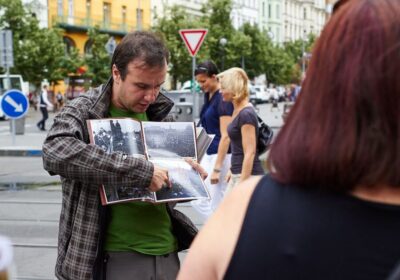
Communism History and Nuclear Bunker Guided Tour
Read our review →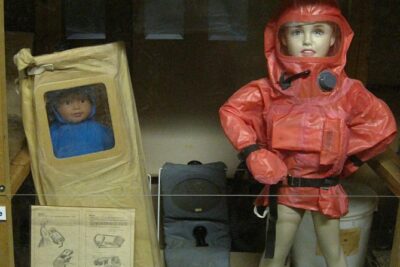
Prague Communism History and Nuclear Bunker Tour
Read our review →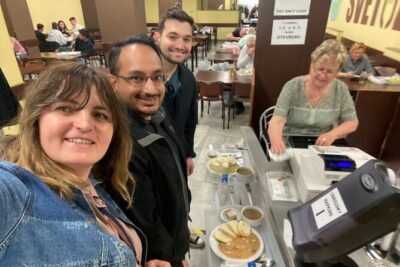
Communism & Nuclear Bunker Tour + 70s Canteen Lunch (own expense)
Read our review →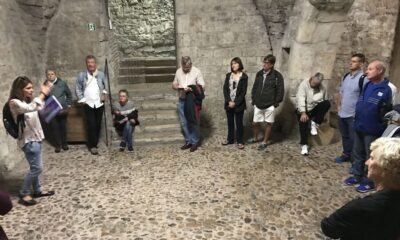
WWII Guided Tour & The Crypt of Operation Anthropoid
Read our review →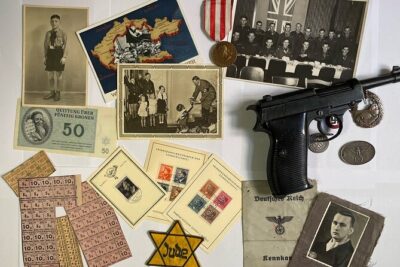
WWII in Prague Tour & The Crypt of Operation Anthropoid
Read our review →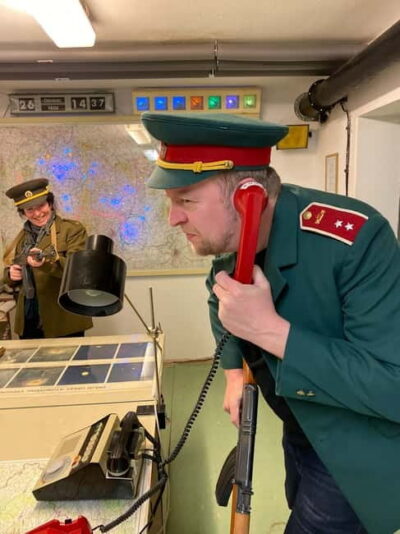
Communism and Bunker Tour with 70s Canteen Lunch
Read our review →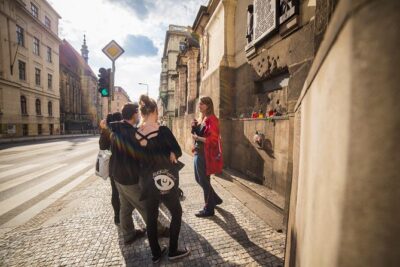
Small-Group World War 2 & Operation Anthropoid Tour in Prague
Read our review →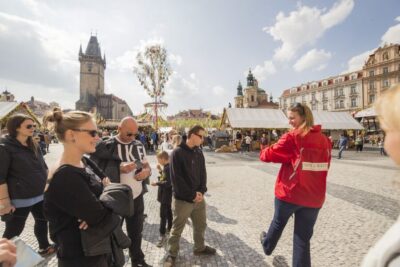
World War 2 and Operation Anthropoid Walking Tour
Read our review →Browse the lists this tour appears in