
Reviewed · CITY TOURS
Prague City Tour with Virtual Reality
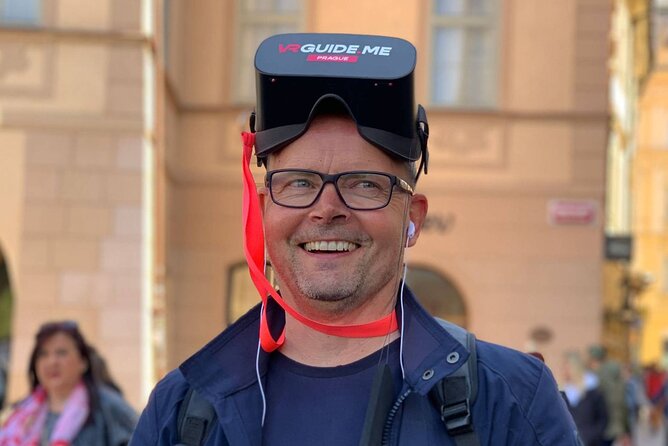
Prague’s past comes alive in an unusual way on this walking tour with virtual reality. At Old Town Square, you put on the glasses and see the square as it looked in 1900. Later, the same idea helps explain the Prague Spring near Wenceslas Square. It is history with a visual aid, not just another guide pointing at a building.
I like the small maximum of 15 people, since you have a fair chance to ask questions. I also like the mix of famous sights and less obvious stories, including the place where paratroopers hid during one of Prague’s most dramatic wartime episodes. The main consideration is weather: the tour requires good conditions, and the VR equipment may feel less appealing if you prefer a traditional, uninterrupted walk.
Key points at a glance
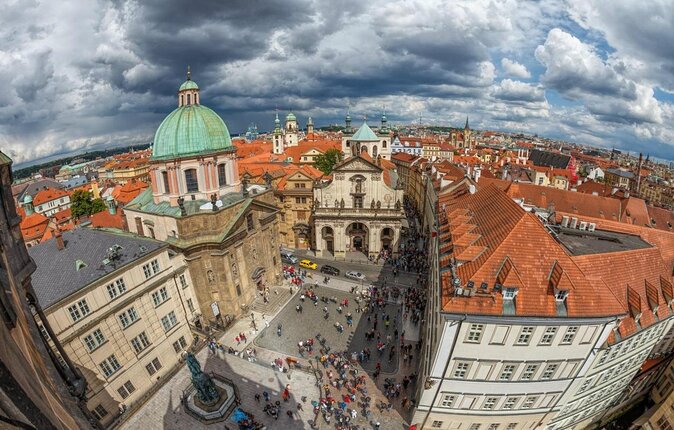
- VR scenes at Old Town Square: See the square as it appeared in 1900 instead of relying only on spoken description.
- A visual look at the Prague Spring: Use the glasses near the National Museum to connect the modern street with a major event in Czech history.
- A small group of no more than 15: You get more room for questions than on a large city walk.
- Marco’s patient guiding: Marco has experience explaining and translating for a multilingual group.
- A varied route: The walk includes the Astronomical Clock, a Gothic-Baroque church, Kafka’s Head, wartime history, Prague Castle views, and the Dancing House.
- A useful two-hour introduction: The route gives you a broad first look at central Prague without taking up a full day.
Why the VR approach works in Prague
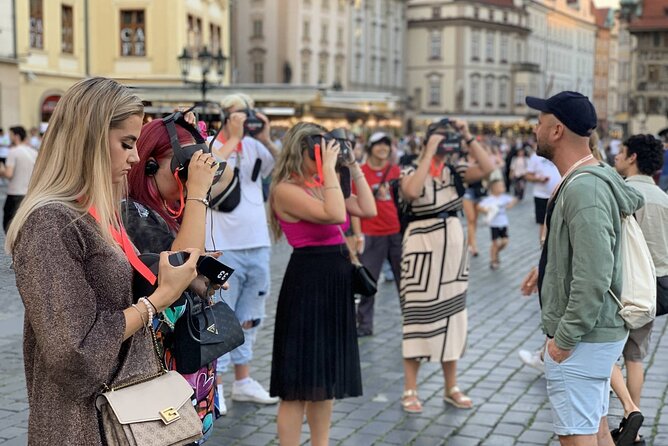
Prague can be hard to read at street level. A square may look calm and polished now, while its earlier appearance and political role are not obvious from the pavement. The VR scenes give you a quick visual comparison, which can help you understand change faster than a long speech.
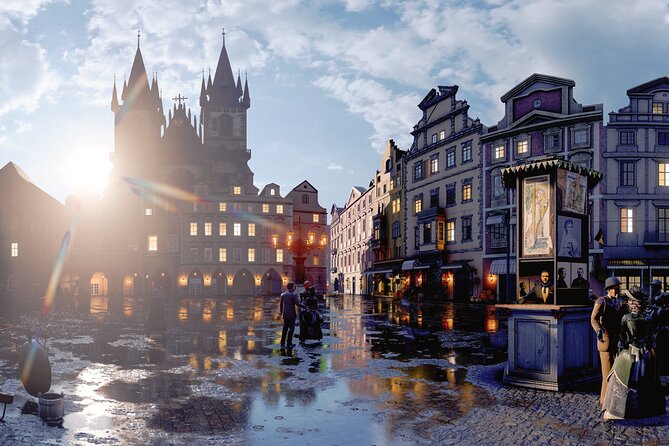
The first major example comes at Old Town Square. You see the present-day setting, then use the glasses to look back to 1900. That contrast is the heart of the experience. You are not only hearing that Prague has changed. You are given a picture of what the square looked like at another point in time.
The second VR stop deals with the Prague Spring near the country’s main square, with views toward the National Museum. Here, the equipment is used to explain a political event rather than an architectural change. That makes the tour useful for people who want more than pretty buildings and old legends.
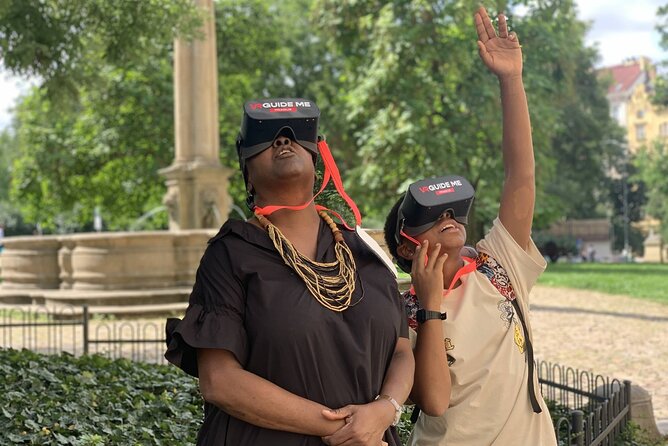
The glasses are an aid, not the whole show. Much of the value still comes from the guide’s explanation and your position in the city. If you enjoy history best when you can connect it to a real street corner, this format should work well. If you dislike stopping to put on equipment, you may prefer a standard walking tour.
A few more things to do in Prague worth a look
- Prague: Historic City Center Bus Tour with Top Sights
★ 4.4 · 2,360 reviews - Grand city tour on Scrooser in Prague
★ 5.0 · 1,910 reviews - Prague: City Highlights By Bus, Boat, and on Foot
★ 4.5 · 1,596 reviews
Starting at Panská Street at 10:30
The tour begins at Rafidein s.r.o.1, Panská 892, in Nové Město at 10:30 in the morning. The meeting point is near public transportation, which helps if you are making your way across Prague rather than staying in the immediate center.
You receive a mobile ticket, so keep the booking details easy to reach on your phone. The start is in central Prague, and the route finishes in another central area at the Dancing House. That makes the tour practical as a morning activity before lunch or as a way to get your bearings early in a Prague visit.
The timing matters. Two hours is long enough to cover several important stops, but short enough that you can still plan an afternoon museum visit, meal, or neighborhood walk. You should expect a walking experience rather than a bus tour, so comfortable shoes and attention to the weather are sensible choices.
The operator says most people can participate, and you can wear ordinary glasses with the VR equipment. The group limit is 15, which is small enough to keep the guide close without making the walk feel private or expensive.
Old Town Square in 1900
Old Town Square is the tour’s best introduction to the VR idea. You arrive in one of Prague’s most recognizable public spaces, hear about its past, and then see a version of the square from 1900 through the glasses.
That visual jump gives the stop a clear purpose. Instead of simply admiring the buildings, you compare the square you are standing in with an earlier view. For first-time visitors, this can make the history easier to follow. You can look at the current setting, then ask the guide about what changed and why.
This is also a good place to ask questions. With no more than 15 people, you are less likely to be lost at the back of the group. The walk is designed to include city secrets and less familiar stories, so you may hear details that a basic Old Town stroll skips.
Still, keep expectations sensible. The supplied information does not promise a long VR presentation at every stop. The glasses appear to be used at selected locations, with the guide filling in the rest. Think of them as short historical windows placed within a walking tour.
The Astronomical Clock and its famous story
The route includes Prague’s Astronomical Clock, one of the city’s signature sights. This stop focuses on its famous story, giving you a chance to hear the legend and meaning attached to the clock while standing near the real mechanism.
The clock is easy to photograph, but a guide can make the stop more useful than a quick picture. Listen for the details that explain why it has become such a strong part of Prague’s identity. The tour’s approach is to pair a well-known sight with context, rather than simply ticking it off a list.
Because Old Town Square and the clock can be busy, staying close to the guide matters. The small group helps here. You can also use this stop to ask for clarification if the guide moves between languages or if the story contains unfamiliar names and events.
Audio guides are available in several European languages. The exact language options are not specified, so check what is offered when booking if you need something other than English. The tour itself is offered in English, and the guide can work with a multilingual group.
Same streets, a different kind of outing:
- Prague: 50-Minute Sightseeing Evening Cruise
★ 4.2 · 33,780 reviews - Prague: Medieval Dinner with Unlimited Drinks
★ 4.4 · 19,847 reviews - Prague: Skip-the-line Castle Ticket and Optional AudioGuide
★ 4.3 · 11,121 reviews - Prague: Castle Tour with Local Guide and Entry Ticket
★ 4.6 · 10,422 reviews
Wenceslas Square and the Prague Spring
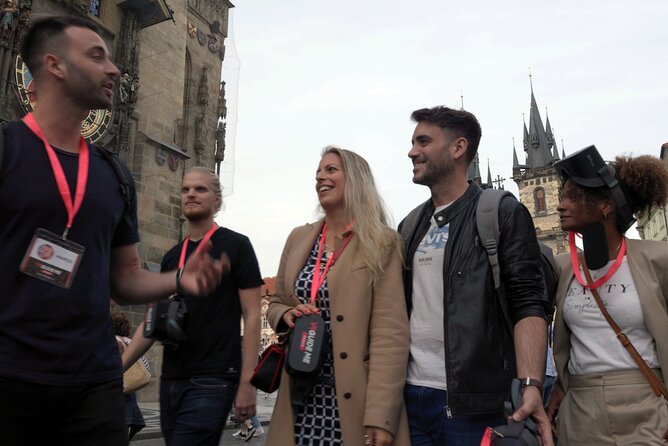
The next major history lesson takes place at the country’s main square, with views toward the National Museum. The VR glasses are used to help explain what happened during the Prague Spring.
This is an effective use of the technology because political history can be difficult to picture. A date and a name may not mean much until you see the setting connected to the event. Looking toward the National Museum while viewing a past scene gives the story a physical anchor.
You should not expect a full political course in one short stop. The tour lasts about two hours and covers many places. Instead, this section works as a clear introduction to a key moment in Prague’s modern past, with the guide adding the explanation that the VR image cannot provide on its own.
I especially like the change in mood here. The tour moves from medieval and early modern Prague into the city’s more recent political story. That keeps the walk from becoming a parade of old façades. You get a sense of Prague as a city shaped by both architecture and public events.
Inside a Gothic-Baroque church
The walk then enters a beautiful church with both Gothic and Baroque features. The focus is on its beauty and height, and this is one of the route’s quieter changes of pace.
After the open squares and street stops, stepping indoors gives you a chance to look up and take in the scale. The combination of Gothic and Baroque design also adds variety to the tour. You are not seeing one uniform version of Prague. You are seeing different periods layered into the city center.
The name of the church is not provided in the tour details, so you should not book this stop expecting a specific church by name. What is clear is that entry is part of the route and that the interior is valued for its height and decoration.
This stop may appeal to you most if you like architecture and sacred spaces. If your main interest is modern history or technology, it is a shorter visual pause between the VR sections and the modern art stop.
Kafka’s Head and Prague’s modern side
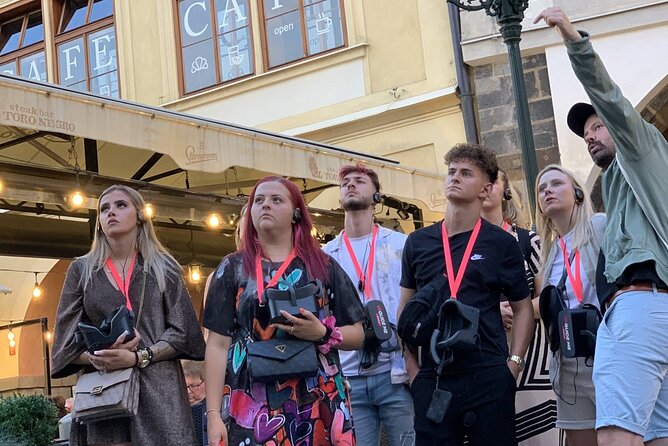
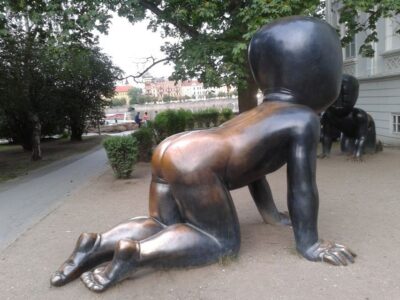
At Kafka’s Head, the route turns to modern art. This gives the tour a welcome break from clocks, churches, and old squares.
The attraction is a public artwork associated with Franz Kafka, and the stop is meant to let you enjoy modern art in the city rather than only looking backward. It also shows how Prague presents its literary and artistic identity in a contemporary setting.
You may find this stop more thought-provoking than traditionally beautiful. That is part of its value. A good city walk should show more than the postcard version of a place, and this stop helps widen the picture of Prague.
The visit is not described as a long museum session. Expect to see the work and hear about it as part of the route. If modern public art is not your priority, it will be brief enough not to take over the experience.
The Old Town Hall and the butcher of Prague
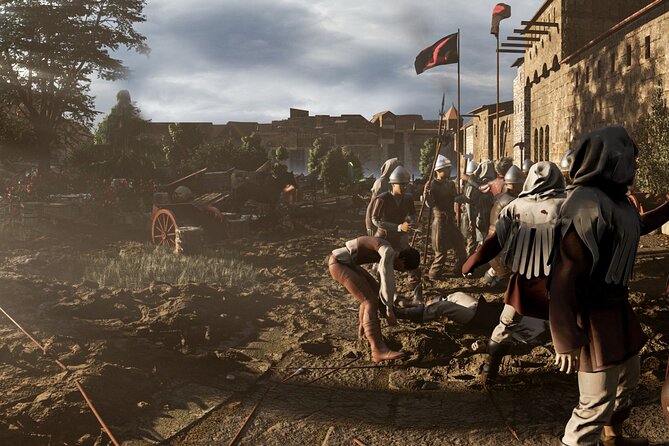
The tour visits the old town hall and includes a story about what happened there. The details supplied for the experience do not spell out the full event, so you should treat this as a guide-led history stop rather than expect a complete museum presentation.
The route then reaches the place linked with the story of the butcher of Prague. Here, paratroopers hid during one of the most striking episodes in the city’s history. This is the kind of stop that can change how you see an ordinary street or building. A location that might otherwise seem like a passing point becomes tied to courage, fear, and wartime decisions.
The story also adds a darker note to the walk. Prague is often presented through castles, towers, and romantic lanes, but its history includes hard and painful chapters. Including this location gives the tour more balance.
Because the route covers several eras, the guide has to keep each explanation focused. If you want a very detailed treatment of wartime Prague, you may need a separate museum or history walk later. On this tour, the strength is the connection between place and story.
Views of Prague Castle and the Dancing House finish
The tour ends with views of Prague Castle and the Dancing House. These are strong final sights because they bring together two very different images of the city.
Prague Castle gives you the familiar historic view, while the Dancing House represents the city’s more modern architectural character. Finishing at Jiráskovo nám. 1981/6 in Nové Město means you can continue exploring from a central location after the tour.
The Dancing House is also practical as an end point. You can stop for photos, enjoy the river-area setting, or simply use the location as a marker for the rest of your day. The route does not return you to the starting point, so plan for a one-way walk through central Prague rather than a loop.
This ending gives the tour a clear shape. You begin with an earlier version of Prague at Old Town Square, move through political, religious, artistic, and wartime stories, then finish with views that connect old Prague to its modern face.
Guide style, group size, and language
The tour is offered in English and includes audio guides in several European languages. The exact language list is not given, so confirm the available options before booking if that matters to you.
Marco is named as one of the guides. He is described as patient and professional when explaining and translating for a multilingual group. That point is important because the route covers many subjects in a short time. Clear explanations and patience can make a real difference when people in the group have different language needs.
The maximum group size is 15. That is not a private tour, but it is small enough for the guide to manage questions and keep the group together. I would choose this size over a large city tour if I wanted to ask about the Prague Spring, the church, or the wartime locations along the way.
The pace may feel active because the route includes several stops and ends at a different address. The tour description does not give a total walking distance, so you should plan for a normal city walk without assuming that transport will carry you between sights.
Is $43.14 a fair price?
At $43.14 per person, this costs more than a basic free walking tour, but it offers more than a standard orientation walk. You are paying for a small group, a guide, selected entry into a church, and VR elements at two important historical locations.
The value is strongest if you want a compact introduction to both old and modern Prague. In two hours, you see Old Town Square, the Astronomical Clock, the main square with National Museum views, a church interior, Kafka’s Head, the old town hall, the wartime hiding place, Prague Castle views, and the Dancing House.
The price is less compelling if you only want a long architectural tour or a full history lecture. The route moves across many subjects, so each stop has limited time. The VR equipment is the feature that makes this experience different from a typical city walk.
A small group also affects the value. With only 15 people, you have a better chance to hear clearly and ask questions. For a first morning in Prague, that combination can be worth the extra cost.
Practical details before you book
Your confirmation arrives at the time of booking, and the tour uses a mobile ticket. The starting point is near public transportation, and the activity is offered in English.
You can take part while wearing glasses. This is useful to know before booking because the VR equipment is central to the experience.
The tour requires good weather. If poor weather causes a cancellation, you are offered another date or a full refund. The activity also requires a minimum number of participants, so a cancellation for that reason comes with the choice of another date or experience, or a full refund.
For your own cancellation, you can receive a full refund if you cancel at least 24 hours before the start time. Changes or cancellations inside that 24-hour window are not accepted for a refund. The cut-off uses Prague local time.
Who should book this Prague VR tour?
I would choose this walk if you want a first look at Prague that mixes major sights with stories you might miss on your own. It suits people who enjoy seeing history in place and like a guide to connect a square, church, artwork, or street with a larger story.
It is also a good fit for a multilingual group, since audio guides are available in several European languages and Marco has experience explaining and translating for mixed-language participants.
Families and older visitors may appreciate the short two-hour format, though the route is still a walking tour and the distance is not specified. People who wear glasses can use the VR equipment.
You may want another option if you dislike technology on sightseeing tours, need a fully indoor activity, or want a deep study of just one period. The weather requirement and the quick pace between subjects are the main limits.
Should you book it?
Book this tour if you want a compact, visual introduction to Prague and like the idea of seeing the city at two points in time. The Old Town Square scene from 1900 and the Prague Spring presentation give the VR feature a real purpose. They are not just decoration.
I also like the route’s range. You get the Astronomical Clock and Prague Castle views, but you also see Kafka’s Head and hear about the paratroopers’ hiding place. At $43.14, the experience makes the most sense for a first or second day in Prague, when you want a clear route and a guide who can help you connect the pieces.
Skip it if you want a slow, highly detailed history tour or a fully indoor activity. For everyone else, the small group, two-hour length, named guide Marco, and unusual use of VR make this a practical way to see more than the usual Old Town postcard.
FAQ
Where does the Prague City Tour with Virtual Reality begin?
It begins at Rafidein s.r.o.1, Panská 892, Nové Město, 110 00 Praha 1, Czechia.
What time does the tour start?
The tour starts at 10:30 am.
Where does the tour end?
It ends at the Dancing House, Jiráskovo nám. 1981/6, 120 00 Praha 2-Nové Město, Czechia.
How long does the tour last?
The tour lasts approximately two hours.
What is the price?
The listed price is $43.14 per person.
Is the tour offered in English?
Yes. The tour is offered in English, and audio guides are available in several European languages.
How many people can join the tour?
The maximum group size is 15 travelers.
Can I wear glasses with the VR equipment?
Yes. The activity information says it is possible to take part while wearing glasses.
What happens if bad weather cancels the tour?
You will be offered a different date or a full refund.
Can I cancel for a full refund?
Yes. You must cancel at least 24 hours before the experience start time for a full refund. Cancellations or changes made less than 24 hours before the start time are not accepted.
Just added in Prague
- World War II 4WD Tour from Prague with Lunch★ 4.4 · 3 reviews
- Prague: Historical Walking Tour with Focus on World War 2★ 4.3 · 12 reviews
- WWII and Communism History in Prague’s Old Town Private Tour★ 5.0 · 4 reviews
- Unique salt cave in Prague★ 4.9 · 10 reviews
- Walking tour of Prague in french: Old Town & Charles Bridge★ 4.9 · 62 reviews
- Prague: Market Tour and Traditional Czech Cooking Class★ 4.7 · 19 reviews
- Ultimate Unlimited Beer Pong with Czech Beer★ 4.6 · 5 reviews
- Walking tour of Prague in French : Nové Město★ 4.9 · 16 reviews
City Tours, compared.
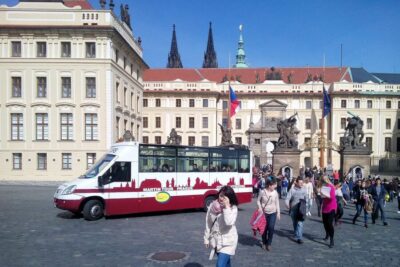
Historic City Center Bus Tour with Top Sights
Read our review →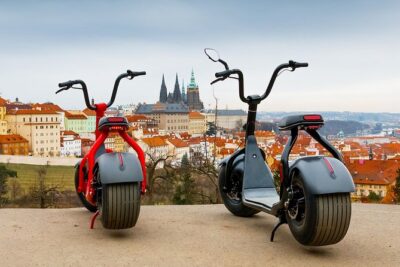
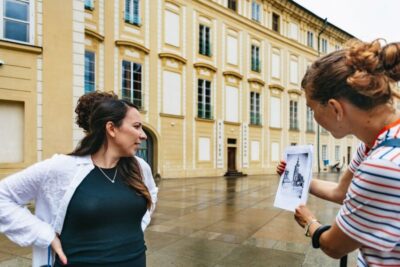
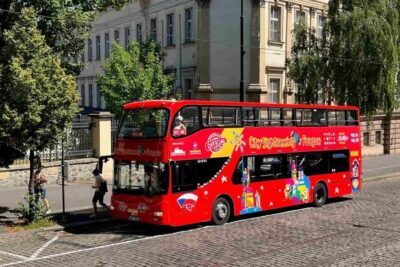
City Sightseeing HOHO Bus Tour & Optional Boat Tour
Read our review →
Browse the lists this tour appears in