
Reviewed · OLD TOWN & JEWISH QUARTER TOURS
WWII and Communism History in Prague’s Old Town Private Tour
Prague’s grand squares hide some very dark chapters. This private walk connects the Jewish quarter, the Gestapo headquarters, the 1945 Prague Uprising, and the 1989 Velvet Revolution in one clear story. I like the way it links Nazi occupation and Communist rule instead of treating them as separate history lessons. I also like the choice between a focused two-hour walk and a longer version with the Museum of Communism.
The main consideration is the price: at about $104 per person, this is not a bargain group stroll. You are paying for a private guide, flexible conversation, and a serious history focus. For the best value, choose the four-hour option if you want the museum and a fuller picture of life under Communism.
Key points at a glance
- Josefov begins the story: See the Maisel Synagogue and Spanish Synagogue while learning about the deportation of Czech Jews to Theresienstadt.
- Operation Anthropoid gets proper context: Your guide explains the Czech resistance and the German response during the occupation.
- The Old Town Square shows wartime damage: The Astronomical Clock and Old Town Hall were caught in the fighting of May 5 to 9, 1945.
- Petschek Palace adds a grim, personal layer: The former Gestapo headquarters brings the story down from politics to interrogation, torture, and resistance.
- Wenceslas Square links two dictatorships and a revolution: Nazi mass demonstrations gave way decades later to the public protests of the Velvet Revolution.
- The four-hour option includes the Museum of Communism: See exhibits on Prague Spring, the Soviet invasion of 1968, Jan Palach, censorship, political trials, and the 1989 revolution.
Why this Prague history walk works
This tour deals with a difficult period, but its route is easy to follow. You begin at the World of Franz Kafka in Josefov, then walk through the Old Town toward the former Gestapo headquarters and finish at Wenceslas Square. Each stop adds another piece to the story.
I like this approach because Prague’s 20th-century history is often scattered across memorials, plaques, museums, and ordinary-looking streets. A private guide can explain how the events connect. You can also ask about the details that interest you most, from resistance networks to daily life under Communist rule.
The guides work in English, French, German, Italian, Polish, Russian, Spanish, or Czech. Recent guide names include Sofija and Markéta. Sofija was praised for handling difficult questions and adding small anecdotes to the wider political story. Markéta was described as entertaining as well as highly informed. That combination matters here. A dry list of dates would make this subject feel like homework, while a guide who explains the human choices behind the events can keep the walk engaging.
The tour is private, so you are not tied to the pace of a large group. That can be useful at busy Old Town stops, where a guide can position the explanation around your interests rather than rushing through a fixed speech. The private format also makes it easier to ask about Czech resistance, Jewish persecution, the Prague Spring, or the Velvet Revolution as soon as a question occurs to you.
More of the old streets in Prague:
- Prague: Old Town Hall Tower Entry Ticket
★ 4.5 · 6,749 reviews - Prague: 3-Hour Walking Tour of Old Town & Prague Castle
★ 4.7 · 5,696 reviews - Prague: 3-Hour Old Town and Prague Castle Tour in German
★ 4.8 · 5,671 reviews
Josefov and the Nazi plan for Prague’s Jews
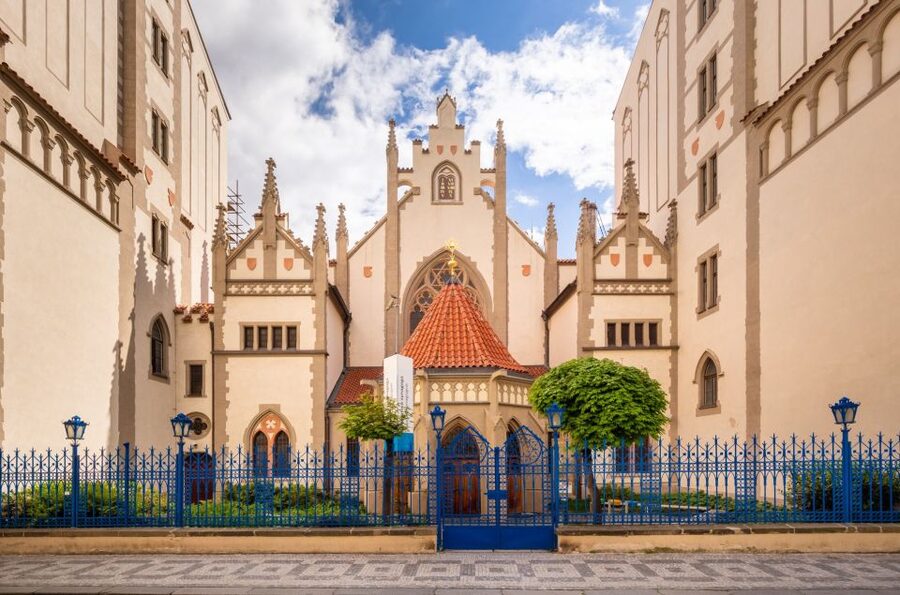
The walk opens in Josefov, Prague’s former Jewish quarter and one of the best-preserved Jewish ghettos in Europe. You see the Maisel Synagogue and the Spanish Synagogue from the route, while your guide explains what happened to Czech Jews during the German occupation.
The central subject is the transport of Czech Jews to the Theresienstadt concentration camp. You also hear about Hitler’s plan to create a museum of an extinct race in Prague. That detail shows how the Nazi regime tried not only to murder people, but also to control how their culture would be remembered.
This part of the tour is valuable because Josefov can otherwise be easy to experience as a collection of beautiful historic buildings. The synagogues and streets deserve admiration, but the guide gives them a sharper meaning. You are not simply looking at architecture. You are learning how Nazi racial policy targeted a living community and attempted to turn its cultural remains into propaganda.
The tour does not appear to include entry into the synagogues. The supplied details describe seeing the Maisel and Spanish Synagogues and learning about the history from outside. If you want interior visits, ask before booking, since the number of attractions depends on the option you select.
The Old Town Square and the May 1945 uprising

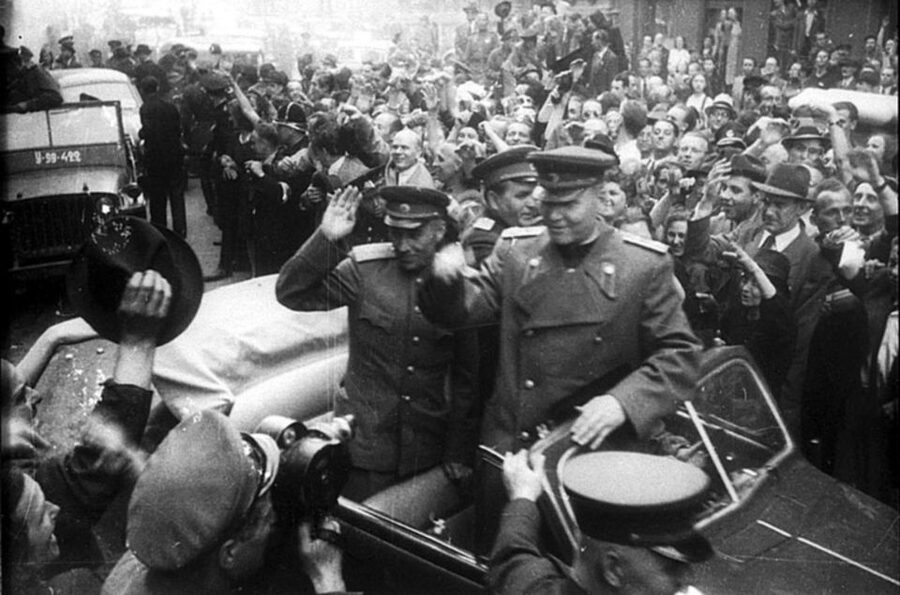
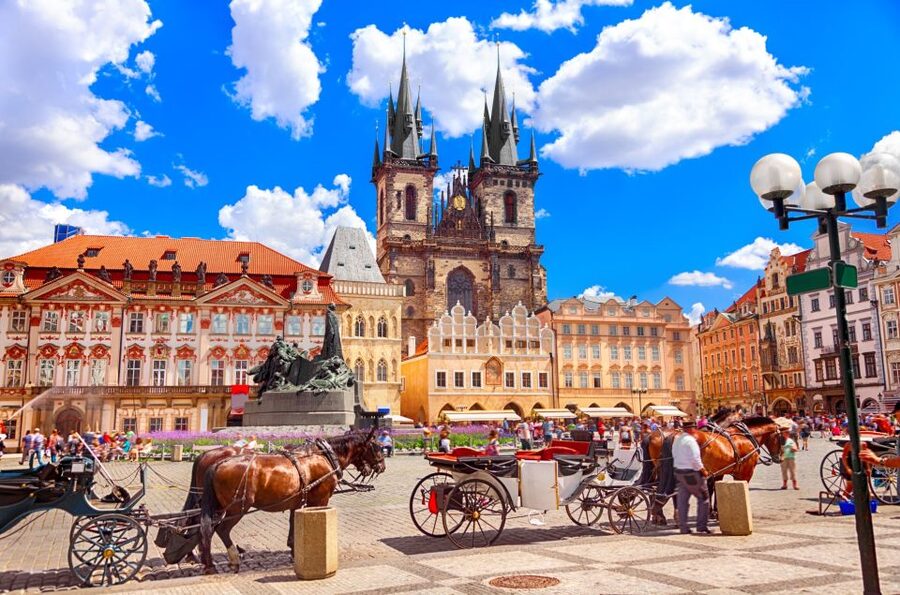
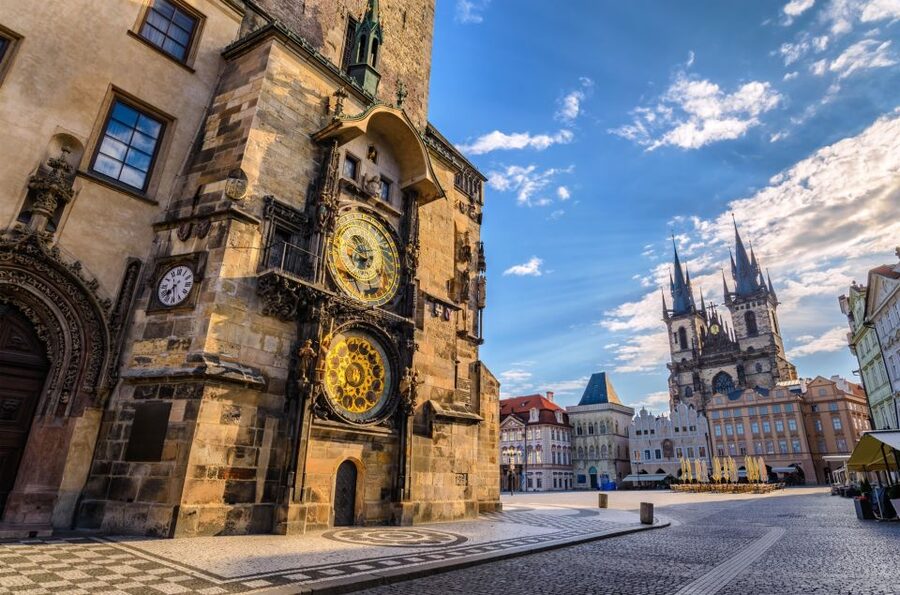
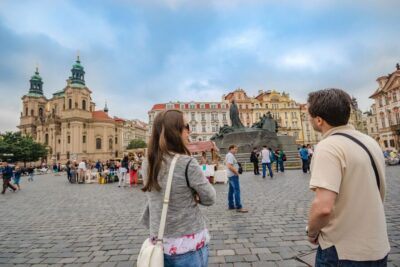
From Josefov, the route continues toward the Old Town Square. Here, the guide explains the Prague Uprising, which took place from May 5 to 9, 1945, as the city fought German forces near the end of the war.
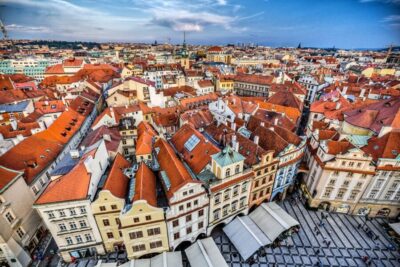
The Astronomical Clock is one of Prague’s most photographed sights, but the clock and Old Town Hall also carry the marks of wartime violence. The Old Town Hall suffered heavy damage during the fighting. That contrast is one of the strongest parts of the walk: you are standing in a postcard setting while hearing about battles that took place around the same landmark.
Your guide also explains the role of the Red Army in Prague’s liberation and how the Communist Party later used that involvement to build support for Communism. This is an important link. The end of Nazi rule did not lead directly to a free democratic government. Liberation became part of a political story that helped shape Czechoslovakia’s next four decades.
I like this stop because it gives you more than a date and a victory. It raises the question of how a country remembers liberation, who receives credit, and how political parties use wartime memory. You may already know the square as the place to see the clock’s hourly show. This tour asks you to look at it as a site of revolt, damage, and political change.
Petschek Palace and the human cost of occupation
The next major stop is Petschek Palace, once the headquarters of the Gestapo in Prague. The building is a stark change from the open square and ornate tourist sights. At the corner, a memorial plaque honors the Czech resistance.
Your guide explains the work of resistance members, along with the interrogations and torture carried out by the Gestapo. This is where the tour becomes especially personal. The occupation was not only a matter of troop movements and government decrees. It affected people who organized, carried messages, resisted, were arrested, and faced brutal questioning.
The stop also gives you a chance to hear about the victims and heroes of the occupation. The tour information specifically includes Operation Anthropoid, the Czechoslovak operation that targeted Nazi official Reinhard Heydrich. The supplied details do not promise a separate visit to every site connected with that operation, so expect the guide to place it within the wider Old Town route rather than provide a full operation-specific tour.
For me, this is one of the strongest reasons to choose a private history tour. You can ask how the resistance worked, what happened after arrests, and how ordinary people were caught between German power and underground activity. The memorial plaque is modest. The explanation gives it weight.
More recent history in Prague:
- Prague: Communism History and Nuclear Bunker Guided Tour
★ 4.7 · 2,417 reviews - Prague Communism History and Nuclear Bunker Tour
★ 5.0 · 1,742 reviews - Communism & Nuclear Bunker Tour + 70s Canteen Lunch (own expense)
★ 5.0 · 1,036 reviews - Prague: WWII Guided Tour & The Crypt of Operation Anthropoid
★ 4.7 · 1,030 reviews
Wenceslas Square and the Velvet Revolution
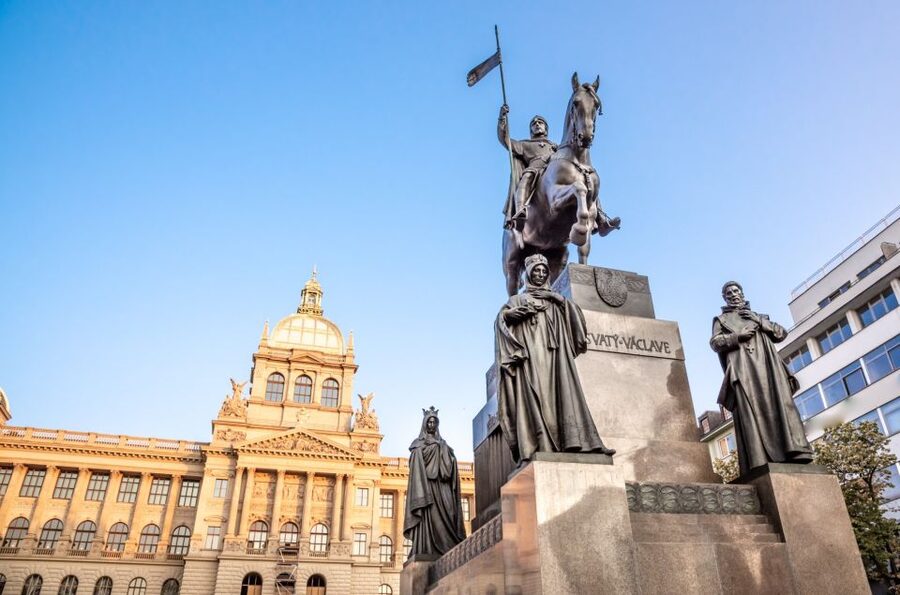
The walk ends at Wenceslas Square, a long central boulevard that has played a major role in modern Czech political life. The Nazis used the square for mass demonstrations. Decades later, it became one of the main gathering places for the mass protests of the 1989 Velvet Revolution.
This final stop helps you understand why the revolution became such a powerful national memory. The square is not presented only as a pretty urban space or shopping area. It is a place where authority performed its strength, and where citizens later gathered to challenge that authority.
The guide connects the Velvet Revolution to the Communist period that came before it. You hear about propaganda, censorship, political trials, executions, and the pressure of a totalitarian government. The result is a useful timeline: Nazi occupation, liberation, Communist consolidation, reform attempts, Soviet intervention, repression, and finally the return of democratic freedoms.
I like ending here because it gives the tour a forward direction. The earlier stops focus on violence and loss. Wenceslas Square adds public action and political change. It also leaves you with a better understanding of why modern Prague commemorates the events of 1989 so strongly.
What the four-hour Museum of Communism adds
The two-hour walk gives you the main outdoor sites. Choose the four-hour version if you want a fuller look at Communist-era Czechoslovakia and a visit to the Museum of Communism.
The museum covers four decades of Communist rule, including the Cold War, the Prague Spring, the Soviet invasion of 1968, the suicide of student Jan Palach, and the Velvet Revolution. It also addresses propaganda, censorship, political trials, and executions.
This extra time changes the balance of the experience. The shorter tour is mainly about places and public events. The museum adds daily political life and the machinery of the regime. You can better understand how censorship shaped public information, how propaganda influenced society, and how political trials and executions enforced obedience.
The museum is especially useful if you know little about the Prague Spring or Jan Palach. The Prague Spring was an attempt at reform within Communist Czechoslovakia, while the Soviet invasion of 1968 ended that experiment. Jan Palach’s death became a powerful act of protest against the loss of freedom. These subjects can be hard to grasp from a quick stop in Wenceslas Square. Museum exhibits give the guide more material to explain.
The four-hour option includes regular museum admission. Tickets are not included in the basic two-hour option, and the shorter version does not include the museum visit. Check the exact option carefully when booking, since the number of included attractions changes with the duration.
Price, timing, and practical value
The listed price is $104 per person. That is a substantial cost for a two-hour walk, especially if you are used to inexpensive public walking tours. The value improves if you are traveling with family or friends and want a private conversation rather than a large group format.
The four-hour version is likely the better buy for most history-minded visitors. It adds the Museum of Communism and gives the guide more time to connect the occupation, the postwar political shift, and the Velvet Revolution. If you have only a short stay in Prague, the two-hour version still covers several key locations without taking up half a day.
The walk begins in front of the World of Franz Kafka at Náměstí Franze Kafky 16/1 in Staré Město. Read the message sent the day before, since important meeting information may be provided there.
The tour lasts two to four hours, depending on your selected option and starting time. It is wheelchair accessible, and the group is private. Since the route is a city walk, comfortable shoes are sensible, though the supplied details do not specify the exact walking distance.
You can cancel up to 24 hours ahead for a full refund, and the reserve-now, pay-later option gives you some flexibility. Those policies are useful when your Prague schedule is still moving around.
Who will enjoy this tour most?
I would choose this for you if you want Prague’s 20th-century history explained in one connected route. It suits first-time visitors who have seen the major sights but want to understand what happened behind them.
It is also a good fit for families with older children or teenagers who can follow a serious subject. The private format lets you adjust the level of detail and ask questions without holding up a large group.
History students, visitors with family ties to the Czech Republic, and anyone interested in the Second World War or the Cold War should find plenty to discuss. The language range is another practical strength, with eight available guide languages.
You may want a different tour if you are mainly looking for interiors, art, food, or relaxed sightseeing. The mood is serious, and several stops concern persecution, torture, executions, and political repression. The walk is not designed as a general introduction to Prague’s architecture or café culture.
The short option may also feel compressed if you want every event explained in detail. The four-hour version gives the subject more room to breathe, although it asks for a larger block of your day.
Should you book it?
Book the two-hour version if you want a focused route through Josefov, the Old Town Square, Petschek Palace, and Wenceslas Square, with a private guide to explain the occupation and the Velvet Revolution.
Choose four hours if the Communist era matters to you. The Museum of Communism adds the context needed to understand the Prague Spring, Soviet invasion, Jan Palach, censorship, and the final collapse of Communist rule.
The strongest reason to book is the guide-led connection between places that many visitors see separately. Guides such as Sofija and Markéta bring an engaging style to a difficult subject, and the private setup gives you room to ask questions. The main reason to hesitate is price, especially for a solo visitor choosing the shorter option. For a small private group that wants serious history rather than a quick sightseeing loop, the cost can make sense.
FAQ
Where does the tour meet?
Meet your guide in front of the World of Franz Kafka at Námestí Franze Kafky 16/1, 110 00 Staré Město, Czechia.
How long does the tour last?
The tour lasts two to four hours, depending on the option you choose.
What places are covered on the two-hour walk?
The route includes Josefov, the Maisel Synagogue, the Spanish Synagogue, the Old Town Square, the Astronomical Clock, the Old Town Hall, Petschek Palace, and Wenceslas Square.
Is the Museum of Communism included?
The Museum of Communism is included only with the four-hour option. Admission is not included in the basic two-hour option.
What does the Museum of Communism cover?
The museum covers four decades of Communist rule, including the Cold War, Prague Spring, the Soviet invasion of 1968, Jan Palach, the Velvet Revolution, propaganda, censorship, political trials, and executions.
What languages are available?
Live guides are available in English, French, German, Italian, Polish, Russian, Spanish, and Czech.
Is this a private tour?
Yes. The experience is organized for a private group.
Can I cancel the booking?
You can cancel up to 24 hours in advance for a full refund. The reserve-now, pay-later option lets you book without paying at the time of reservation.
More Historical Tours in Prague
- Prague: Oldtown, Medieval Underground & Dungeon History Tour
★ 4.2 · 8,244 reviews - Prague Old Town, Medieval Underground and Dungeon Historical Tour
★ 4.5 · 3,227 reviews - Prague: Historic City Center Bus Tour with Top Sights
★ 4.4 · 2,360 reviews - Prague Historic Pub Tour with Drinks Included
★ 5.0 · 2,084 reviews
Just added in Prague
- World War II 4WD Tour from Prague with Lunch★ 4.4 · 3 reviews
- Prague: Historical Walking Tour with Focus on World War 2★ 4.3 · 12 reviews
- Unique salt cave in Prague★ 4.9 · 10 reviews
- Walking tour of Prague in french: Old Town & Charles Bridge★ 4.9 · 62 reviews
- Prague: Market Tour and Traditional Czech Cooking Class★ 4.7 · 19 reviews
- Ultimate Unlimited Beer Pong with Czech Beer★ 4.6 · 5 reviews
- Walking tour of Prague in French : Nové Město★ 4.9 · 16 reviews
- Organ Concert in St Francis Church Admission Ticket★ 4.5 · 88 reviews
Old Town & Jewish Quarter Tours, compared.
3-Hour Walking Tour of Old Town & Prague Castle
Read our review →
Jewish Quarter Walking Tour with Admission Tickets
Read our review →
Prague Old Town, Medieval Underground and Dungeon Historical Tour
Read our review →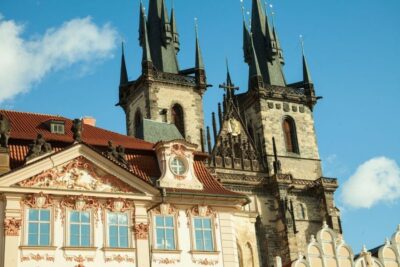
Old Town and Jewish Quarter Guided Tour in German
Read our review →
Ghosts and Legends of the Old Town Evening Tour
Read our review →
Prague Ghost and Legend of Old Town Walking Tour
Read our review →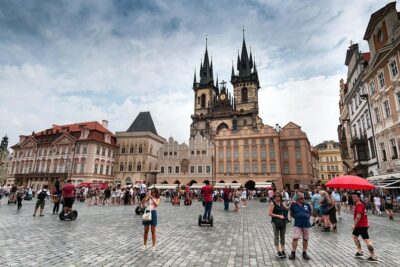
Browse the lists this tour appears in