
Reviewed · WALKING TOURS
Prague Art Nouveau and Cubism Walking Tour
Prague’s Art Nouveau buildings make the most sense when you see them as more than pretty façades. They were the hotels, cafés, restaurants, banks, and stations of a new urban elite, and this walk connects their decoration to the city’s changing social and national identity. I especially like the attention to small design details, such as ginkgo leaves and elaborate light fixtures, and the way the tour places Cubism beside Art Nouveau rather than treating each style as an isolated subject.
I also like that the guides take you indoors, including the Lucerna bar and Grand Hotel Europa, where the period interiors matter as much as the street views. Guides have included Robert, Vadim Erent, and Bonita, with backgrounds ranging from history and journalism to art criticism and university teaching. The main drawback is pace: three hours goes quickly, and you may need to take photographs fast while the group keeps moving.
Key points at a glance
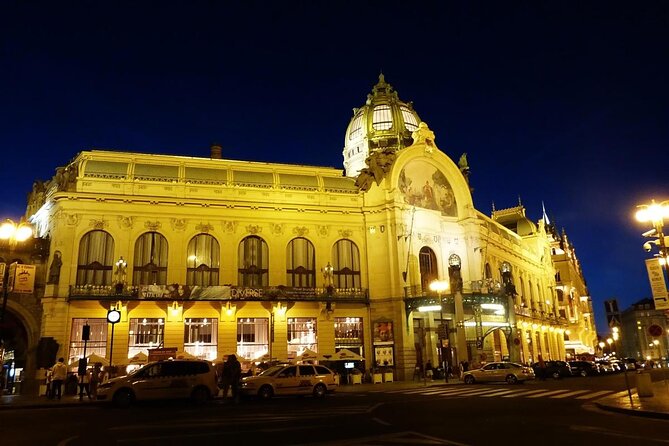
- Art Nouveau details you can actually recognize: Look for plant forms, ginkgo leaves, curved lines, ornate lamps, and decorative interiors.
- Lucerna and Grand Hotel Europa: These interiors show how cafés, bars, and hotels served Prague’s fashionable pre-war social world.
- Cubism beside Art Nouveau: See how the House of the Black Madonna and Bank of the Legions express a sharper, more geometric idea of modern Prague.
- A guide-led architectural history: Robert, Vadim Erent, Bonita, and other specialist guides connect buildings to politics, society, and national identity.
- Small-group flexibility: Private and small-group formats allow more questions and make it easier to enter lesser-known passages and interiors.
- A fast-moving three hours: The walk covers a lot, so it suits you best if you prefer active sightseeing to long stops at one building.
Why Prague’s Art Nouveau is about people, not just patterns
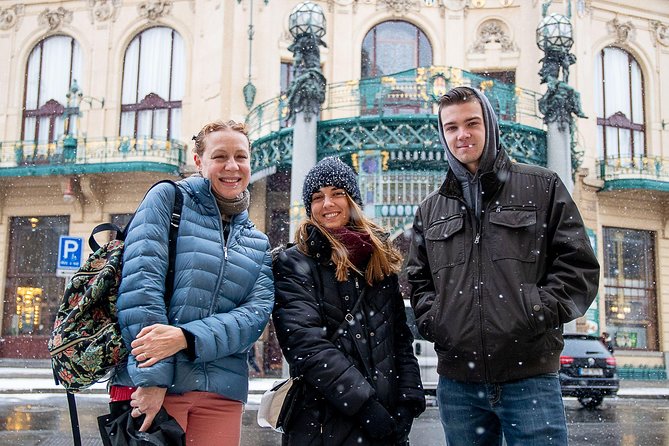
Art Nouveau arrived in Prague near the end of the 19th century, when new technology, transport, and industry were changing city life. The style offered a fresh visual language for that new age. Buildings could be modern in purpose while still covered in flowers, flowing lines, mosaics, stained glass, and sculpted figures.
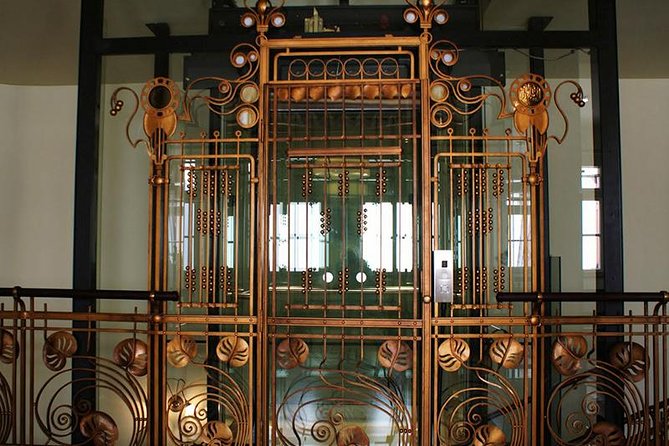
The tour helps you read those choices. You learn to spot ginkgo biloba leaves, whose shape points to the period’s interest in Asian and oriental influences. You also look at lamps, doorways, railings, and wall decoration, details that are easy to miss when you are simply walking between Prague’s major sights.
I find this approach more useful than a list of building dates. Once you know what to look for, the city becomes a kind of open-air design lesson. A façade is no longer just ornate. Its plants, curves, colors, and materials begin to tell you what the architects wanted modern life to feel like.
The social setting matters just as much. Many Art Nouveau buildings served as hotels, restaurants, cafés, and railway stations. These were the places used by people enjoying the benefits of industrial progress and international travel before the First World War brought that world to a halt.
That point gives the walk a human scale. You are not only studying architecture. You are picturing the people who met for coffee, checked into a hotel, waited for a train, or gathered in an elegant bar. The buildings were made for public life, and the tour explains how that life shaped their design.
More walking routes in Prague:
- Prague: 3-Hour Walking Tour of Old Town & Prague Castle
★ 4.7 · 5,696 reviews - Prague: Ghost Walking Tour Where Legends Come To Life
★ 4.4 · 5,253 reviews - Prague: Jewish Quarter Walking Tour with Admission Tickets
★ 4.7 · 3,729 reviews
Starting at the House of the Black Madonna
The meeting point is the House of the Black Madonna, at Grand Café Orient, downstairs at the front doors on the square at Ovocný 19 in Prague 1. This is a practical starting point because the building introduces you to Prague’s Cubist side before the walk turns more fully toward Art Nouveau.
The House of the Black Madonna is associated with Czech Cubism, a style that used angular shapes and strong geometry rather than Art Nouveau’s softer curves and plant forms. The contrast gives you a useful visual reference at the very beginning.
The tour also draws attention to the Grand Café Orient. Even if you are primarily interested in façades, this interior setting reminds you that architecture here was designed to be experienced from inside as well as viewed from the street.
Your guide may begin by placing these styles within a longer sequence of Prague architecture. One particularly praised feature of the experience is the connection from earlier Gothic and other historic forms through Art Nouveau and Cubism. That wider frame helps explain why the early 20th century felt like a break with the past, even though Prague remained full of older buildings.
Reading the Art Nouveau façade
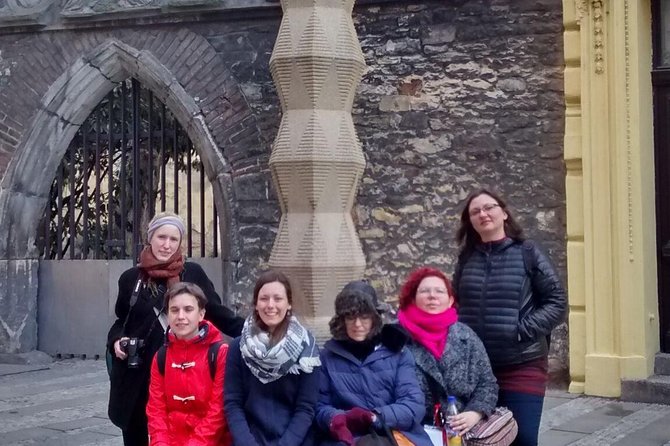
As the walk continues, your guide shows you how to recognize the style without relying on a label. You may find floral decoration, curved lines, stylized plants, elaborate entrances, and carefully designed windows. Ginkgo leaves are a useful example because they reveal the period’s taste for natural forms with an exotic visual flavor.
The point is not to memorize every term. It is to build a working eye. After a few examples, you can begin to compare how one architect uses a plant motif, how another handles a balcony, or how a building turns decoration into a complete visual system.
Interiors are just as important. The tour includes elaborate light fixtures and other decorative features that reveal how Art Nouveau extended through a building. A street façade might attract your attention first, but lamps, stairways, wall surfaces, and furniture show how the style shaped daily life.
The guides are said to include professors, doctoral students, historians, journalists, art critics, and published authors. That background helps explain the tour’s academic tone, but the better guides keep the information moving with stories and humor rather than turning the walk into a lecture.
Robert, in particular, has been praised for explaining architectural change clearly while answering questions with humor. Vadim Erent is known for connecting buildings to wider social and historical ideas. Bonita has led the walk for visitors interested in late 19th and early 20th century design. The exact guide depends on the date you book, but the experience is built around specialist interpretation rather than a standard city overview.
Lucerna bar and the public life of old Prague
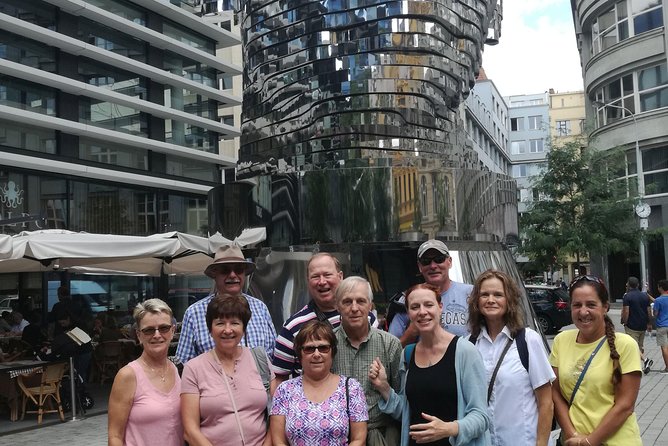
Lucerna bar is one of the walk’s most appealing indoor stops. It shows why Art Nouveau was so closely linked with cafés, restaurants, hotels, and entertainment spaces. These were not private houses hidden from public view. They were places where Prague’s social elite met, ate, talked, and displayed its taste.
The setting also gives you a break from the street. This matters in winter, when a three-hour outdoor walk can become uncomfortable. One group walking in cold December weather was able to enter buildings for both a closer look and a little warmth. That is a practical advantage, not just a pleasant extra.
You should not expect a long, leisurely coffee stop unless your guide chooses to arrange one. The walk keeps moving, and the indoor visits are part of the architectural route. Still, Lucerna offers a more complete sense of the period than a quick look at an exterior can provide.
The tour also uses Prague’s passageways and back courtyards. These spaces can reveal a side of the city that you might miss on the main streets. One guide has been praised for leading groups through passages, a student café in a backyard, and other less obvious places connected with Prague’s story.
The exact access to every interior can depend on circumstances, so you should think of these visits as part of the guide-led experience rather than a guaranteed museum schedule. The value lies in having someone who knows where to look and how each space fits the larger picture.
Same streets, a different kind of outing:
- Prague: 50-Minute Sightseeing Evening Cruise
★ 4.2 · 33,780 reviews - Prague: Medieval Dinner with Unlimited Drinks
★ 4.4 · 19,847 reviews - Prague: Skip-the-line Castle Ticket and Optional AudioGuide
★ 4.3 · 11,121 reviews - Prague: Castle Tour with Local Guide and Entry Ticket
★ 4.6 · 10,422 reviews
Grand Hotel Europa and the pre-war city
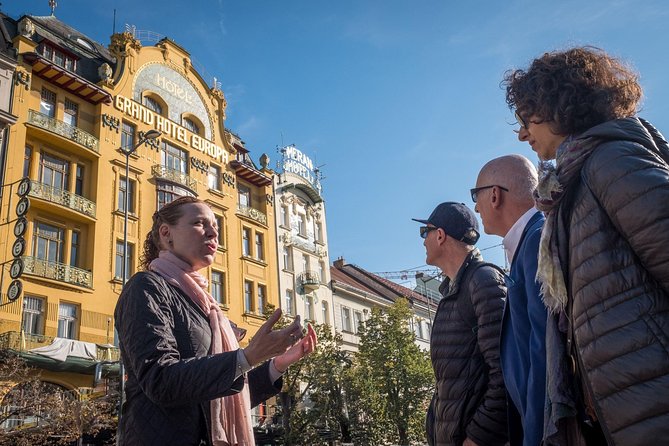
Grand Hotel Europa is another key stop. Its elegant design helps explain why Art Nouveau hotels became such important symbols of early 20th-century Prague. Hotels welcomed people arriving by new transport networks, including the international visitors who could now cross Europe with greater ease.
The hotel also gives the guide a chance to discuss the social world behind the style. The people who used these spaces were enjoying modern travel, new industry, and public entertainment. Art Nouveau made that optimism visible through decorative surfaces and carefully staged interiors.
Yet the walk does not treat the style as a simple story of progress. The period ended with war, and the buildings now carry a sense of a world that was about to change. That tension gives the architecture more weight. The decoration is attractive, but it also belongs to a particular moment in European life.
For you, the stop is especially useful if you want to understand why Prague can feel both historic and modern at once. The city’s older medieval and Baroque layers did not vanish. They were joined by buildings that announced a new urban identity.
From Art Nouveau curves to Cubist angles
The tour’s comparison with Cubism is one of its strongest features. Rather than presenting Art Nouveau as Prague’s only important modern style, the guide shows how Czech architects experimented with sharper forms and more forceful geometry.
The House of the Black Madonna provides an early reference. The Bank of the Legions adds another example, with the walk also discussing Rondo-Cubist architecture. These styles make a useful contrast with Art Nouveau. Instead of flowing plant forms, you encounter angles, facets, bold shapes, and a more constructed visual rhythm.
Rondo-Cubism is particularly useful in a Prague context because it reflects a local response to modern European ideas. The tour connects these buildings with the city’s sense of national renewal and modern sophistication. Architecture was not just decoration. It could express what Czech society wanted to become.
This is where an expert guide earns the fee. You could photograph the buildings alone, but it is harder to understand why two nearby structures look so different, or why a national identity might be expressed through a façade. The explanations turn visual contrast into a story about cultural ambition.
The walk may also place these styles alongside older Prague architecture, including Gothic examples and other historic forms. That continuity is important. The city’s modern designers were not working in a vacuum. They were responding to the buildings and traditions already around them.
A quick pace with room for questions
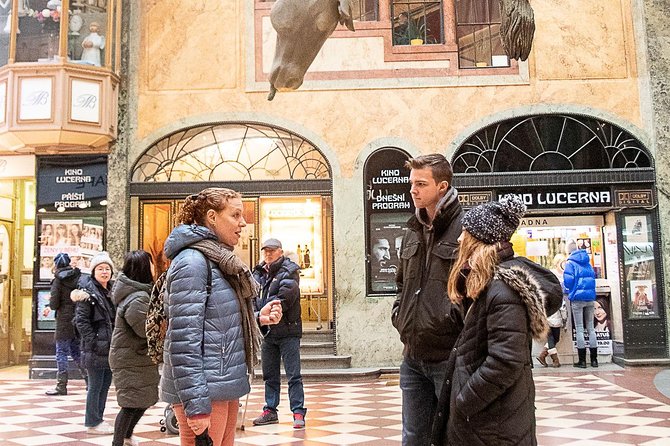
The tour lasts three hours and is conducted in English. Private and small-group options are available, which is useful if you want to ask about particular buildings or keep the conversation tailored to your interests.
The pace is active. One guide is praised for keeping the group moving instead of leaving everyone standing in one place for long stretches. I consider that a plus for most people, especially in a city where the route includes several streets, passages, and interiors.
It does create a small tradeoff for photographers. You may not always have a long pause to frame every shot, so be ready to take photographs efficiently. If a building matters to you, ask the guide for a moment, but do not expect every stop to become a photo session.
The guides have also shown flexibility around breaks. Coffee and restroom pauses can be arranged when needed, and one group was offered extra time after the scheduled three hours. You should not assume an extended tour is guaranteed, but it is worth telling the guide at the start if you need to reach another appointment.
Wear comfortable shoes and dress for the weather. Even with indoor stops, this is a walking tour, and Prague’s streets can make a full afternoon on foot feel longer than the clock suggests.
Is $123 a fair price?
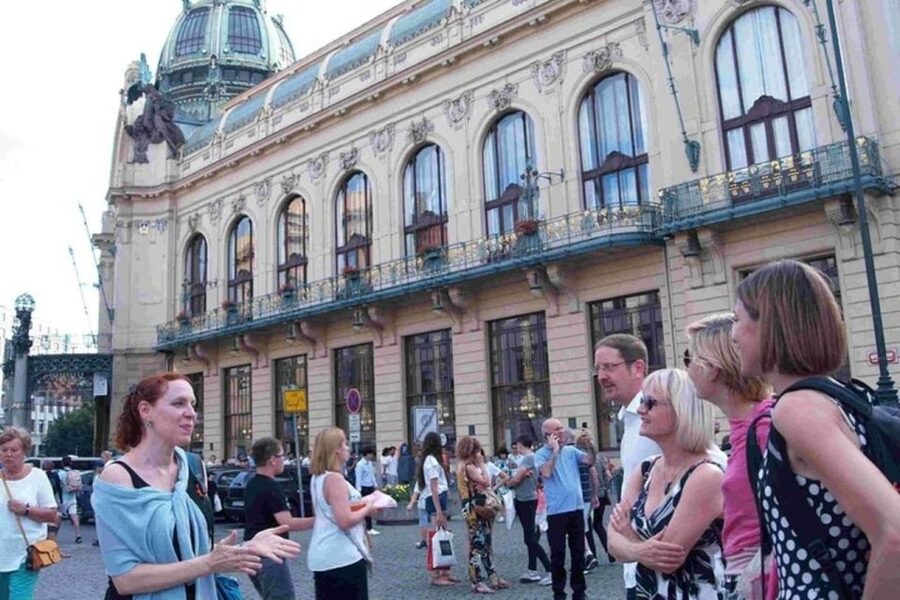
At $123 per person, this is not a budget introduction to Prague. The value depends on what you want from a tour.
If you only want to see famous façades and take a few photographs, you can walk through central Prague on your own for much less. If you want a specialist to explain architectural details, compare Art Nouveau with Cubism, enter selected interiors, and connect buildings to Czech social history, the price becomes easier to justify.
The private or small-group format is important here. A large coach tour could not offer the same access to questions or the same attention to small design details. You are paying less for transportation and more for interpretation.
The guides’ backgrounds also affect the value. A professor, doctoral student, historian, journalist, art critic, or published author brings a different level of preparation than a general city guide. That does not guarantee a perfect match for every person, but it suits you if you want architectural context rather than a quick sightseeing loop.
Free cancellation up to 24 hours before the tour and the option to reserve now and pay later reduce the risk if your Prague plans are still changing. Starting times depend on availability, so check the schedule before building the rest of your day around it.
Who will enjoy this walk most?
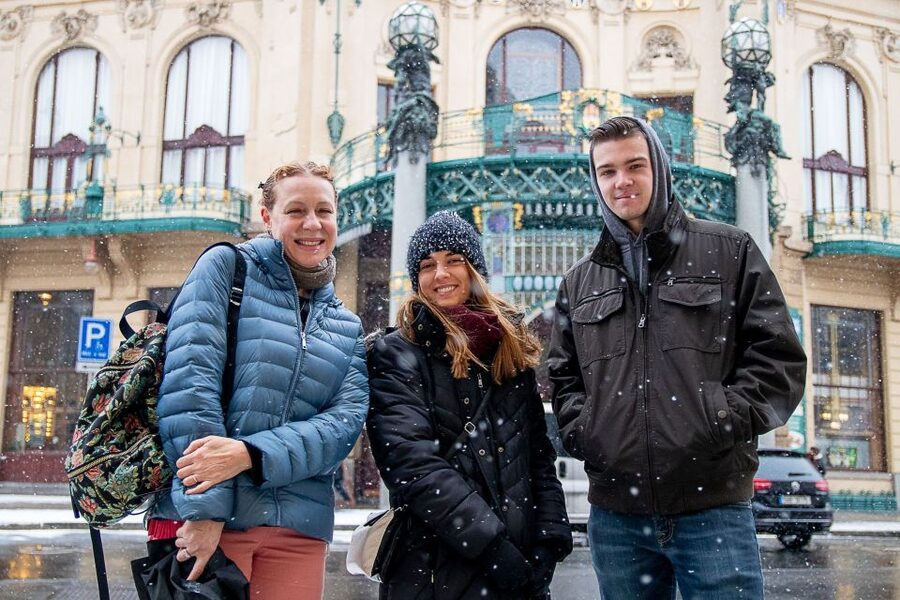
I would choose this tour if you have already seen Prague’s main landmarks and want to understand the city’s early modern architecture. It is also a strong first activity for anyone who likes design, because it teaches you how to read the streets from the start of your visit.
It suits:
- Architecture and design enthusiasts
- People interested in Czech national identity and social history
- Photographers who can work at a fairly brisk pace
- Visitors who prefer small groups and direct conversation
- Anyone who wants indoor access and lesser-seen passages
- Repeat visitors looking beyond the standard Old Town route
It may be less suitable if you dislike walking, want long stops at each building, or prefer a relaxed café tour with little historical explanation. The subject is focused, and the guide may cover a lot of material in three hours.
The strongest reason to book is the combination of specialist storytelling and real places. Robert’s humor and clear explanations, Vadim’s broad architectural connections, and Bonita’s long familiarity with Prague have made this experience work for people with different levels of prior knowledge. You do not need to be an architect, but you should enjoy looking closely.
Should you book the Prague Art Nouveau and Cubism Walking Tour?
Book it if you want Prague to make more sense visually and historically, not just look beautiful in passing. The Lucerna bar, Grand Hotel Europa, House of the Black Madonna, and Bank of the Legions give the walk a solid set of places, while the guide’s explanations connect them to cafés, hotels, travel, social status, and Czech identity.
I would skip it only if your schedule is too tight for three active hours or if $123 feels high for a walking tour. For everyone else, especially visitors who care about architecture and authentic city life, this is a focused way to see Prague through the buildings that announced its entry into the modern age.
FAQ
How long is the Prague Art Nouveau and Cubism Walking Tour?
The tour lasts three hours.
What language is the tour conducted in?
The live tour guide speaks English.
Where does the tour meet?
The meeting point is at the House of the Black Madonna and Grand Café Orient, downstairs at the front doors on the square at Ovocný 19, Prague 1.
Which buildings are included?
The tour includes the Lucerna bar and Grand Hotel Europa, and discusses the House of the Black Madonna and Bank of the Legions. It also covers other Art Nouveau, Cubist, and Rondo-Cubist examples in central Prague.
Is the tour private or shared?
Private and small-group options are available.
Who leads the tour?
The guides include professors, doctoral students, historians, journalists, art critics, and published authors. Named guides who have led the experience include Robert, Vadim Erent, and Bonita.
Can I cancel for a refund?
You can cancel up to 24 hours before the tour for a full refund. You can also reserve now and pay later.
Just added in Prague
- World War II 4WD Tour from Prague with Lunch★ 4.4 · 3 reviews
- WWII and Communism History in Prague’s Old Town Private Tour★ 5.0 · 4 reviews
- Prague: Historical Walking Tour with Focus on World War 2★ 4.3 · 12 reviews
- Unique salt cave in Prague★ 4.9 · 10 reviews
- Walking tour of Prague in french: Old Town & Charles Bridge★ 4.9 · 62 reviews
- Prague: Market Tour and Traditional Czech Cooking Class★ 4.7 · 19 reviews
- Ultimate Unlimited Beer Pong with Czech Beer★ 4.6 · 5 reviews
- Walking tour of Prague in French : Nové Město★ 4.9 · 16 reviews
Walking Tours, compared.
3-Hour Walking Tour of Old Town & Prague Castle
Read our review →
Ghost Walking Tour Where Legends Come To Life
Read our review →
Jewish Quarter Walking Tour with Admission Tickets
Read our review →
Prague Guided Walking Tour and Cruise with Authentic Czech Lunch
Read our review →
Old Town and Jewish Quarter Guided Walking Tour
Read our review →
Prague Ghost and Legend of Old Town Walking Tour
Read our review →
Prague 3-hour Afternoon Walking Tour including Prague Castle
Read our review →
Ghosts and Legends Nighttime Guided Walking Tour
Read our review →Browse the lists this tour appears in