
Reviewed · COMMUNISM & WWII HISTORY TOURS
Prague: Communism and Bunker Tour with 70s Canteen Lunch
Prague’s communist past becomes far easier to understand when you follow it through the city streets, from the Powder Tower toward Old Town and Wenceslas Square. This tour links major events, everyday life, and personal family stories instead of treating history as a list of dates.
I like the clear timeline and the local guides, especially Klara, Leo, and Tereza, who use photos, questions, humor, and stories from life behind the Iron Curtain. I also like the four-hour option, which adds a 1950s nuclear bunker and a stop at a 1970s workers’ canteen.
The main consideration is pace and atmosphere. You walk for about two hours before the bunker portion, and the bunker is not suitable for people with claustrophobia. Lunch is also at your own expense, even though the bunker entry is included with the longer option.
Key points to know before booking
- The route begins at the Powder Tower: You walk through Old Town and New Town, with the city itself serving as the classroom.
- The four-hour version offers the best value: It includes the bunker admission, a guided bunker visit, and time for a retro canteen break.
- The history is made personal: Guides use family experiences, old photographs, quizzes, and visual comparisons to explain life under communism.
- The group is limited to 15 people: That gives you a better chance to ask questions and hear the guide clearly.
- Lunch is optional and paid separately: You can try a Czech meal or Kofola during the 30-minute break.
- You receive a real communist-era pin: It is a small but fitting souvenir from a history-focused tour.
Prague’s communist story begins at the Powder Tower
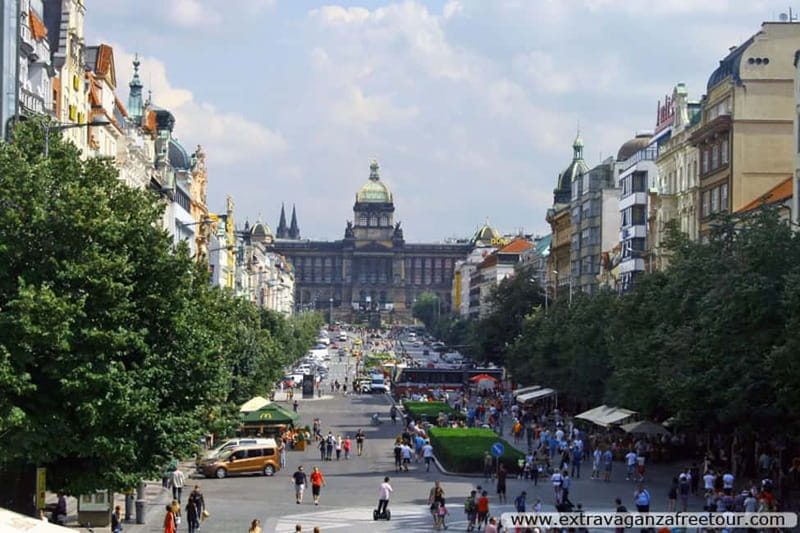
The meeting point is the Powder Tower at Náměstí Republiky, or Republic Square. Look for the guide holding a blue umbrella. This is a sensible starting point because the tour can move straight into Prague’s central streets without needing a bus, tram, or taxi.
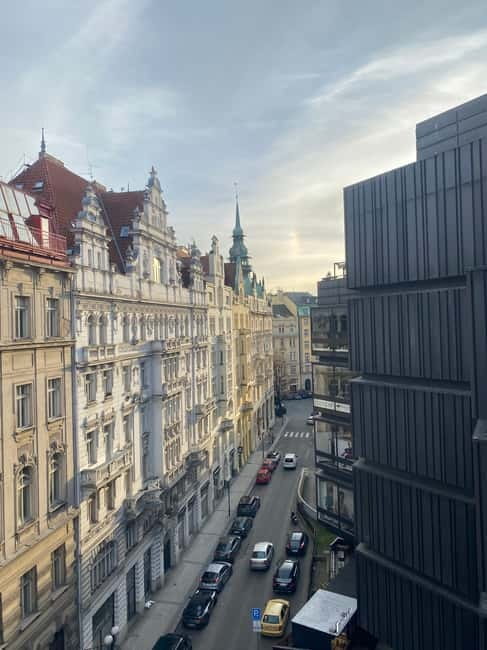
The walking route covers Old Town and New Town. These are familiar parts of Prague, but the guide changes how you read them. Instead of only admiring façades and grand squares, you learn how public spaces became stages for power, protest, fear, and political change.
The tour places key events on a simple timeline. You cover the 1948 Communist coup, the Prague Spring, the Soviet-led suppression that followed, and the Velvet Revolution of 1989. The guide also explains what those events meant for ordinary people, not just party leaders and government offices.
I appreciate this approach because the subject can become confusing quickly. Czechoslovakia’s postwar years included political pressure, censorship, shortages, state control, reform, and protest. A good guide needs to explain how one period led to the next, and this tour is built around that order.
More recent history in Prague:
- Prague: Communism History and Nuclear Bunker Guided Tour
★ 4.7 · 2,417 reviews - Prague Communism History and Nuclear Bunker Tour
★ 5.0 · 1,742 reviews - Communism & Nuclear Bunker Tour + 70s Canteen Lunch (own expense)
★ 5.0 · 1,036 reviews
Old Town and New Town with context at every stop
The Old Town section lasts about an hour, followed by about an hour in New Town. You are not simply walking from one attraction to another. The guide uses the streets as reference points while explaining where major events unfolded and how Prague changed under communist rule.
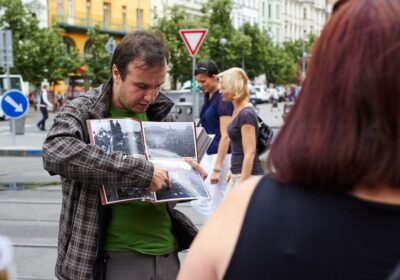
Several guides, including Klara and Leo, are praised for making complex material easy to follow. Klara has used old photographs to show how particular places looked before and after communist rule. Leo has added quiz questions between stops, which gives the group a reason to stay involved rather than listening passively for two straight hours.
That small-group setting matters. With no more than 15 people, you can usually ask questions without turning the tour into a private lesson. The guides are also described as happy to stop and explain a point, so this suits you if you want more than a memorized speech.
The personal stories are one of the strongest parts. Klara has spoken about her own family’s experiences behind the Iron Curtain, while other guides explain the difference between official political life and the routines of ordinary households. These details help you picture the era without reducing it to a simple good-versus-bad story.
The walk is still a city walking tour, so comfortable shoes are sensible. The activity runs rain or shine. Prague’s weather can change quickly, and there is no promise of a fully indoor route before the canteen and bunker, so bring suitable clothing.
The 1970s workers’ canteen break
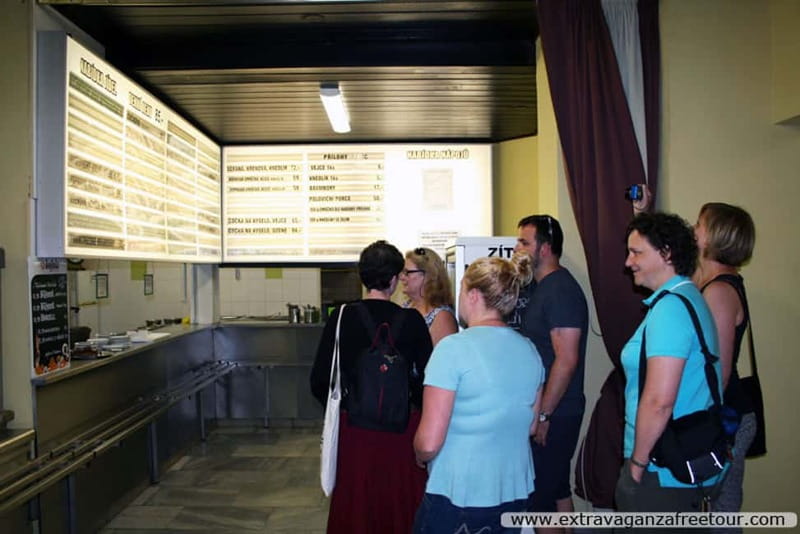
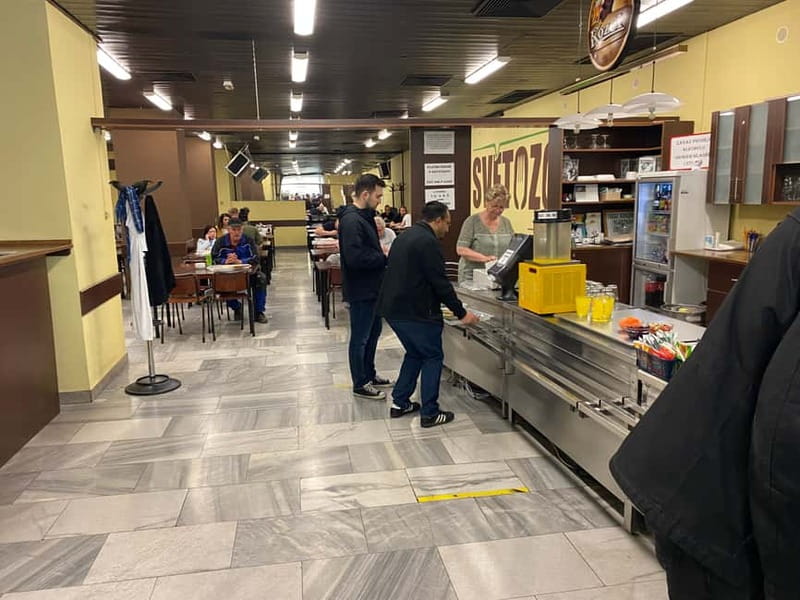
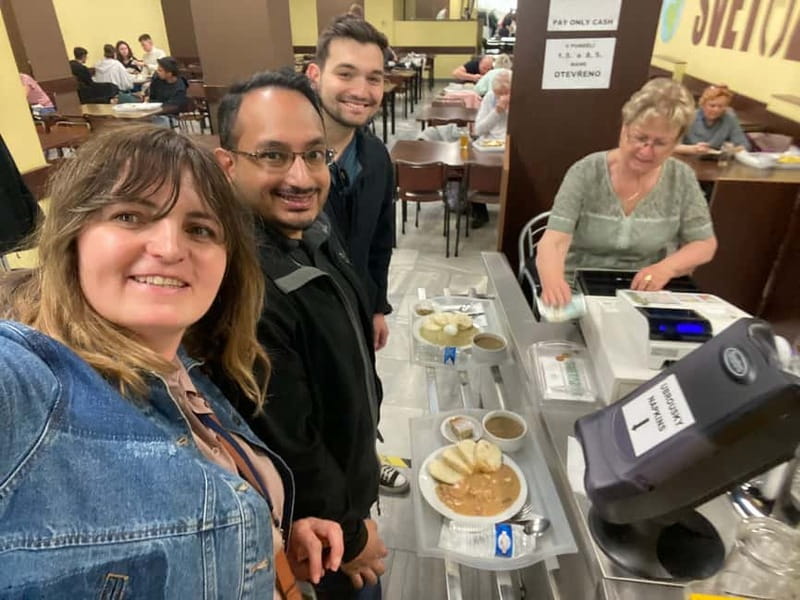
The four-hour tour includes a 30-minute break at a retro workers’ canteen designed in the style of the 1970s. This is not included as a free meal. You pay for your own food or drink, and you can choose a Czech meal or Kofola, the popular soft drink associated with the communist period.
The canteen adds something important to the tour because it shifts the focus from political events to daily habits. You get a sense of the plain, practical setting associated with working life during the era. It is also a useful pause after the first part of the walk.
Do not expect a long restaurant meal. Thirty minutes is enough for a quick plate or drink, but not for a leisurely lunch with several courses. If you have dietary needs, the supplied information does not specify menu choices, so ask at booking or before ordering.
Some guides make the break more useful by pointing out surviving Czech brands and familiar products. Klara has also shown visitors retro Czech chocolate bars that continued after the end of communism. That kind of small detail gives the stop personality without pretending that a canteen meal can recreate an entire historical period.
If you choose the two-hour version, this break is not part of your outing. You get the walking tour only and miss both the canteen and bunker elements.
Inside the 1950s nuclear bunker
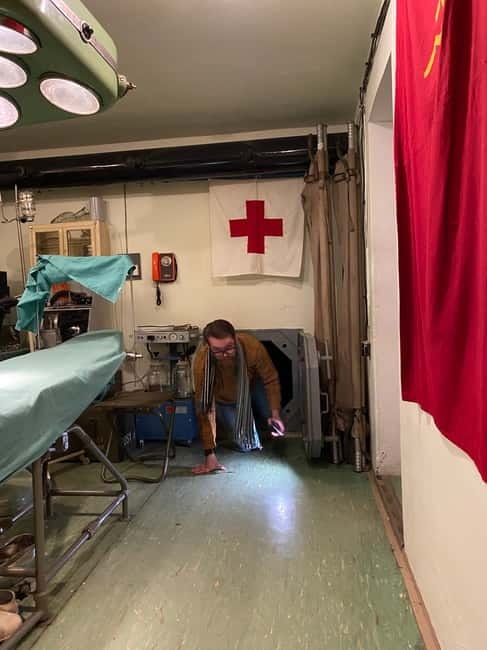
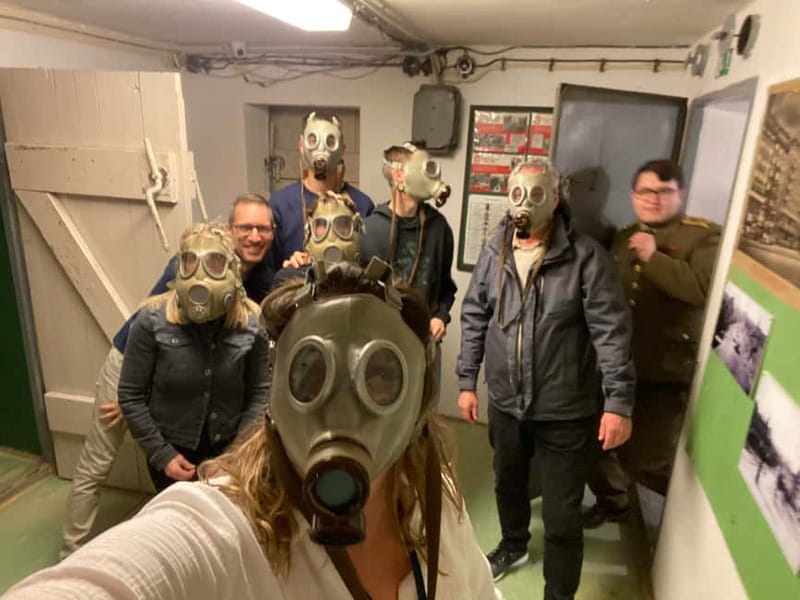
The bunker is the main reason I would choose the four-hour option. Entry to the 1950s Cold War-era nuclear bunker is included in the longer tour, with a stated value of 250 CZK, or about 10 euros. You also receive a guided visit rather than simply being sent underground to look around alone.
The bunker gives the political story a physical setting. The 1950s were shaped by the fear of nuclear war, military tension, and civil-defense planning. Underground rooms and equipment make those concerns feel less abstract than they do in a textbook.
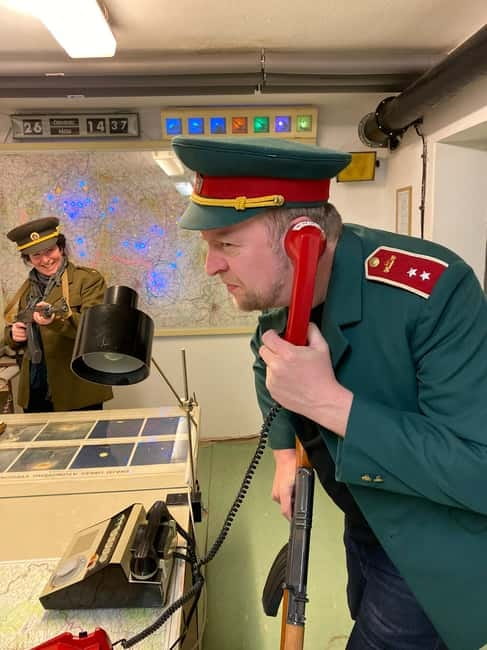
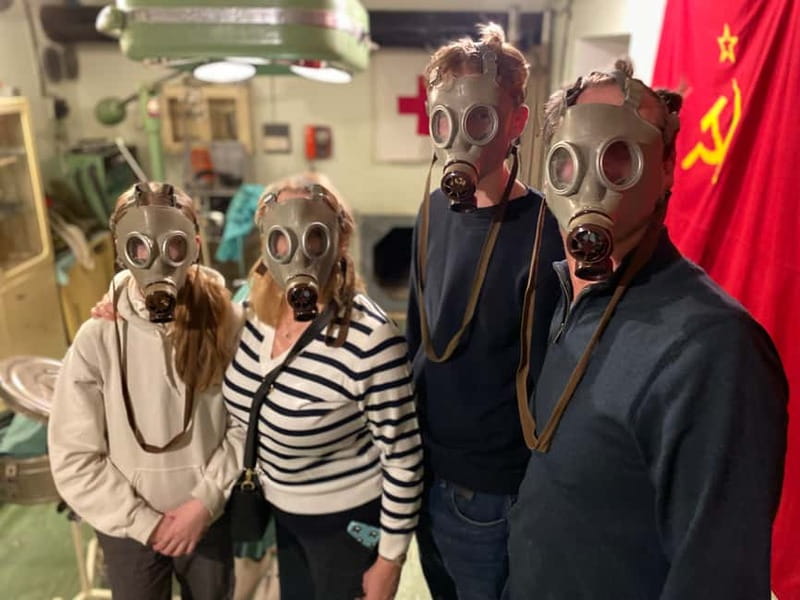
The visit is also interactive. Guides have allowed people to try on period uniforms, handle or inspect equipment, and take photographs. Some have used role-play to explain what different bunker functions involved. This adds a light touch to a serious subject, while still keeping the focus on the period.
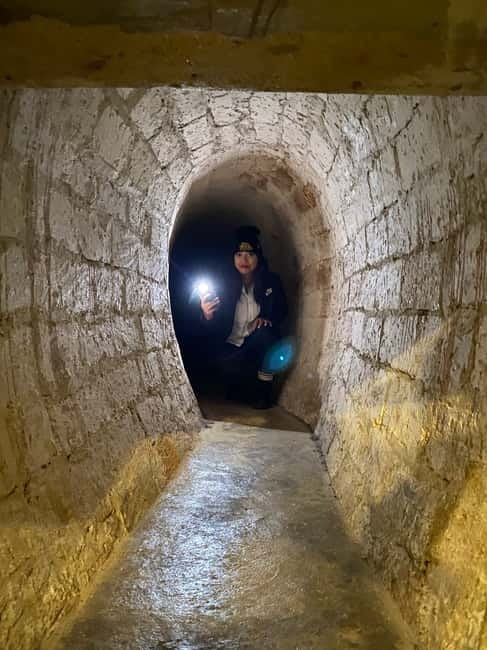
That said, the bunker is not for everyone. The activity information specifically warns that it is unsuitable for people with claustrophobia. If enclosed underground spaces make you uncomfortable, the two-hour walking tour may be the better choice.
The bunker portion is also where the tour feels most distinct from a standard city history walk. Prague has many architectural and food tours, but an authentic Cold War bunker gives you a different kind of encounter. You are not just hearing about the threat of nuclear conflict. You are standing in a place built around it.
A few more things to do in Prague worth a look
- Prague Guided Walking Tour and Cruise with Authentic Czech Lunch
★ 5.0 · 3,627 reviews - Prague: Vltava River Lunch Cruise in an Open-Top Glass Boat
★ 4.5 · 2,865 reviews - Prague: Hard Rock Cafe with Set Menu for Lunch or Dinner
★ 4.4 · 1,487 reviews - Full-Day Prague Tour with Prague Castle, Lunch and Vltava Cruise
★ 4.0 · 921 reviews
Guides who shape the experience
The guide is especially important on a topic this complicated. A flat lecture about communism can become dry fast, but the guides here appear to rely on clear explanations, questions, humor, and personal connections.
Klara is frequently singled out for her warmth, humor, and ability to answer detailed questions. She has also adapted tours for small groups, offering to adjust the break or focus depending on what the group wanted to learn. Her family experiences give her explanations a direct local connection.
Leo uses quizzes and an upbeat delivery to keep the walking sections active. He is particularly good for you if you prefer a guide who mixes facts with short questions and conversation. Tereza is also described as enthusiastic and well informed, with a friendly style.
Guide assignments can change, so you should not book on the assumption that one specific person is guaranteed. Still, the repeated pattern is clear: the quality of the guide is central to the outing, and this is not a self-guided route with a script read aloud.
The guides also offer practical Prague advice during the walk. That can be useful early in your visit, since you can ask about places to eat, cafés, and other ways to spend your time in the city.
Two hours or four hours?
The two-hour option works well if your schedule is tight or you mainly want the political walking tour. It covers the Powder Tower, Old Town, and New Town, with the main historical timeline presented on foot. You still get the guide’s stories and the communist-era pin.
The four-hour option gives you the fuller experience:
- Around two hours of guided walking
- A 30-minute break at the 1970s-style canteen
- Optional food or Kofola at your own cost
- Guided entry to the 1950s bunker
- Bunker admission included
- More time for questions and photographs
At about $33 per person, the longer version offers strong value if you want the bunker. The included entry is listed as worth about 10 euros, and you are also getting a small-group walking tour with a local guide. The meal is extra, so budget for that separately.
The shorter version may offer better value for you if you already have a full Prague schedule or prefer not to spend time underground. The choice is less about price than about interest, energy, and comfort.
Group size, meeting point, and practical details
The maximum group size is 15 people. That is small enough for conversation but not necessarily intimate on every departure. If only a few people book, the guide may be able to adjust the emphasis or timing, as Klara has done for small private groups.
The activity is in English, and the guide is live rather than delivered through an audio device. You meet at the Powder Tower, looking for the blue umbrella. The published route lists Jalta Boutique Hotel as the finish, while the meeting information says the activity ends back at the meeting point. Because those details do not match perfectly, confirm the exact finishing point when you book.
The tour operates rain or shine. Wear shoes suited to city walking and bring weather protection. The bunker adds stairs or enclosed spaces, but the supplied information does not give detailed accessibility information, so ask the operator directly if mobility is a concern.
You can cancel up to 24 hours before the start for a full refund. The reserve-now, pay-later option can help if your Prague plans are still shifting.
The communist-era pin and the tour’s lasting value
The original communist-era pin is a small souvenir, but it fits the subject better than a generic Prague trinket. It gives you something physical to take home while reminding you of the political system the tour explains.
The real value is the connection between places, events, and personal experience. You hear about the 1948 coup, then move through streets where Prague’s public life changed. You discuss the Prague Spring and the Velvet Revolution, then enter a bunker built during the years of Cold War fear.
I also like that the tour does not stop at famous leaders and dramatic dates. The canteen, soft drink, chocolate bars, uniforms, family stories, and old photos all point toward daily life. Those details are what help you understand how a political system shaped ordinary routines.
The tone is not entirely solemn. Guides use jokes, quizzes, photographs, and opportunities to try on equipment. That makes the subject easier to absorb, though you should still expect serious material about repression, fear, and restricted freedom.
Who should book this Prague history tour?
I would recommend it to anyone who wants more than Prague’s medieval and baroque sights. It is especially useful early in your visit because the guide can help you understand the city’s modern identity and offer practical advice for the rest of your stay.
History fans will appreciate the timeline and political context. Families can benefit from the visual aids and interactive bunker visit, though parents should consider whether younger children will stay interested during the walking sections.
The four-hour tour is best for you if you want the bunker and do not mind paying separately for lunch. Choose the two-hour route if you want the core history without the underground visit, or if enclosed spaces are a concern.
Should you book it?
Yes, if you want a clear, personal explanation of Prague’s 20th-century history and like the idea of combining city streets with a real Cold War bunker. The small group, local guides, old photographs, personal stories, and included bunker entry make the four-hour option particularly appealing at $33 per person.
Choose carefully if you dislike walking in poor weather, need a fully accessible route, or feel uneasy in confined spaces. For most curious visitors, though, this is a practical way to see Prague beyond its famous old buildings and understand how recent history still shapes the city.
FAQ
Where does the tour start?
It starts at the Powder Tower at Náměstí Republiky, also called Republic Square. Look for guides holding a blue umbrella.
How long does the experience last?
You can choose a two-hour walking tour or a four-hour tour that adds the canteen break and nuclear bunker visit. Starting times depend on availability.
What language is the tour conducted in?
The live guided tour is conducted in English.
Is the bunker included in the tour price?
Bunker entry is included when you choose the four-hour Communism Tour with Bunker and Canteen Lunch option. The stated entry value is 250 CZK, or about 10 euros.
Is lunch included?
No. The workers’ canteen meal or Kofola is optional and paid for separately. The four-hour option includes a 30-minute break for this stop.
Is the tour suitable for people with claustrophobia?
No. The activity information specifically says it is not suitable for people with claustrophobia because the longer option includes an underground bunker visit.
Can I cancel the booking?
Yes. You can cancel up to 24 hours in advance for a full refund. A reserve-now, pay-later option is also available.
Just added in Prague
- 1 hour boat cruise with fragrant coffee and homemade strudel★ 4.3 · 27 reviews
- From Prague: Karlstejn Castle Skip-the-Line Ticket and Tour★ 4.2 · 117 reviews
- Prague: Karlštejn Castle Guided Tour with Entry Ticket★ 4.3 · 139 reviews
- Wine Tasting and Walking Tour of Prague★ 5.0 · 157 reviews
- Karlovy Vary Day Trip from Prague★ 4.0 · 147 reviews
- Prague-Vienna One-Way Sightseeing Day Tour★ 5.0 · 108 reviews
- A delightful wine tasting in the scenic countryside with lunch★ 5.0 · 74 reviews
- 2 Hours Wine Tasting in a Historical Cellar in Krizikova★ 5.0 · 51 reviews
Communism & WWII History Tours, compared.
Communism History and Nuclear Bunker Guided Tour
Read our review →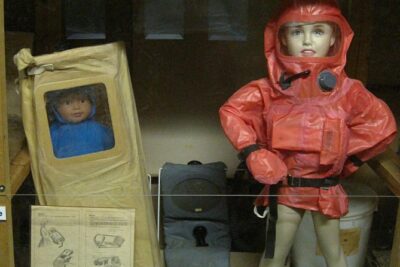
Prague Communism History and Nuclear Bunker Tour
Read our review →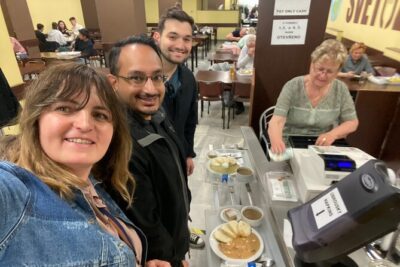
Communism & Nuclear Bunker Tour + 70s Canteen Lunch (own expense)
Read our review →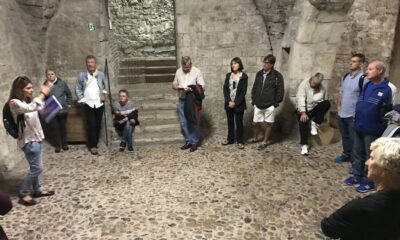
WWII Guided Tour & The Crypt of Operation Anthropoid
Read our review →
WWII in Prague Tour & The Crypt of Operation Anthropoid
Read our review →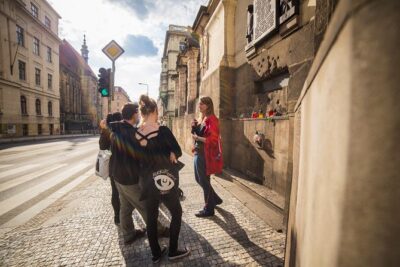
Small-Group World War 2 & Operation Anthropoid Tour in Prague
Read our review →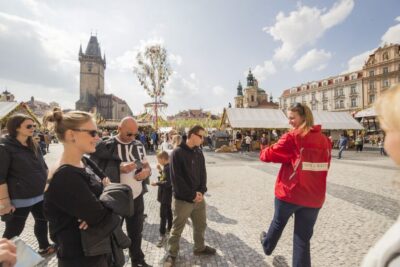
World War 2 and Operation Anthropoid Walking Tour
Read our review →Browse the lists this tour appears in