Reviewed · TOURS IN PRAGUE
Prague: Modern Architecture and Design Guided Tour
Prague’s modern face is easy to miss behind its Gothic towers and Baroque façades. This two-hour walk to 10 sites shifts your attention to socialist realism, brutalist buildings, public art, and experimental design that tell a different story about the Czech capital. I like the small-group feel and the chance to see art installations you might otherwise pass without a glance. I also like the personal stories and practical city tips from guides such as Michael.
The main drawback is that this is not a neat, chronological lesson in Prague’s architectural styles. The route favors selected buildings and installations with good stories, so some stops may look plain rather than beautiful. If you want a formal survey of every major movement, this tour may feel loosely organized.
Key points to know before you book
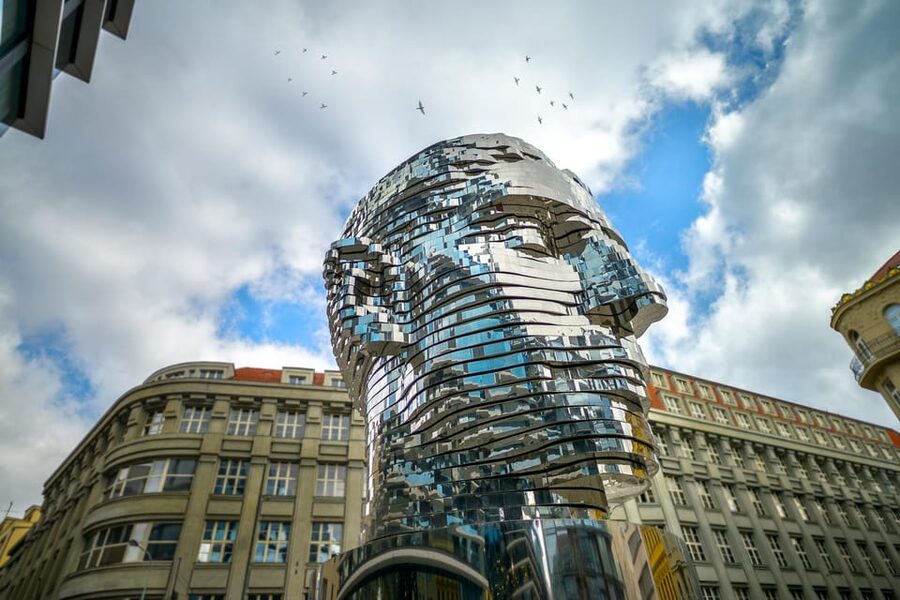
- Ten modern sites in two hours: You get a focused walk rather than a full-day architecture course.
- Prague beyond the old town: The tour explains how 20th and 21st-century design became part of the city’s identity.
- Socialist realism and brutalism: These styles receive attention alongside newer experimental work.
- Small groups can change the experience: Recent departures have been very intimate, including one private-feeling tour with Michael.
- English live guiding: You can ask questions directly instead of relying on an audio guide or printed notes.
- Good value for design-minded visitors: At $35, the tour is reasonably priced if you value interpretation, local context, and overlooked public art.
Why Prague’s modern side deserves two hours
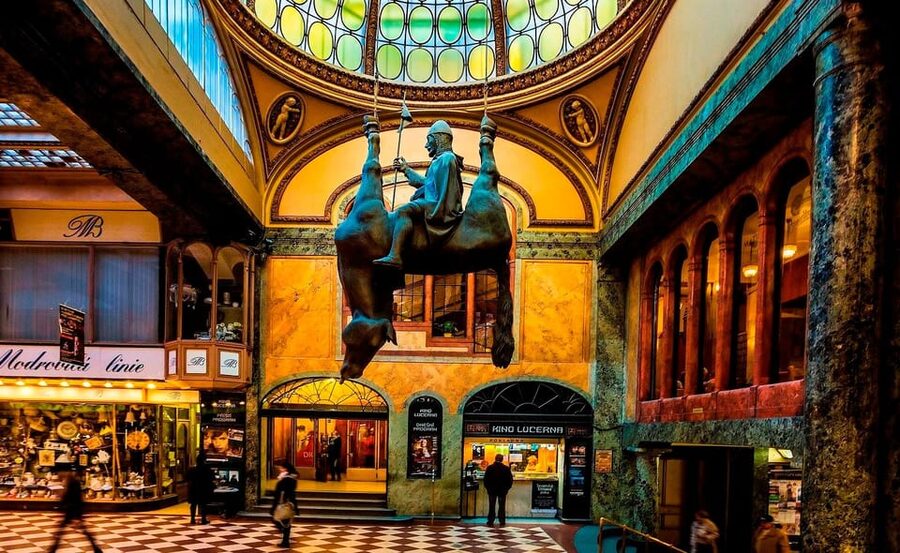
Most first-time visits to Prague center on its older architecture. That makes sense. The city’s historic streets are unusually striking, and the familiar postcard view can fill several days on its own.
Still, stopping there gives you only part of the story. Prague continued changing through the 20th century and into the 21st. New political ideas, new building methods, public commissions, and changing views of urban life all left their mark.
This tour focuses on that less obvious side of the city. You look at design not simply as decoration, but as evidence of how Prague’s society changed. A building may show the ideals of socialist realism. Another may reflect the heavier forms of brutalism. An installation may question how people use public space today.
I like this approach because it gives you a reason to notice ordinary-looking places. You are not only searching for the prettiest façade. You are learning why a structure, sculpture, or installation matters.
The tour also works well as a contrast to a standard historic walking tour. After seeing medieval streets and Baroque churches, modern Prague can seem surprising. It is less polished, sometimes more severe, and often more personal than the city’s famous old center.
A few more things to do in Prague worth a look
- Prague: Castle Tour with Local Guide and Entry Ticket
★ 4.6 · 10,422 reviews - Prague: Klementinum Library & Astronomical Tower Guided Tour
★ 4.5 · 5,050 reviews - Prague Guided Walking Tour and Cruise with Authentic Czech Lunch
★ 5.0 · 3,627 reviews
Ten stops, three design eras, and plenty of interpretation
The experience visits 10 points of interest during two hours. The supplied information does not name each stop, so you should not expect a published checklist of famous buildings. Instead, think of the route as a selected group of examples tied together by a guide’s explanation.
The tour’s themes include three broad areas:
- Socialist realism
- Brutalism
- Experimental installations and contemporary urban design
That range gives the walk useful variety. Socialist realism can help you consider how architecture served public ideals and official messages. Brutalism brings attention to concrete, strong geometric forms, and buildings that can divide opinion. Contemporary installations shift the focus toward artists, public space, and the way modern Prague keeps changing.
The number of stops matters. Ten places in two hours means you will generally spend a short time at each one. That is enough to hear the main idea, ask a question, and look closely, but not enough for a long architectural study of every structure.
I would bring a phone or small notebook if you are serious about design. You may want to record the names of artists or buildings mentioned by the guide, especially since one particularly positive experience involved several art installations that would otherwise have gone unnoticed.
Why the guide matters more than the buildings
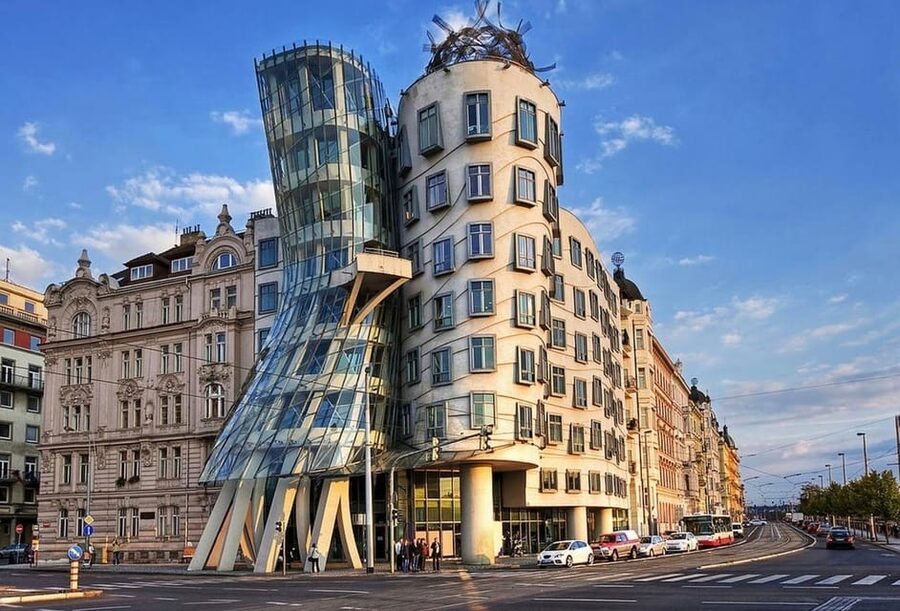
This is a live guided experience, not a self-guided route with a fixed audio track. The guide’s personality and knowledge shape the afternoon.
Michael has led at least some departures, and his style appears to be personal and open to questions. One small group received extra tips for seeing Prague after the walk, while another departure was so small that the guide worked with only two participants. A separate visit had just one participant, creating something close to a private tour.
That small-group possibility is a real advantage. You can stop to ask why a design choice was made or how a building fits into Prague’s wider development. You are less likely to feel lost in a large crowd, and the guide can adjust the conversation to your interests.
There is also a tradeoff. A personal route may not feel systematic. If you want a clear lecture that begins with one architectural movement and proceeds step by step through the next, you may find the structure informal.
I would treat the guide as an interpreter rather than a professor giving a strict course. You will get stories, observations, and context about selected places. You may not get a complete map of every style found in Prague.
The first part of the walk: changing ideas about urban life
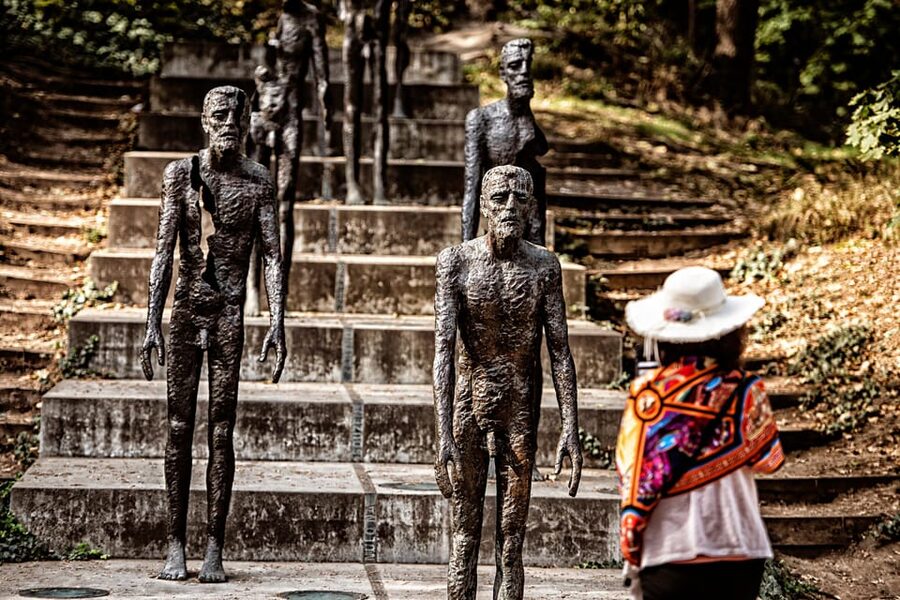
The early stops introduce the basic point of the tour: Prague is not frozen in its historic past. The city’s identity also comes from buildings and public works created during recent political and cultural periods.
At these stops, listen for the link between design and daily life. The key question is not simply Do I like this building? Ask instead what the building was meant to communicate, who used it, and what kind of city its designers imagined.
This is especially useful when the architecture is plain or imposing. Some structures may not make your list of Prague’s most beautiful sights. That does not make them unimportant. Their value may lie in the story behind them, the way they changed a neighborhood, or the debate they created.
The guide’s interpretation is important here because a quick look at concrete or stone rarely explains much on its own. A few minutes of context can turn an easy-to-ignore building into one of the more memorable stops of the day.
Same streets, a different kind of outing:
- Prague: 50-Minute Sightseeing Evening Cruise
★ 4.2 · 33,780 reviews - Prague: Medieval Dinner with Unlimited Drinks
★ 4.4 · 19,847 reviews - Prague: Skip-the-line Castle Ticket and Optional AudioGuide
★ 4.3 · 11,121 reviews - Prague Castle 2.5-Hour Tour Including Admission Ticket
★ 4.7 · 8,927 reviews
Socialist realism and the political meaning of style
The socialist realist section gives the tour a clear historical and cultural angle. This style was not only about appearance. It was tied to a period when public art and architecture could carry political messages.
You can expect the guide to discuss design principles and cultural influences rather than simply point out dates and materials. Pay attention to how public buildings and artworks present ideas about society, work, progress, and collective life.
This part may interest you most if you enjoy the connection between architecture and politics. It can also help you read other Central European cities with a sharper eye, since design often reflects the values of the period that produced it.
Do not expect every stop to be visually dramatic. Socialist realist work can be formal and purposeful. Its importance may come less from delicate detail than from the message it was built to express.
Brutalism and the buildings people argue about
Brutalist design tends to split opinion. Some people admire its bold concrete shapes and direct engineering. Others find it harsh or unfriendly. This tour gives you a chance to consider both reactions.
The useful part is the discussion of form. Brutalism often asks you to notice mass, structure, repetition, and the relationship between a building and the open space around it. That makes it a good fit for a walking tour, since you can view the structure from different angles rather than seeing only a photograph.
The experience does not promise a parade of Prague’s most beautiful buildings. That is worth knowing before you reserve. Some stops may seem ordinary at first. The payoff comes when the guide explains the design decisions or the building’s place in the city’s changing story.
I like tours that allow room for disagreement. You do not need to decide that every concrete structure is a masterpiece. It is enough to understand why the building looks as it does and what it says about the time in which it was made.
Experimental installations and art you might miss
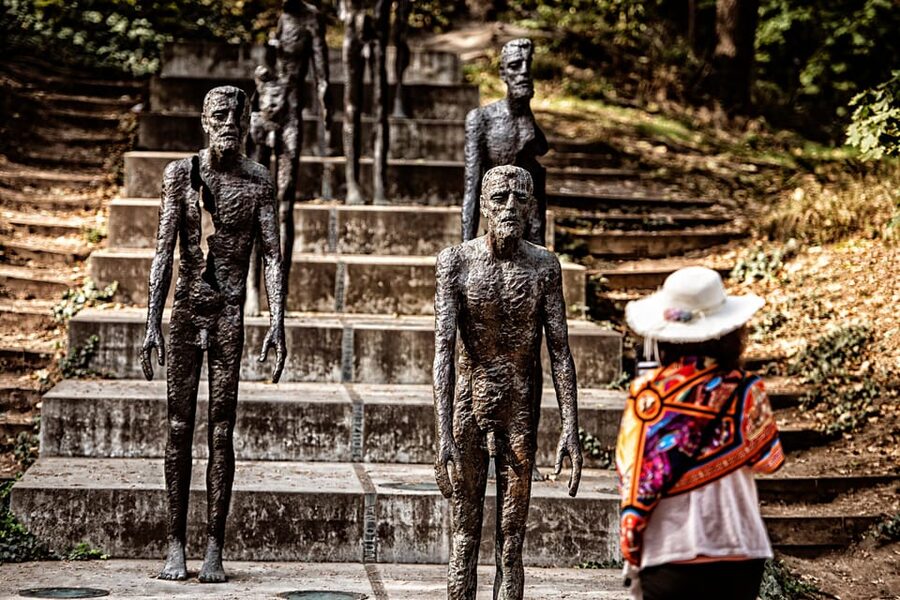
The strongest part of the walk may be its attention to public art and installations. One participant described seeing works that would otherwise have gone unnoticed, along with explanations of the artists behind them.
That detail tells you what makes this tour different from a standard architecture stroll. You are not only looking up at large buildings. You are also learning to scan streets and public spaces for smaller, stranger, or more easily missed works.
Experimental design can be harder to understand without context. An installation may seem random until the guide explains its purpose, creator, or connection to the surrounding area. This is where a live guide earns the fee.
The guide may also point out how newer work fits into an older city. Prague’s modern additions do not exist in a vacuum. They share space with historic streets, established neighborhoods, and older public monuments. The result can be awkward, clever, or thought-provoking.
That mix is part of the appeal. You are seeing a city still being edited rather than a museum display where every object belongs to one tidy period.
What the two-hour pace feels like
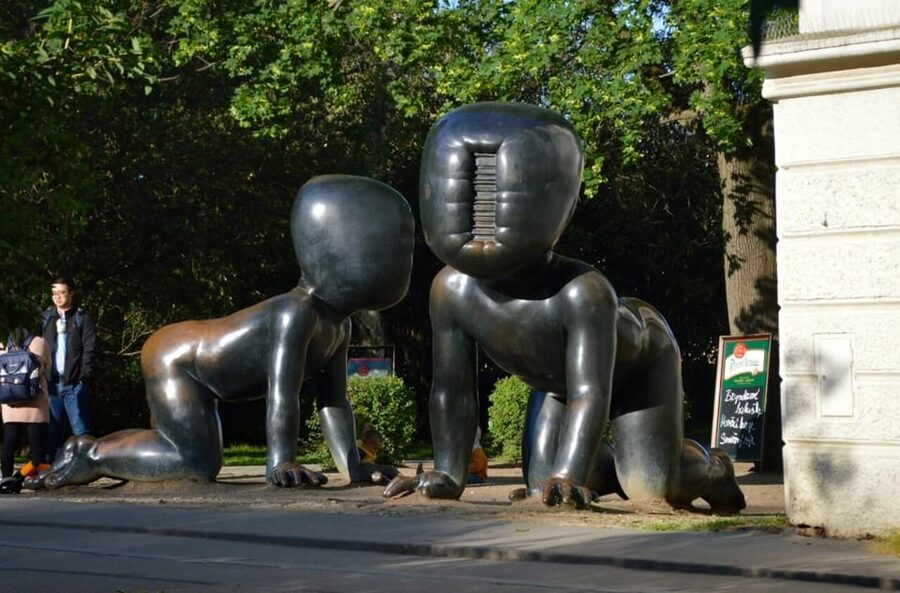
Two hours is a sensible length for this subject. You get enough time to build a theme without spending an entire day on specialized architecture.
At the same time, 10 stops create a quick rhythm. You will need to listen closely and move on when the guide does. This format suits you if you like variety and short explanations. It is less ideal if you want to sit for 20 minutes at each site and sketch or photograph every detail.
The walk also leaves room in your day. You could schedule it between other sightseeing plans rather than devote a full morning or afternoon to architecture.
Because food and drinks are not included, plan to handle refreshments separately. The tour is about interpretation and movement, not a meal or a stop at a café.
The activity is listed as wheelchair accessible, an important practical point for visitors who need an accessible route. You should still confirm the current meeting and route details when booking, since the information provided does not specify the exact streets or surfaces.
Is $35 a fair price?
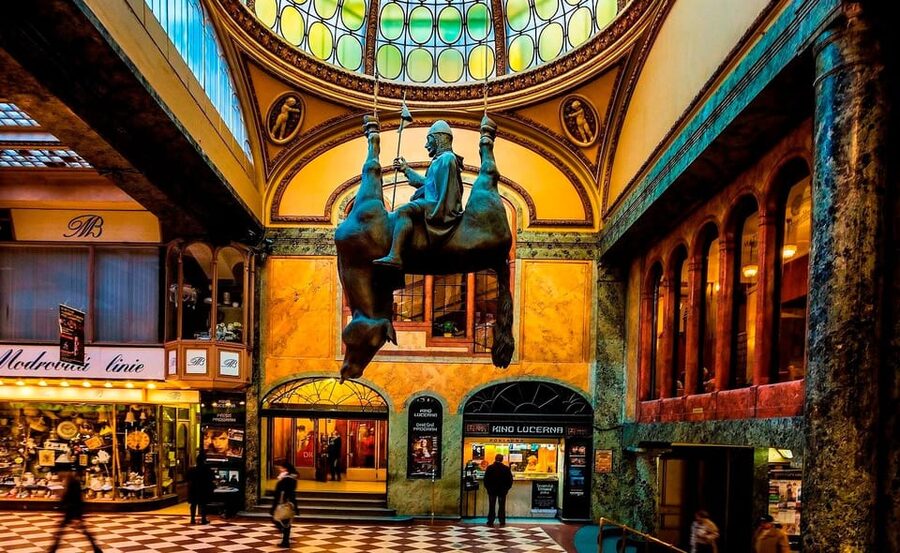
At $35 per person, this sits in a reasonable range for a two-hour specialist walking tour. You are paying for a live English-speaking guide, access to a selected route, and the ability to ask questions as you go.
The value depends on what you want. If you only need a list of buildings to photograph, you could likely explore modern Prague on your own. If you want help noticing installations, understanding political context, and connecting different design movements, the guided format makes more sense.
The possible small group is another value point. A private-feeling departure at the same listed price can be excellent value, though group size can change from one time slot to another.
I would not book it expecting grand interiors, famous landmarks at every turn, or a polished survey course. I would book it for the explanations and for the chance to see Prague through a less familiar lens.
The reserve-now-and-pay-later option also helps if your plans are still moving. You can hold a place without paying at once, and cancellation is available up to 24 hours before the start for a full refund.
Who will enjoy this Prague walk most?
This tour suits you if you:
- Enjoy architecture, public art, or urban design
- Have already seen Prague’s main historic sights
- Like discussing why a building looks the way it does
- Prefer a small live tour to a large group
- Want practical city suggestions from a local guide
- Are curious about socialist realism and brutalism
- Like finding art that is easy to miss without guidance
It may not suit you if you want a strict academic history of Prague architecture. It may also disappoint if your main goal is a tour of only the city’s most famous or attractive buildings.
For a first visit, I would pair it with a traditional historic walking tour rather than use it as your only introduction to Prague. The contrast makes both experiences stronger.
Practical details that affect your choice
The tour lasts two hours and is offered in English with a live guide. Availability depends on the starting time you select.
The price is $35 per person. Food and drinks are not included, so arrange those separately. The activity is wheelchair accessible.
You can cancel up to 24 hours in advance for a full refund. You can also reserve now and pay later, which is useful when your Prague schedule is not settled.
The experience is operated by DH Travel s.r.o. Since the exact 10 stops are not listed in the information available here, ask about the current route if a particular building or design movement is essential to your plans.
Should you book this modern architecture tour?
Book it if you want Prague beyond the usual historic postcard. The best reasons are the attention to overlooked installations, the discussion of socialist realism and brutalism, and the chance of a very small group with a guide such as Michael.
Skip it if you need a formal, chronological course or a route made up only of famous architectural icons. This is a selective walk built around stories and interpretation, not a complete catalogue.
For most design-minded visitors, $35 is a fair price for two focused hours. You will leave with a better sense of how Prague kept changing after its medieval and Baroque masterpieces were built, and you may start noticing modern details that you would otherwise walk past.
FAQ
How long does the modern architecture tour last?
The tour lasts two hours.
How many points of interest are included?
The route visits 10 points of interest.
What language is the tour offered in?
The tour is offered in English with a live guide.
Who operates the experience?
The experience is operated by DH Travel s.r.o.
Is the tour wheelchair accessible?
Yes, the activity is listed as wheelchair accessible.
Are food and drinks included?
No. Food and drinks are not included in the price.
Can I cancel or pay later?
Yes. You can cancel up to 24 hours in advance for a full refund, and you can reserve now while paying later.
Just added in Prague
- World War II 4WD Tour from Prague with Lunch★ 4.4 · 3 reviews
- WWII and Communism History in Prague’s Old Town Private Tour★ 5.0 · 4 reviews
- Prague: Historical Walking Tour with Focus on World War 2★ 4.3 · 12 reviews
- Unique salt cave in Prague★ 4.9 · 10 reviews
- Walking tour of Prague in french: Old Town & Charles Bridge★ 4.9 · 62 reviews
- Ultimate Unlimited Beer Pong with Czech Beer★ 4.6 · 5 reviews
- Walking tour of Prague in French : Nové Město★ 4.9 · 16 reviews
- Prague: Market Tour and Traditional Czech Cooking Class★ 4.7 · 19 reviews
Tours in Prague, compared.
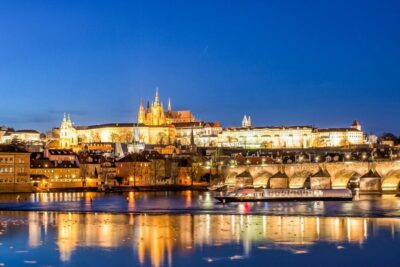
Castle Tour with Local Guide and Entry Ticket
Read our review →
Prague Castle 2.5-Hour Tour Including Admission Ticket
Read our review →
Oldtown, Medieval Underground & Dungeon History Tour
Read our review →