Reviewed · TOURS IN PRAGUE
Prague: Private Prague Art Nouveau and Cubism Tour
Prague’s most famous buildings are only part of its architectural story. This private tour follows Art Nouveau from the 1909 Central Train Station through the New Town, then shifts to Cubism in a quieter area below Vyšehrad. You’ll see places many sightseeing routes skip, with a guide explaining why these styles mattered.
I like the clear historical thread, which connects the Belle Epoque, modern design, World War I, and Prague’s older buildings. I also like the chance to travel like a local for part of the route, using public transportation to reach the city’s most daring Cubist houses. The main drawback is the length: at roughly three and a half hours, the final stretch may feel long if you prefer a shorter city walk.
Key points to know before you book
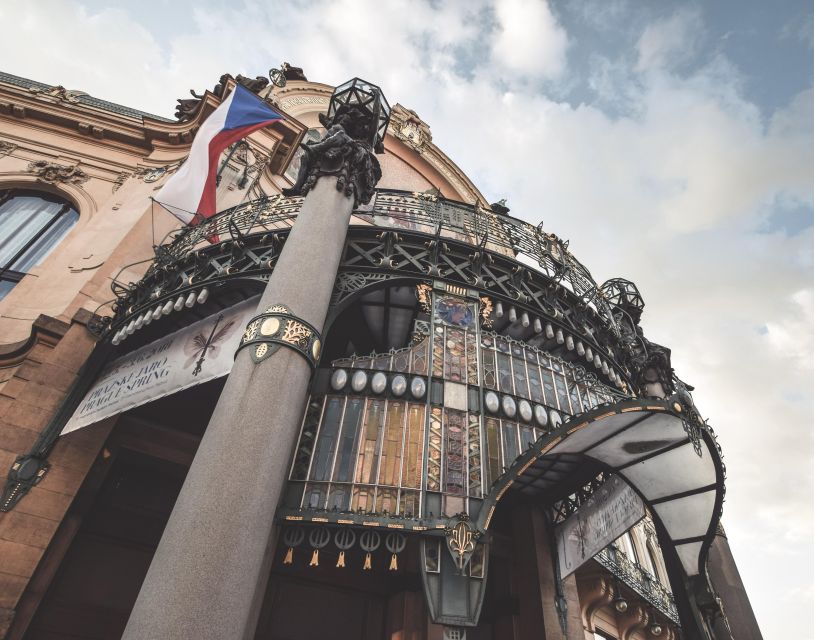
- Art Nouveau and Cubism in one route: See how two striking styles developed, clashed, and faded after World War I.
- A private guide makes the difference: Max and Eva are praised for clear explanations, good German and English, and thoughtful answers to questions.
- The route leaves central Prague: The walk ends near Vyšehrad, where public transportation takes you to buildings most visitors miss.
- Expect plenty of walking: Comfortable shoes matter, and one part of the group felt the full route could be shortened.
- Good for repeat visitors: This is aimed at people who have already seen Prague Castle, the Old Town, and other headline sights, or who have several days in the city.
- Practical value at $84: A private tour with public transportation included is a fair deal if you care about architecture and want a tailored explanation rather than a quick photo stop.
Why this Prague architecture tour feels different
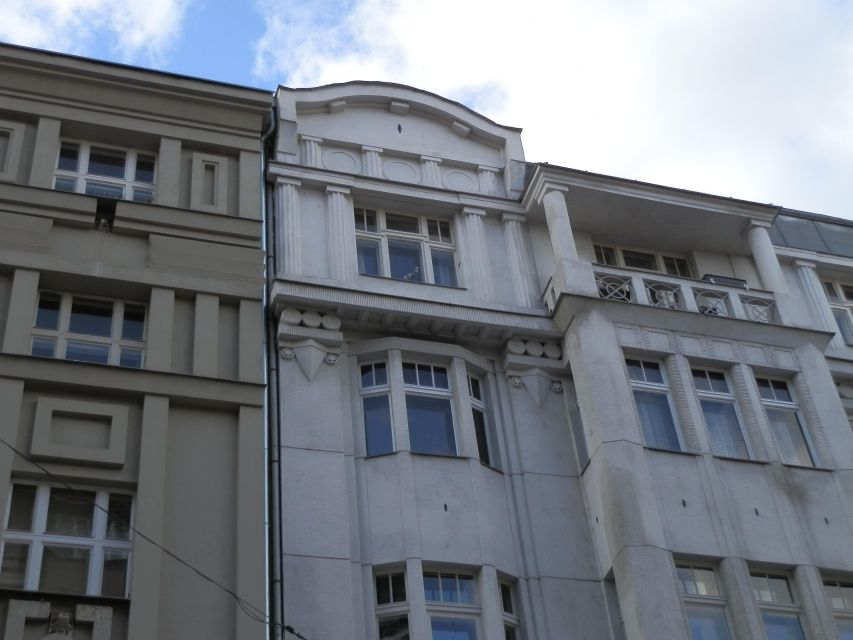
Most first-time visitors meet Prague through medieval lanes, Baroque churches, and the grand castle above the river. Those sights deserve their place, but they can leave you with a picture of Prague as a city frozen before the modern age.
This walk changes that picture. It focuses on the years around 1900, when Prague was changing fast and architects were looking for new ways to express a new century. Art Nouveau brought curved lines, plant forms, decorative surfaces, and a break from the rigid historical styles of the 19th century. Cubism pushed even harder, turning buildings into sharp planes and unusual geometric shapes.
You are not simply ticking off façades. Your guide explains how each style grew from the one before it, why Art Nouveau felt revolutionary at the time, and how Czech architects adapted outside ideas into a local style. That context is the chief reason to choose a private tour instead of wandering with a guidebook.
The private format also matters. With only your own group, you can ask why a particular building looks the way it does, stop to study a detail, or move on when the explanation is clear. Max has guided in English and German, and Eva has received praise for explaining Prague’s many architectural styles in a direct, easy-to-follow way.
A few more things to do in Prague worth a look
- Prague Old Town: Private Tour
★ 5.0 · 1,223 reviews - Prague Airport Private Arrival Transfer
★ 4.5 · 991 reviews - Prague Airport Private Departure Transfer
★ 4.5 · 780 reviews
Meeting at Prague Main Railway Station
The tour begins in the middle of Platform 1 at Prague’s Central Train Station. Look for the bankomat, or ATM, associated with UniCredit Bank, and identify the guide by the red folder.
This is a practical meeting place if you are arriving by train, but it may take a little attention if you enter the station from the street. Give yourself time to find Platform 1 rather than arriving at the last minute. The meeting point is inside the station, not at a landmark on the square outside.
The station itself begins the story. The current building dates from 1909, placing it right in the Belle Epoque period the tour examines. Your guide spends about 15 minutes here, using the station as an early example of Prague’s modern ambitions. It is a smart opening because you begin with a working transport hub rather than a museum display.
You can also get your bearings quickly. From here, the route moves into Prague’s New Town on foot, so this first stop sets both the theme and the pace.
New Town details: Jubilee Synagogue and overlooked façades
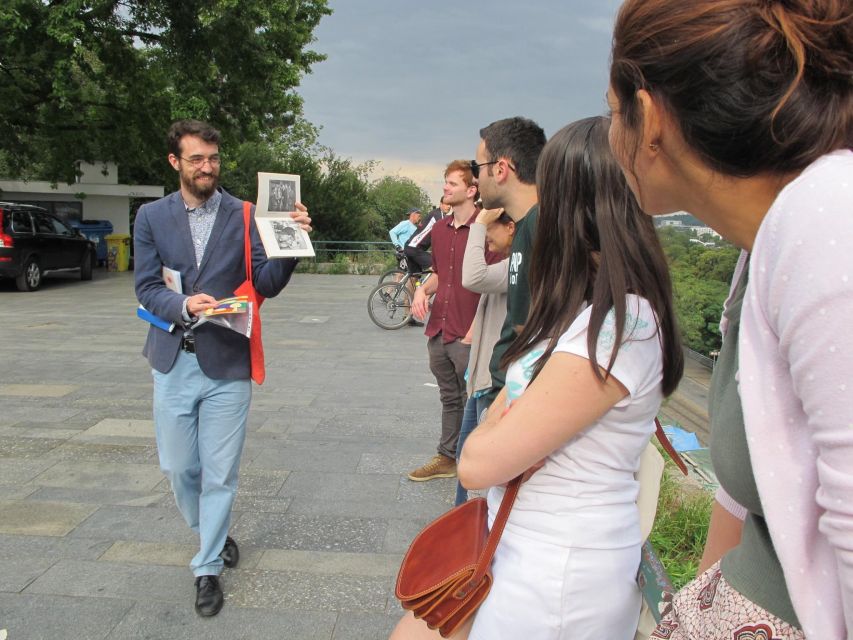
The next part is a series of short walks and stops. Most walks between points take three to five minutes, while the stops range from about five to 20 minutes. This rhythm works well for architecture because you are rarely stuck listening in one place for too long.
The Jubilee Synagogue is one of the early stops. It gives the walk another layer, showing how religious architecture could use colorful decoration and modern design at the start of the 20th century. The stop itself is brief, about five minutes, so expect an exterior-focused explanation rather than a long interior visit.
From there, the guide points out several less-noticed buildings in the New Town. These pauses are important because the tour teaches you how to look. A doorway, window surround, sign, or decorative line that might seem like background detail becomes evidence of a changing design language.
You will not spend every stop inside a major attraction. That is both the strength and the limitation of the experience. If you want long visits to interiors, this is not that kind of tour. If you enjoy reading a city through streets and façades, the short stops keep the route moving.
Municipal House and the polished face of Art Nouveau
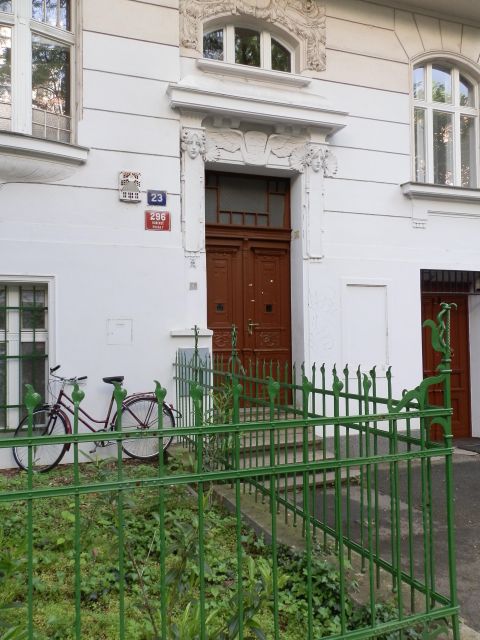
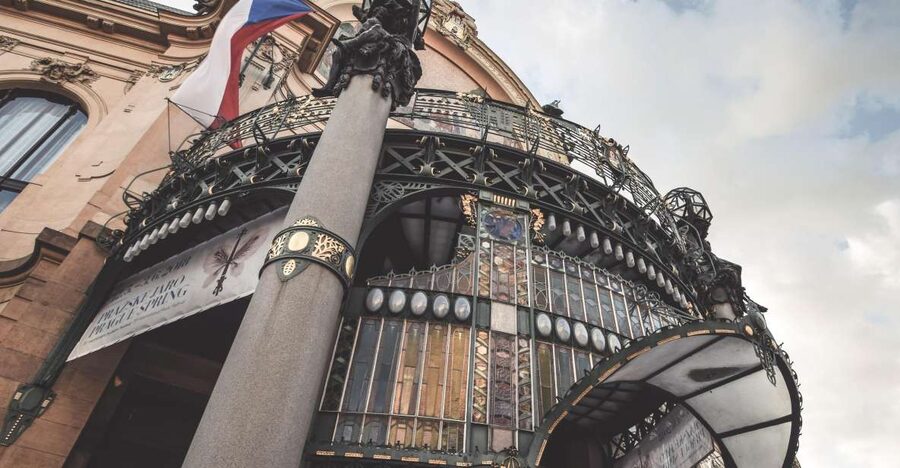
Municipal House receives about 10 minutes, enough time to appreciate its place in Prague’s Art Nouveau story. This is one of the route’s major architectural highlights, and it helps you see how the style could combine structure, public ceremony, decoration, and national pride.
Your guide’s job here is not just to say that the building is beautiful. You learn how Art Nouveau developed out of 19th-century traditions while breaking away from strict historical copying. In Prague, that shift helped create a modern identity without cutting the city off from its older architectural past.
This is one of the moments when the tour’s wider idea becomes clear. Modern architects did not simply replace old Prague. Their work often framed, echoed, or respected the historic city around it. The result is a layered Prague, where medieval, Baroque, Art Nouveau, and Cubist buildings can appear within a short walk.
Same streets, a different kind of outing:
- Prague: 50-Minute Sightseeing Evening Cruise
★ 4.2 · 33,780 reviews - Prague: Medieval Dinner with Unlimited Drinks
★ 4.4 · 19,847 reviews - Prague: Skip-the-line Castle Ticket and Optional AudioGuide
★ 4.3 · 11,121 reviews - Prague: Castle Tour with Local Guide and Entry Ticket
★ 4.6 · 10,422 reviews
House of the Black Madonna and the turn toward Cubism
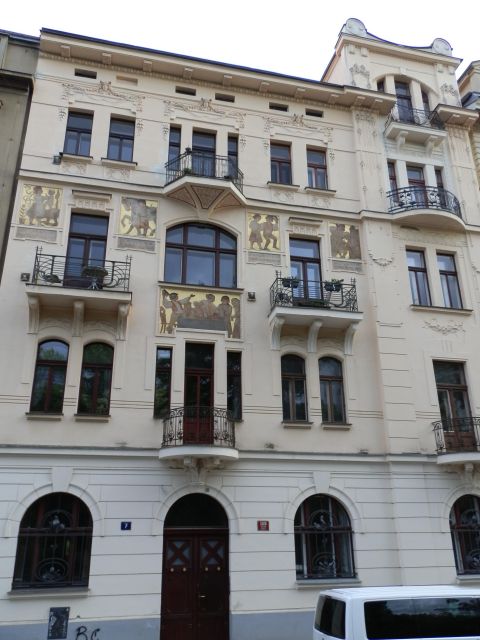
The House of the Black Madonna is the clearest bridge from Art Nouveau to Cubism. The stop lasts about 10 minutes, giving your guide room to explain why Cubism arrived as a revolt against the softer and more decorative style that came before it.
Cubist architecture is not always easy to understand at first glance. In a painting, broken planes and shifting angles are obvious. In a building, the effect can be more restrained, appearing in the shape of a staircase, a window, a façade, or an interior object. This is where a good explanation earns its keep.
The building also helps show that Czech Cubism was not simply an imported fashion. It became one of Prague’s most distinctive contributions to modern design. After seeing it, you will have a better eye for the angular forms that appear later in the tour.
The route then continues through more short stops, including buildings that are easy to pass without noticing. The guide fills in the gaps between the headline sights, which is where the private format feels most useful.
Wenceslas Square and the city’s modern identity
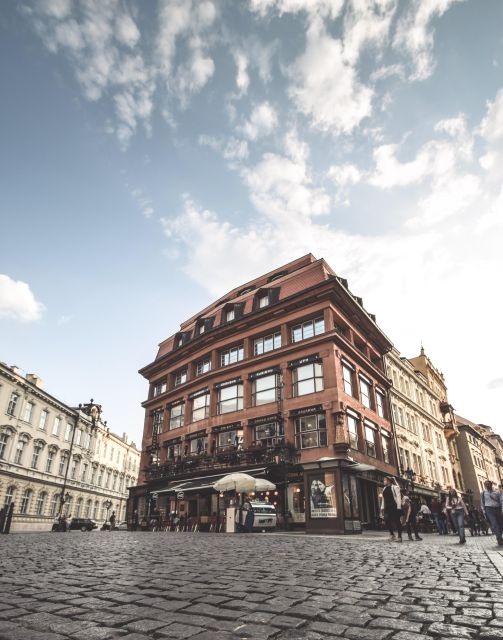
Wenceslas Square is the longest stop in the central portion, at about 20 minutes. That extra time makes sense. The square is large, historically important, and full of buildings from different periods, so it offers a broad view of how Prague changed during the modern era.
Here, the story moves beyond individual design features. You consider how architecture reflects political and social change, especially during the early 20th century. The Belle Epoque did not last forever. World War I altered the political order and weakened the conditions that had allowed Art Nouveau and Cubism to flourish.
The square also helps connect architectural history to everyday city life. It is not a quiet monument; it is a major urban space. You can see how styles were used for homes, shops, offices, and public buildings rather than only for grand palaces.
After Wenceslas Square, the tour continues to another lesser-known stop before leaving the central area. By this point, you will have covered a lot of ground. Wear comfortable shoes, and do not assume that the short walks mean the whole experience is light on walking.
The tram ride toward Vyšehrad
The route then uses public transportation for two short tram rides, with about five minutes listed for each segment. Tickets for the necessary public transportation are included, so you do not need to arrange them separately.
This change of pace is one of the route’s best features. You leave the busiest central streets and reach a more remote area beneath the Vyšehrad fortress. The ride shows how the architectural story extends beyond the usual visitor circuit.
It also adds a small practical challenge. You need to follow the guide through the transit portion rather than wandering at your own speed. Since the group is private, this should be manageable, but keep your attention on the meeting and boarding instructions.
The tram is not a sightseeing ride in itself. Its value is that it gets you to the final section, where the buildings are harder to reach by a standard walking route. The tour ends near a tram stop, making the return to central Prague straightforward.
Three Cubist Houses and Kovařovicova Villa
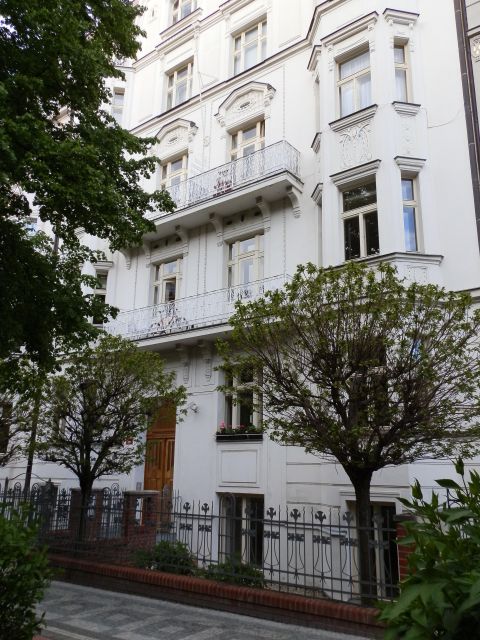
The Cubist section begins with the Three Cubist Houses. These buildings show how radical the style could look when applied to ordinary urban structures. Their shapes and surfaces are less concerned with the soft decoration associated with Art Nouveau and more interested in geometry, tension, and strong visual planes.
The stop is short, about five minutes, but the guide’s explanation is likely to matter more than the amount of time spent standing there. Cubist buildings can look odd or even unfinished if you do not know what you are seeing. With the right context, their sharp forms become deliberate experiments.
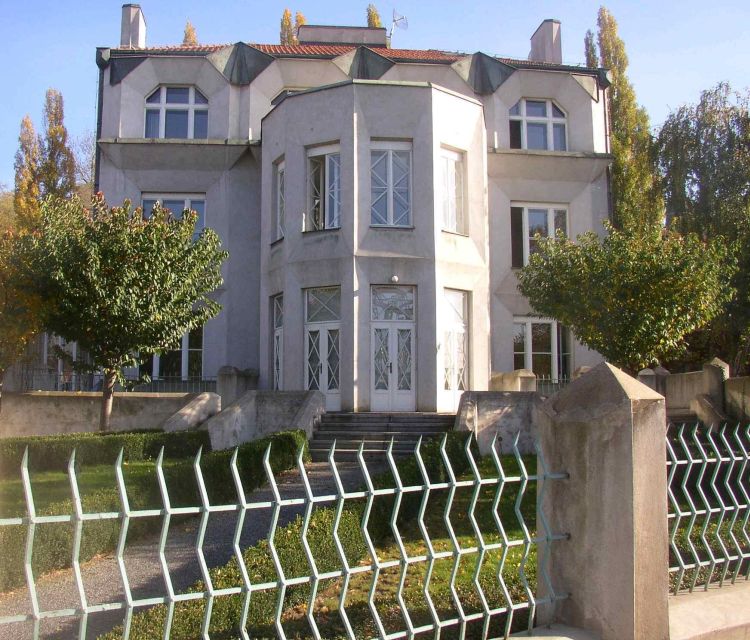
Kovařovicova Villa follows after another short walk. This is a chance to see Cubism on a more individual scale. Instead of a broad city square or public building, the villa lets you consider how the style could shape a private home.
The contrast between the earlier New Town buildings and this quieter area is part of the appeal. Central Prague gives you grand public architecture and busy streets. Under Vyšehrad, you see a more personal and adventurous side of the movement.
Cubist House Vyšehrad No. 98 and the final stop
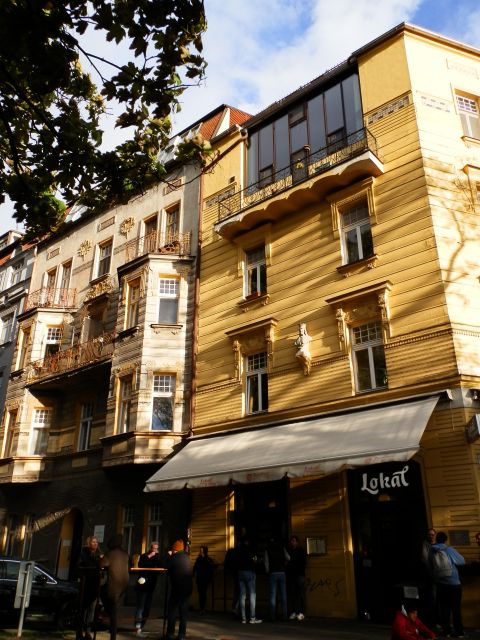
The last architectural stop is Cubist House Vyšehrad No. 98. By now, the guide has built a visual vocabulary for you. You can compare the building with the earlier examples and judge how Cubism changes from one structure to another.
This is also the point where the tour can feel long. One person found that the final portion could have been skipped and that two and a half to three hours would have been enough. I would take that as useful planning advice, not a reason to dismiss the route.
If you are seriously interested in architecture, the final section gives the experience its strongest sense of discovery. If you have limited energy, young children, or another appointment soon after, the full route may ask too much. Children under 12 are not accepted, and the walk is better suited to adults who enjoy sustained explanation.
The nearby tram stop is convenient at the end. You can ride back toward central Prague using the included ticket, rather than having to work out a return route from a residential area.
Price, pace, and who gets the best value
At $84 per person, this is not a bargain sightseeing walk for someone who only wants a quick introduction to Prague. It is a private, full-route architecture experience with a live guide in English or German and public transportation included.
The value improves if two or more people are sharing the private booking. You are paying for a specialist subject, a personal group format, and access to parts of Prague that are not usually covered on a first visit. Max and Eva have both been singled out for clear explanations, strong command of the subject, and the ability to answer questions.
The rating is 4.8 from six evaluations, which points to a very strong response, though the small number means you should still pay attention to the length concern. The common thread is the quality of the teaching. This is not the right choice if you want a fast photo tour.
Plan for roughly three and a half hours, even though the booking is valid for one day. The exact start time depends on availability. Wear comfortable shoes, and leave room in your schedule afterward rather than trying to squeeze in another timed attraction.
The tour is wheelchair accessible according to the activity details. Since the route involves several outdoor walks and public transportation, ask the provider for current route specifics if you need to plan around particular mobility requirements.
Who should book this Prague Art Nouveau and Cubism tour?
I would choose this tour if you have already covered Prague’s major sights or have a week in the city. It gives you a fresh subject without abandoning the city’s better-known areas entirely.
It also suits you if you enjoy cultural history, photography, design, or buildings that reward close attention. You do not need a professional background in architecture. The guide’s role is to make the styles understandable, not to bury you in technical terms.
You may want something else if you are visiting Prague for only one day and have not yet seen the castle, Old Town, Charles Bridge, or Jewish Quarter. This route is an alternative layer of the city, not a replacement for the first-time essentials.
I would also think twice if you dislike long walks, prefer indoor visits, or want a relaxed half-day with plenty of café time. The route covers a lot of ground, and the final Cubist section is valuable mainly if the subject already interests you.
My recommendation
Book it if you want to understand why Prague looks the way it does beyond its medieval postcard image. The tour’s best qualities are its sharp focus, strong historical explanation, and route from central Art Nouveau landmarks to the unusual Cubist buildings under Vyšehrad.
Skip it if your Prague schedule is tight or if three and a half hours of walking sounds tiring. For everyone else, especially repeat visitors, this is a smart way to see a less familiar side of the city. Max or Eva can help you notice the details that most people walk past, and the included tram rides make the farthest part of the route practical.
FAQ
Where does the tour start?
It starts at Prague’s Central Train Station, in the middle of Platform 1 near the UniCredit Bank ATM. The guide carries a red folder.
How long does the tour take?
Plan for about three and a half hours. One part of the route can feel long, and some people may prefer a shorter version of about two and a half to three hours.
What languages are available?
The tour is offered in English and German.
Is this a private tour?
Yes. It is designed for a private group rather than a shared public group.
What architectural styles does the tour cover?
The focus is on Prague’s Art Nouveau and Cubist architecture, with historical context about how both styles developed and changed.
Does the tour use public transportation?
Yes. The route includes short tram rides to the area beneath Vyšehrad, and the required public transportation tickets are included.
Is the tour wheelchair accessible?
The activity is listed as wheelchair accessible.
Are children allowed?
Children under 12 are not suitable for this tour.
What should I bring?
Bring comfortable shoes because the route includes substantial walking.
Can I cancel for a full refund?
You can cancel up to 24 hours before the activity for a full refund. You can also reserve now and pay later, which keeps your plans flexible.
Just added in Prague
- World War II 4WD Tour from Prague with Lunch★ 4.4 · 3 reviews
- WWII and Communism History in Prague’s Old Town Private Tour★ 5.0 · 4 reviews
- Prague: Historical Walking Tour with Focus on World War 2★ 4.3 · 12 reviews
- Unique salt cave in Prague★ 4.9 · 10 reviews
- Walking tour of Prague in french: Old Town & Charles Bridge★ 4.9 · 62 reviews
- Prague: Market Tour and Traditional Czech Cooking Class★ 4.7 · 19 reviews
- Ultimate Unlimited Beer Pong with Czech Beer★ 4.6 · 5 reviews
- Walking tour of Prague in French : Nové Město★ 4.9 · 16 reviews
Tours in Prague, compared.
Castle Tour with Local Guide and Entry Ticket
Read our review →
Prague Castle 2.5-Hour Tour Including Admission Ticket
Read our review →
Oldtown, Medieval Underground & Dungeon History Tour
Read our review →