
Reviewed · OLD TOWN & JEWISH QUARTER TOURS
Jewish Prague With a Local Historian
Prague’s Jewish story is told most clearly in the places where it happened: the synagogues and cemetery of Josefov, the station used to deport Czech Jews, and the railway terminal linked to Nicolas Winton’s rescue work. This three-hour walk connects those sites with the life of Franz Kafka and the difficult story of Jewish persecution.
I like the small group size, capped at six, and the way the route moves beyond the famous Jewish Quarter. I also like that historian Jiri brings academic depth to the walk, yet keeps the pace manageable and answers questions patiently and fully. The main consideration is that the Jewish Museum’s interiors are not part of the standard tour, and the route covers several areas by foot and public transport.
Key points to know before you book
- Josefov is only the first chapter: The tour spends about 90 minutes in Prague’s former Jewish Quarter, then continues to less familiar sites elsewhere.
- Historian Jiri leads the walk: His PhD background and patient approach suit anyone who wants context, not just a list of dates.
- The Holocaust story is tied to real places: Bubny marks the departure point for Czech Jews sent to concentration camps.
- Nicolas Winton gets his own stop: Prague’s main railway station recalls how he helped save 669 Jewish children.
- The group is limited to six: That makes questions and conversation much easier than on a large city tour.
- Public transport is included: A Prague transit ticket and bottled water are provided, making the route easier to manage.
Why this Jewish Prague walk feels different
Many Prague tours stay inside the postcard center. This one uses Josefov as a starting point, then follows the subject into New Town, Bubny, and Prague’s main railway station. That wider route matters because Jewish Prague is not only a collection of historic buildings. It is also a story of daily life, forced removal, survival, and memory.
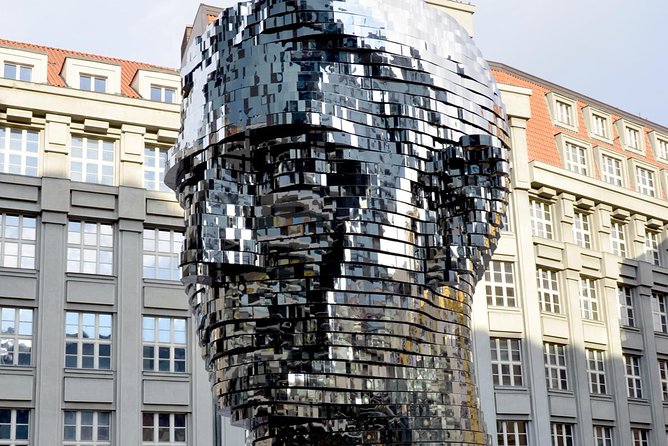
You begin at Náměstí Franze Kafky in the Old Town, a fitting place for a tour that gives Franz Kafka a clear place in the story. From there, the route moves through the former Jewish Quarter and later by public transport toward other parts of Prague.
I especially like the balance between architecture and human stories. You will see synagogues and the Jewish Cemetery, but you will also hear about the Holocaust, Nazi concentration camps, and the departure of Czech Jews from Bubny. The final parts of the route connect that painful history with Nicolas Winton’s rescue of children and with the Jerusalem Synagogue.
The tour lasts about three hours. That is long enough to connect the subjects without taking up an entire day, though you should expect a steady city walk rather than a sit-down museum visit.
More of the old streets in Prague:
- Prague: Old Town Hall Tower Entry Ticket
★ 4.5 · 6,749 reviews - Prague: 3-Hour Walking Tour of Old Town & Prague Castle
★ 4.7 · 5,696 reviews - Prague: 3-Hour Old Town and Prague Castle Tour in German
★ 4.8 · 5,671 reviews
Josefov, Prague’s former Jewish Quarter
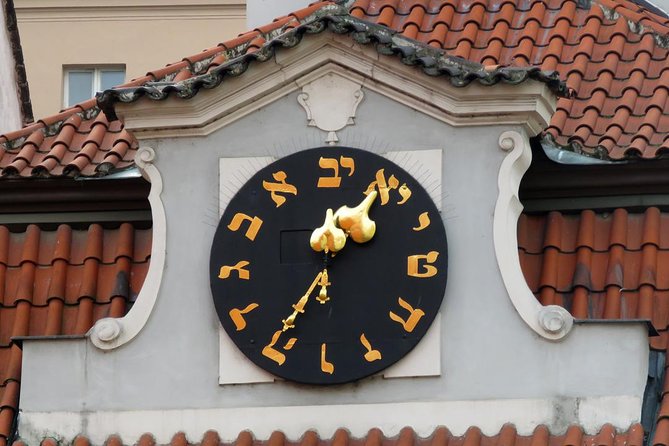
The first and longest stop is Josefov, where you spend about 90 minutes walking through the former Jewish Quarter. The area dates to the 13th century, when it was Europe’s largest Jewish ghetto. The tour takes you past different synagogues, the Klausen Synagogue, and the Jewish Cemetery.
The value here is the setting. You are not hearing about the quarter from a distant lecture room. You are walking through the streets and seeing the buildings that shaped Jewish life in Prague. The guide also points out less obvious spots that can be easy to miss when you explore alone.
The Jewish Cemetery is one of the major sights on this part of the route. Klausen Synagogue is another named highlight, and together they give you a sense of the religious and communal life that once centered here. The emphasis is on explanation, so you can expect the guide to connect the visible buildings with the people and events behind them.
A useful point to understand before booking: the standard tour does not include a visit inside the Jewish Museum. You walk through Josefov and see its important locations from the route, but the museum admission is separate. The guide can arrange a museum visit together, which may suit you if you want more time inside the synagogues and exhibitions.
That arrangement also means the tour is flexible in spirit, but you should clarify the museum plan before setting out. If your main goal is to see every Jewish Museum site, this walk alone may not be enough. If you want a guided introduction before deciding what to visit on your own, it works well.
Franz Kafka and the city around him
The meeting point at Náměstí Franze Kafky gives the tour an early connection to one of Prague’s best-known Jewish writers. Kafka’s life and writing form part of the discussion as you move through the city.
The appeal here is not simply seeing a name on a square. Kafka’s work is tied to Prague’s languages, streets, institutions, and social divisions. A local historian can place his writing within that setting instead of treating him as an isolated literary celebrity.
The information provided does not promise a dedicated Kafka museum visit or a long literary lecture. Expect Kafka to be one thread in a broader story about Jewish Prague. That is a good fit if you want literature to support the historical setting, rather than take over the entire walk.
New Town and three lesser-known Jewish sites
After Josefov, the route continues into Nove Mesto, or New Town, for about 30 minutes. Here you see three Jewish-related places that are harder to find without a guide, including the oldest known Jewish cemetery in Prague.
This is one of the tour’s strongest features. The famous quarter is easy to put on a sightseeing list. The smaller sites in New Town require more orientation, and a local guide helps you understand why they matter.
You should not expect a large museum or a long stop at each location. Thirty minutes is a short segment, so the focus is on finding the sites and explaining their place in Prague’s Jewish story. I see this as a useful bridge between the formal sights of Josefov and the wider city.
The route also gives you a break from seeing only the most heavily visited part of central Prague. You gain a better sense of how Jewish traces can appear outside the boundaries most people associate with the Jewish Quarter.
Same streets, a different kind of outing:
- Prague: 50-Minute Sightseeing Evening Cruise
★ 4.2 · 33,780 reviews - Prague: Medieval Dinner with Unlimited Drinks
★ 4.4 · 19,847 reviews - Prague: Skip-the-line Castle Ticket and Optional AudioGuide
★ 4.3 · 11,121 reviews - Prague: Castle Tour with Local Guide and Entry Ticket
★ 4.6 · 10,422 reviews
Bubny and the Holocaust Memorial
The next stop is Bubny, where Czech Jews departed for concentration camps. You spend about 30 minutes here, including time at the Holocaust Memorial.
This is the point where the tour’s subject becomes especially direct. Earlier stops show religious buildings, cemeteries, and Jewish life. Bubny confronts the machinery of persecution and forced departure. The memorial gives that history a physical location rather than leaving it as a general account of the Holocaust.
I appreciate the decision to include Bubny even though it lies beyond the usual Old Town circuit. A tour focused only on synagogues could give an incomplete picture. This stop makes clear what happened to the Jewish communities the earlier sites represent.
The subject is serious, and the guide’s role matters here. Jiri is described as a PhD historian who answers questions patiently and completely. That background should be useful at a place where dates and names matter, but where the human meaning matters just as much.
Allow yourself some quiet attention at Bubny. This is not a quick photo stop. The 30-minute visit gives the memorial enough time to register, while keeping the whole experience within three hours.
Prague’s main railway station and Nicolas Winton
The route then goes to Praha hlavni nadrazi, Prague’s main railway station, for about 15 minutes. Here you hear the story of Nicolas Winton, who helped save 669 Jewish children.
This is a shorter stop, but it adds a different kind of historical note. Bubny represents deportation and loss. The railway station story points to an effort that protected children from the Nazi threat. Together, the two railway-related sites show how transport could be used both to remove people and to help them escape.
You will not spend a long period at the station, so this section is best understood as a focused story rather than a full station tour. The value comes from the guide’s explanation and from standing in the place associated with Winton’s rescue work.
The stop also broadens the tour beyond buildings tied directly to worship. Jewish Prague includes personal decisions, networks, danger, and acts of courage. That wider view makes the experience more than a walk among old religious sites.
Ending at the Jerusalem Synagogue
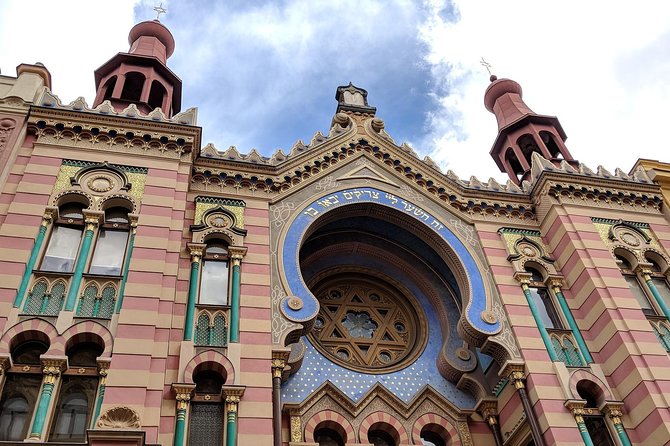
The tour ends at the Jerusalem Synagogue in New Town. The visit is scheduled for about 15 minutes, and admission is not included in the tour price.
Because the synagogue is the final stop, it provides a visual and architectural finish after the more difficult subjects at Bubny and the railway station. You should budget separately if you want to go inside. The tour information lists the synagogue admission as not included, so check the current entry arrangements when planning your day.
Ending here also gives you a practical advantage. You finish on Jeruzalémská Street in New Town rather than returning to the starting point. That can work well if you plan to continue sightseeing in New Town or head elsewhere by public transport. It is less convenient if you need to return immediately to Josefov, so note the end location before booking.
What you get for $64
At $64 per person, this is not the cheapest way to walk around Prague. You are paying for a private experience with a historian, a maximum group of six, public transport, and a route that links several parts of the city.
The price makes more sense if you value interpretation. You could walk through Josefov independently, but you would need to research the buildings, locate the New Town sites, understand Bubny’s role, and connect the railway station to Winton’s story. The included transit ticket also removes one small task from a route that changes neighborhoods.
The tour includes all fees and taxes, bottled water, and a Prague public transport ticket. It does not include admission to the Jerusalem Synagogue, and the Jewish Museum is not part of the standard visit. Those extra costs are worth factoring in if you want to go inside both.
For a group of up to six, the format is particularly appealing. You can ask questions without waiting for a large crowd to quiet down. You also avoid the rushed feel that can come with a big walking group. The strongest value comes from the guide’s time and the route’s historical connections, not from the number of admission tickets included.
Pace, group size, and practical comfort
The walk lasts approximately three hours and includes both walking and public transport. The route is described as moving at a good pace, not too fast, so you have time to take in the information and ask questions.
You should still wear comfortable shoes. The itinerary includes several districts and multiple stops, and the tour is not based in one museum or building. Most people can participate, and the experience is near public transportation.
Morning and afternoon departures are available. I would choose the time that leaves room for the Jewish Museum or the Jerusalem Synagogue if you want to visit either independently. Since the tour ends in New Town, an afternoon booking could also fit well with an evening plan nearby.
The experience is subject to good weather. If poor weather causes cancellation, you are offered another date or a full refund. You can cancel for a full refund up to 24 hours before the start time. Confirmation is sent within 48 hours of booking, subject to availability.
Who will get the most from this experience
I would choose this tour if you want a serious introduction to Jewish Prague and prefer a historian-led walk over a standard sightseeing circuit. It is especially suitable if you want the Holocaust story included in a clear, place-based way.
The small group format should suit you if questions matter. Jiri’s patient, detailed answers are a strong reason to choose this over a larger group tour, particularly if you have an interest in Prague’s Jewish history, World War II, or Franz Kafka.
It also suits anyone who has already seen Prague’s main square and castle and wants a more focused subject. The route is not limited to the most familiar attractions, so it can give a repeat visitor a new way to understand the city.
You may want another option if you mainly want interior visits to synagogues and museum galleries. The standard experience is primarily a guided walk, and the Jewish Museum is not included. You may also prefer a shorter tour if three hours of historical discussion feels like too much.
Should you book Jewish Prague With a Local Historian?
I would book it if you want the Jewish Quarter placed within a larger story. The combination of Josefov, New Town, Bubny, Prague’s main railway station, and the Jerusalem Synagogue gives you far more than a quick walk past old buildings.
The best reasons to choose it are the group limit of six, the wider route, and Jiri’s reported strength as a PhD historian who explains patiently. Just plan for the separate admission costs, the final stop away from Josefov, and the fact that the Jewish Museum is not automatically included.
If those details fit your plans, $64 is a fair price for three hours of focused guidance and public transport across several parts of Prague. If you want a self-guided look at Josefov only, you can spend less. If you want the connections between Jewish life, persecution, Kafka, Winton, and Holocaust memory, this tour earns its place in your itinerary.
FAQ
How long does Jewish Prague With a Local Historian last?
The tour lasts approximately three hours.
Where does the tour begin?
It begins at Nám. Franze Kafky 24/3 in Prague’s Staré Město, near the Franz Kafka square.
Where does the tour end?
The tour ends at the Jerusalem Synagogue on Jeruzalémská Street in New Town.
Is the Jewish Museum included?
No. The standard tour does not include a Jewish Museum visit, though a visit together can be arranged.
Is admission to the Jerusalem Synagogue included?
No. Admission to the Jerusalem Synagogue is not included in the tour price.
What is the maximum group size?
The tour has a maximum of six travelers.
Are public transport tickets included?
Yes. A Prague public transport ticket is included, along with bottled water.
Can I cancel for a full refund?
Yes. You can cancel at least 24 hours before the experience start time for a full refund.
Just added in Prague
- World War II 4WD Tour from Prague with Lunch★ 4.4 · 3 reviews
- WWII and Communism History in Prague’s Old Town Private Tour★ 5.0 · 4 reviews
- Prague: Historical Walking Tour with Focus on World War 2★ 4.3 · 12 reviews
- Unique salt cave in Prague★ 4.9 · 10 reviews
- Walking tour of Prague in french: Old Town & Charles Bridge★ 4.9 · 62 reviews
- Prague: Market Tour and Traditional Czech Cooking Class★ 4.7 · 19 reviews
- Ultimate Unlimited Beer Pong with Czech Beer★ 4.6 · 5 reviews
- Walking tour of Prague in French : Nové Město★ 4.9 · 16 reviews
Old Town & Jewish Quarter Tours, compared.
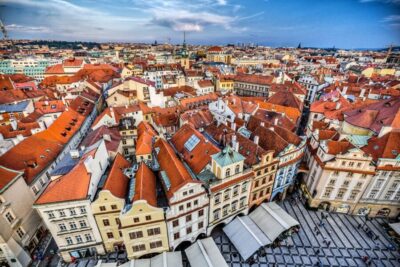
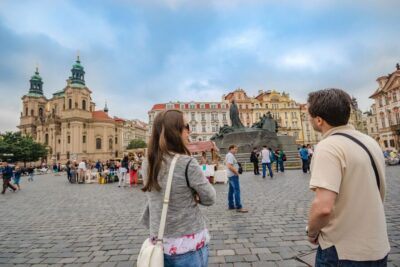
3-Hour Walking Tour of Old Town & Prague Castle
Read our review →
Jewish Quarter Walking Tour with Admission Tickets
Read our review →
Prague Old Town, Medieval Underground and Dungeon Historical Tour
Read our review →
Old Town and Jewish Quarter Guided Tour in German
Read our review →
Ghosts and Legends of the Old Town Evening Tour
Read our review →
Prague Ghost and Legend of Old Town Walking Tour
Read our review →
Browse the lists this tour appears in