
Reviewed · COMMUNISM & WWII HISTORY TOURS
Prague: 2-Hour Back to Communism Walking Tour
Prague’s communist past is not confined to a museum. It is written into ordinary streets, former government offices, protest sites, and places where Soviet power was felt for decades. This two-hour walking tour connects those locations while a local guide explains how socialism and communism shaped daily life in Czechoslovakia.
I like two things in particular: you get both the political story and the human one, and you see places that are easy to pass without noticing. The guide-led discussion can cover famous figures, major dates, protests, and the practical details of life under the system. The main drawback is that guide quality can vary, especially in German, and one poor experience included frequent phone use and repeated coughing that disrupted the talk.
Key points to know before you book
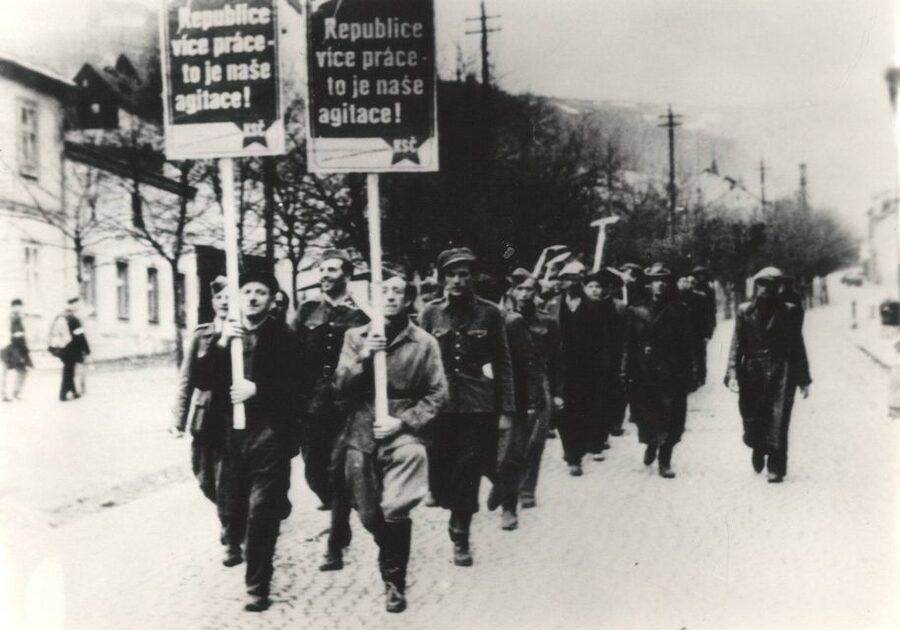
- Former secret police headquarters: See a building tied to the machinery of communist state security.
- Stalin statue site: Learn about the former monument and what its location represented in postwar Prague.
- Local firsthand perspective: Your guide lived through the period and can explain ordinary life, not only official politics.
- Protests and revolution: Walk past places linked to demonstrations, rebellion, occupation, and the end of communist rule.
- Private-group option: A private booking is available, and one small group booking effectively became a private tour.
- Useful practical limits: Bring a passport or ID card, leave large luggage behind, and expect a walk of about one to two hours.
Why Prague needs a communist history walk
Prague is famous for its medieval lanes, grand churches, and elegant squares. Yet the city also carries the marks of the 20th century, when Czechoslovakia lived under a communist government and remained closely tied to the Soviet Union after World War II.
This tour gives you a framework for reading that part of the city. It begins with an explanation of socialism and communism, including their rise in the 19th century and spread across Central and Eastern Europe. That opening matters because the walk is not just a series of addresses. You first get the political background, then connect it to places in Prague.
I appreciate this approach for visitors who know the broad outline but want to understand how the system worked in practice. You can ask about official ideology, state power, protest, work, shortages, public life, and the gap between what the government said and what people experienced.
The tour also makes room for mixed conclusions. You will hear about advantages and disadvantages rather than a simple good-versus-bad lecture. That balance does not mean treating the system as morally neutral. It means you can ask better questions about why it lasted, how people adapted, and why opposition eventually grew.
More recent history in Prague:
- Prague: Communism History and Nuclear Bunker Guided Tour
★ 4.7 · 2,417 reviews - Prague Communism History and Nuclear Bunker Tour
★ 5.0 · 1,742 reviews - Communism & Nuclear Bunker Tour + 70s Canteen Lunch (own expense)
★ 5.0 · 1,036 reviews
Starting near Na Příkopě
There are two listed starting options on Na Příkopě, at numbers 28 and 864. Your exact meeting point depends on the option you book, so check the confirmation carefully before setting out.
Na Příkopě is central, which makes this a handy tour to place early in a Prague stay. You can use it to get your bearings in the city center, then spend the rest of the day visiting a museum or site that explores the period in more detail.
The meeting instructions have generally been clear, and arriving on time matters. The guide may be carrying the only material you need for the tour, so do not assume you can join easily after the group has moved on.
Bring a passport or ID card. Leave large bags and luggage behind, since they are not allowed. The walk is listed as wheelchair accessible, though you should still confirm the exact route and meeting point if you need step-free access.
The opening lesson on socialism and communism
The first part is more classroom-like than a standard sightseeing walk. Your guide introduces the theories behind socialism and communism, then traces their rise in the 19th century and spread into Central and Eastern Europe.
For some people, this will be the strongest part of the experience. If you have only a general idea of communism, the introduction helps you place the Czech story in a wider setting. It also gives you terms and events that make the later stops easier to follow.
For others, the opening may feel a little heavy, particularly if you expected a quick walk with a few colorful stories. The advertised length is one to two hours, and the amount of time spent talking at the start may depend on the guide and the group.
I would treat this as a serious history walk rather than a light city stroll. The tour is designed to explain systems, power, and memory. It is a good choice if you enjoy asking why a political system took hold, not just where a famous event happened.
The former secret communist police headquarters
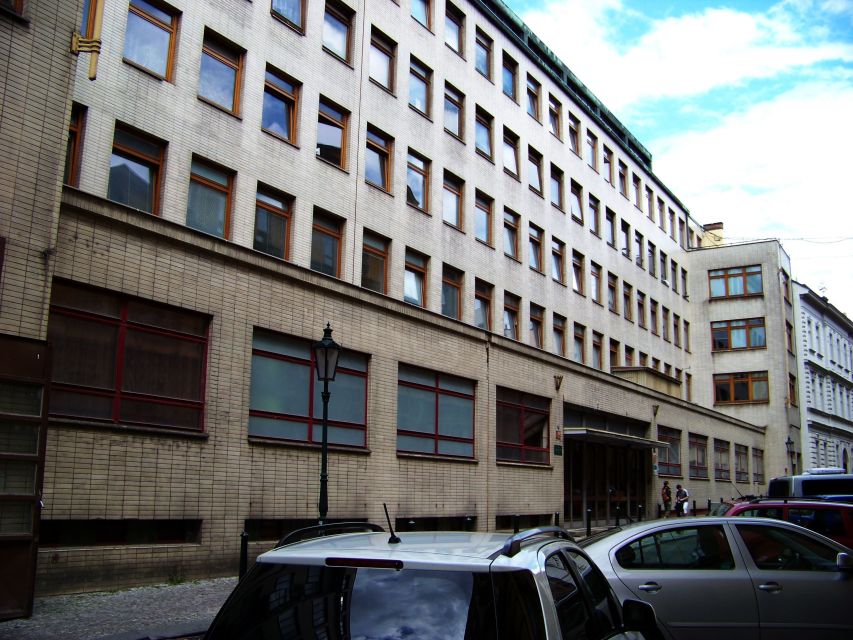
One of the key stops is the former headquarters of the secret communist police. This is one of the places where the abstract ideas of surveillance and state control become physical.
The value of the stop comes from the connection between a building and the people affected by the institution inside it. Your guide can explain the role of secret police in communist Czechoslovakia and place it within the wider Cold War system.
Do not expect a museum visit or a tour of the interior based on the information provided. The experience is a walking tour, so the emphasis is on seeing the location and hearing its story from outside or in the surrounding area.
I find this kind of stop useful because it changes how you see an ordinary city street. A building can look unremarkable today while carrying memories of fear, interrogation, pressure, and official secrecy. The guide’s explanation is what gives the site meaning.
More walking routes in Prague:
- Prague: 3-Hour Walking Tour of Old Town & Prague Castle
★ 4.7 · 5,696 reviews - Prague: Ghost Walking Tour Where Legends Come To Life
★ 4.4 · 5,253 reviews - Prague: Jewish Quarter Walking Tour with Admission Tickets
★ 4.7 · 3,729 reviews - Prague Guided Walking Tour and Cruise with Authentic Czech Lunch
★ 5.0 · 3,627 reviews
The former Stalin statue site
The walk also visits the former location of Prague’s Stalin statue. The statue itself is gone, but the site remains important because public monuments express who holds power and what a government wants people to honor.
Your guide can connect the location to the postwar relationship between Czechoslovakia and the Soviet Union. This is a good place to consider how political symbols enter daily life, how they dominate public space, and what it means when they are later removed.
This stop may appeal to you if you like the way history can be read through urban space. There is no grand monument to photograph now, which is part of the point. You are asked to imagine what once occupied the site and why its presence mattered.
Because the tour covers several places within a short period, the time at each stop may be limited. If you want a long architectural or photographic visit, this is not that kind of outing. The guide’s explanation is the main attraction.
Communist Party buildings and seats of power
The route includes current and former seats of the Communist Party. These locations help show where political decisions were made and how the party’s influence was organized.
The guide is expected to discuss important personalities, dates, and milestones. You can ask questions about the difference between the official party structure and the way ordinary people encountered the government in daily life.
This distinction is important. A political history tour can become a list of leaders and dates, but this experience aims to connect institutions with everyday routines. The guide may explain how the period felt at street level, including the advantages and disadvantages people associated with the system.
The wording around current and former party locations also gives the tour a useful sense of time. It is not only about a vanished era. It asks you to consider what remains, what changed, and how Prague lives with these places today.
Protest sites, occupation, and revolution
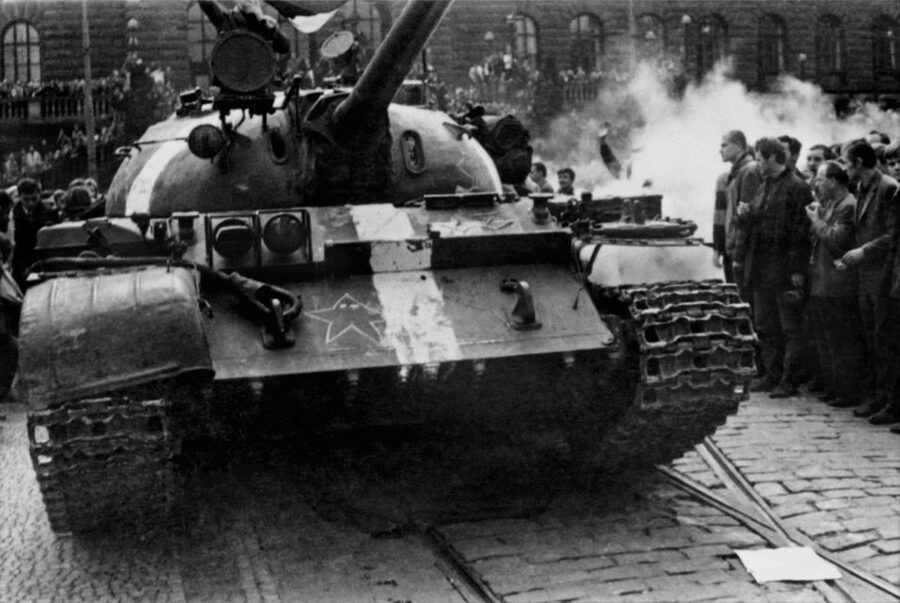
The walk visits locations tied to protests, demonstrations, rebellions, revolutions, and the Soviet occupation. These are the points where public pressure met government power.
Your guide can help connect separate moments into a sequence. You hear about the occupation, see where people gathered, and learn how demonstrations and resistance fit into the eventual collapse of communist rule.
This is likely the most moving section for many people, but the tone may be serious. Some places still carry a sense of sadness and oppression. That feeling is part of the experience, although it may not suit you if you want a cheerful introduction to Prague.
I value the chance to discuss protest as something that happened in real streets, not just in a textbook. The physical setting can make the risks clearer. People were not opposing an idea in the abstract. They were gathering in public places under a system that could punish dissent.
What daily life under communism may add
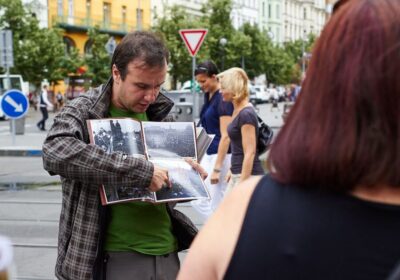
The strongest guides will not stop with politics. They will describe how ordinary life looked during the period, drawing on their own experience of living through it.
That personal element is one of the main reasons to choose this tour instead of reading a short overview online. You can ask about the practical side of the era and hear how the system affected people beyond party offices and official speeches.
The information supplied for this experience does not list specific examples of daily routines, shops, housing, work, or food, so you should not expect a fixed set of anecdotes. Ask direct questions if those details matter to you. The format encourages discussion, and questions are welcome.
The guides speak Czech, English, or German. English appears to be the safest choice for a detailed discussion based on the available feedback. If you book German, confirm that the guide assigned to your date is comfortable speaking at the level you need. One German-language experience was criticized for weak language skills, while another was hurt by organizational distractions and illness.
Guide quality and the small-group question
A local guide who lived through the communist era can offer something a textbook cannot: memory. The guide may explain how official ideas sounded in public, how people talked in private, and how the period felt from inside the society.
The best available feedback praises the guide’s storytelling, detailed grasp of the subject, clear arrival instructions, and ability to add unusual anecdotes. One Italian-speaking customer described the guide as engaging and detailed, while English-language feedback called the tour informative and unique.
Still, the experience is not perfectly consistent. One guide spent much of the tour handling organizational problems by phone, which weakened the presentation. A severe cold and repeated coughing also made that particular walk harder to follow. These are practical risks with a small operator and an individual guide rather than a large museum program.
The group format may also surprise you. One booking was sold as a group tour but had no other participants, creating a private experience at the group price. That can be a real bargain if you enjoy asking questions. If you prefer the energy of a larger group, you may find the quieter format less social.
A private group is available as a booking option. It makes sense for families, friends, or anyone who wants to shape the discussion around a particular interest, such as the Cold War, Soviet influence, public protest, or daily life.
Is $50 a fair price?
At about $50 per person, this is not the cheapest way to spend two hours in Prague. You are paying for a specialist walking tour led by a local guide, not for entrance tickets or transport.
The value depends on how much context you want. If you already know the political story and mainly want to see Prague’s major sights, the price may feel high. If you want a focused explanation of communism in Czechoslovakia, the former police headquarters, the Stalin statue site, party locations, and protest places give the tour a clear purpose.
The potential value improves if your booking becomes a small private group. You can ask more questions and request explanations that fit your interests. That said, you should not book on the assumption that every group will be private.
Free cancellation up to 24 hours before the start and the reserve-now, pay-later option reduce the financial risk. Check the available start times because the listed duration can range from one to two hours.
Who should book this walk?
I would choose this tour if you want political context alongside sightseeing. It suits adults, students, history-minded visitors, and anyone who wants to understand how the Soviet Union influenced Central Europe after World War II.
It is also a good fit if you prefer conversation to audio guides. Questions are welcome, and the guide’s personal experience can make the subject more direct and human.
You may want to skip it if your main goal is Prague’s medieval architecture, major churches, or food scene. The walk focuses on a difficult period and includes places associated with surveillance, occupation, protest, and depression. It is serious by design.
German speakers should take extra care when booking. The tour is offered in German, but the quality of that language delivery may depend on the guide assigned to you. English or Czech may be a better choice if you can use either comfortably.
Should you book the Back to Communism tour?
Book it if you want to see Prague through its 20th-century political story rather than only its postcard sights. The former secret police headquarters, Stalin statue site, party offices, and protest locations give the walk a strong route, while a local guide adds the human detail.
The main caution is inconsistency. The overall rating is 3.8 from 26 ratings, and the experience can suffer when the guide is distracted, unwell, or not fully at ease in the selected language.
For the best chance of a rewarding tour, choose a language you understand well, arrive at the correct Na Příkopě meeting point, leave your luggage behind, and come ready to ask questions. At $50, it is worthwhile for a focused political history lesson with real Prague locations, but it is not a substitute for a museum if you want exhibits, documents, or a long indoor visit.
FAQ
How long does the walking tour last?
The tour is listed as lasting between one and two hours. The guided walk itself is described as approximately two hours, and you should check the available start time when booking.
Where does the tour begin?
There are two possible starting locations on Na Příkopě: Na Příkopě 28 and Na Příkopě 864. The exact meeting point depends on the option you book.
What places related to communism will I see?
The walk includes the former secret communist police headquarters, the former site of the Stalin statue, current and former Communist Party locations, and places connected with protests, demonstrations, rebellions, revolutions, and Soviet occupation.
Which languages are available?
The tour is offered in Czech, English, and German.
Can I ask questions during the tour?
Yes. Discussion and questions are welcome during the experience.
Is the tour wheelchair accessible?
Yes, the activity is listed as wheelchair accessible. Confirm the exact meeting point and route details if you require specific access arrangements.
Can I book a private group?
Yes. A private-group option is available.
What should I bring, and what is not allowed?
Bring a passport or ID card. Luggage and large bags are not allowed on the tour.
Can I cancel for a refund?
You can cancel up to 24 hours in advance for a full refund. A reserve-now, pay-later option is also available.
Just added in Prague
- World War II 4WD Tour from Prague with Lunch★ 4.4 · 3 reviews
- WWII and Communism History in Prague’s Old Town Private Tour★ 5.0 · 4 reviews
- Prague: Historical Walking Tour with Focus on World War 2★ 4.3 · 12 reviews
- Unique salt cave in Prague★ 4.9 · 10 reviews
- Walking tour of Prague in french: Old Town & Charles Bridge★ 4.9 · 62 reviews
- Prague: Market Tour and Traditional Czech Cooking Class★ 4.7 · 19 reviews
- Ultimate Unlimited Beer Pong with Czech Beer★ 4.6 · 5 reviews
- Walking tour of Prague in French : Nové Město★ 4.9 · 16 reviews
Communism & WWII History Tours, compared.
Communism History and Nuclear Bunker Guided Tour
Read our review →
Prague Communism History and Nuclear Bunker Tour
Read our review →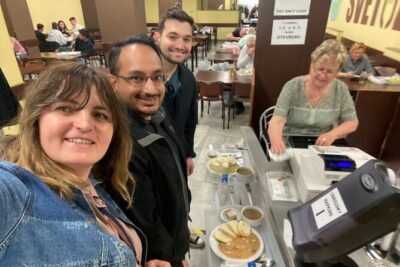
Communism & Nuclear Bunker Tour + 70s Canteen Lunch (own expense)
Read our review →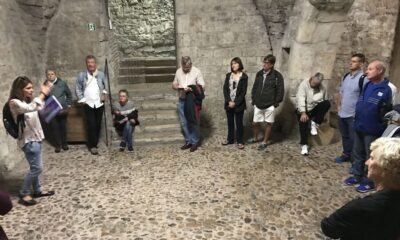
WWII Guided Tour & The Crypt of Operation Anthropoid
Read our review →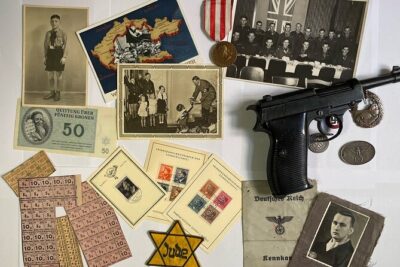
WWII in Prague Tour & The Crypt of Operation Anthropoid
Read our review →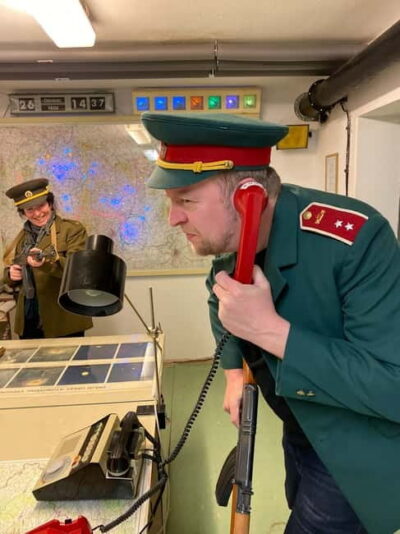
Communism and Bunker Tour with 70s Canteen Lunch
Read our review →
Small-Group World War 2 & Operation Anthropoid Tour in Prague
Read our review →
World War 2 and Operation Anthropoid Walking Tour
Read our review →Browse the lists this tour appears in