
Reviewed · OLD TOWN & JEWISH QUARTER TOURS
Prague: 2-Hour Old Town and Jewish Ghetto Walking Tour
Prague’s Old Town and Josefov fit together like two very different chapters of the same city. In two hours, this walk takes you from Jan Hus and the Astronomical Clock to the old Jewish quarter, where synagogues and a crowded cemetery preserve a more solemn side of Prague. I like the way it connects Christian and Jewish history, rather than treating Josefov as a separate postcard stop. I also like that the guide explains small details, such as the symbols on the clock and the story behind Prague’s Golem legends.
The main drawback is pace. You cover a lot of ground and do not go inside the monuments, synagogues, or cemetery. This is best as a first look at Prague, not as a replacement for a full visit to the Jewish Museum or an advanced history tour.
Key points at a glance
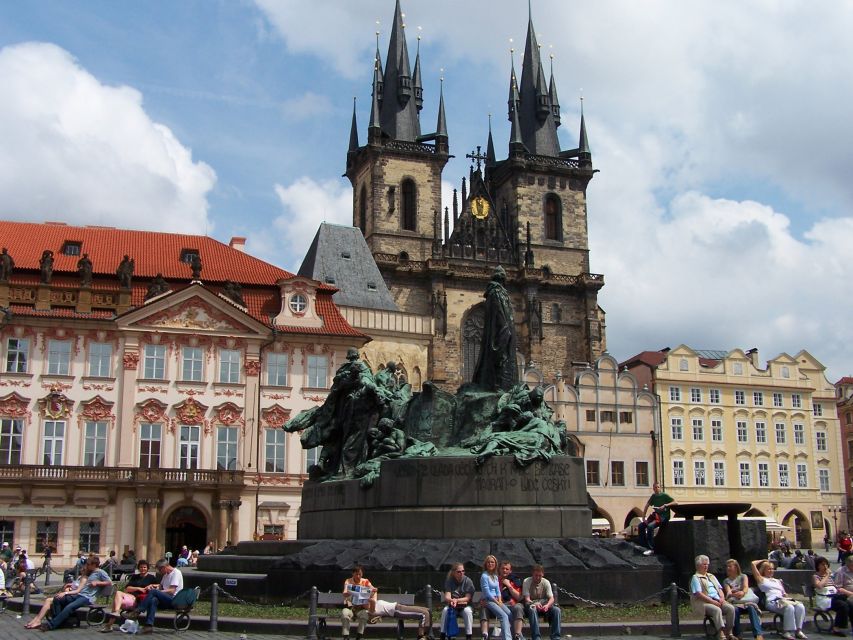
- A fast route through Old Town: See the Astronomical Clock, Jan Hus Monument, Charles University, Estates Theatre, House of the Black Madonna, and several churches.
- Josefov without entering the sights: Visit the exterior of Maisel, Klausen, Old-New, and Spanish synagogues, plus the Old Jewish Cemetery.
- Strong historical focus: Learn how Bohemia, Czech identity, religion, education, and culture shaped Prague.
- Franz Kafka connection: Visit the location associated with Kafka’s birthplace and see the Franz Kafka Monument.
- Small groups: The maximum group size is 15 people, with private tours available.
- Good value at $23: You pay for a live English-speaking guide and a tightly planned introduction, not admission tickets.
Why this two-hour route works for a first visit
I like this tour because it gives you a working map of central Prague without asking you to commit half a day. The route begins behind Týn Cathedral at Týnská 627/7. Look for the large wooden door at building number 7. From there, you walk through the Old Town before finishing at Staroměstské náměstí, the main Old Town Square.
The route is packed, but not random. It moves from medieval religious power to education, theater, architecture, Jewish life, and modern Czech memory. That gives the guide a useful thread to follow. You are not simply ticking off buildings. You are hearing why each place matters.
At $23 per person, the value depends on what you want. If you only need directions to the Astronomical Clock, it is unnecessary. If you want the basic story behind a dozen important sights, the price is modest for a live guide and two hours of context. Since entrance fees are not included, you should think of this as an orientation walk rather than a museum visit.
More of the old streets in Prague:
- Prague: Old Town Hall Tower Entry Ticket
★ 4.5 · 6,749 reviews - Prague: 3-Hour Walking Tour of Old Town & Prague Castle
★ 4.7 · 5,696 reviews - Prague: 3-Hour Old Town and Prague Castle Tour in German
★ 4.8 · 5,671 reviews
Starting behind Týn Cathedral and at the Stone Bell House
The meeting point puts you right in the medieval heart of Prague. Behind Týn Cathedral, the Dům U Kamenného zvonu, or House at the Stone Bell, provides the first guided stop. Its name refers to the stone bell on the building, and its position beside Old Town Square makes it a natural starting point for the city’s early story.
From here, the guide can place the square in context before leading you toward its most famous landmarks. That matters because Prague’s center can feel like a parade of ornate façades. A guide helps you sort out what belongs to medieval Bohemia, what reflects later imperial influence, and what connects to Czech national identity.
The location is easy to reach on foot, but allow time to find the door. Týnská is a small historic street, and the meeting instructions are more useful than simply being told to meet at Old Town Square.
Jan Hus and the symbols of Old Town Square
The Jan Hus Monument is one of the key stops. Jan Hus was a religious reformer and preacher whose ideas made him a major figure in Czech history. The monument is more than a statue in a pretty square. It represents religious conflict, reform, and the long memory of Czech national history.
The guide also explains Prague’s Astronomical Clock. You will hear about the curious figures and symbols on its face, as well as the place of the clock in the life of Old Town. The clock is easy to photograph, but less easy to understand at a glance. A short explanation makes the details more meaningful.
Do not expect a long stop for independent viewing. The tour has many sites to cover, so you will likely hear the story, take a few pictures, and move on. If the clock is high on your list, return later when you can study it at your own pace.
Charles University and Prague’s role in education
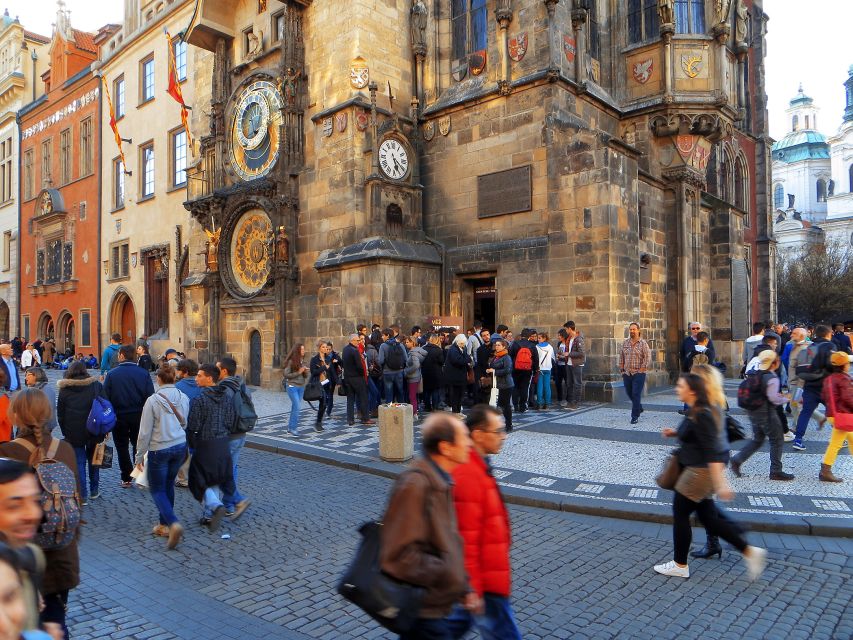
The walk continues to the Karolinum complex, linked with Charles University. This is one of the most useful historical stops because it shows Prague as a center of education in Central Europe, not only as a collection of churches and palaces.
The guide discusses the 15th-century buildings and the importance of learning in the development of Bohemia. This helps explain why Prague attracted scholars, religious thinkers, artists, and political movements. You get a broader picture of the city’s influence, rather than hearing only about royal power.
The stop is mainly about the exterior and the story attached to it. If university history is your main interest, the explanation will be a brief introduction. Still, it adds depth to a route that could otherwise focus only on architecture.
More walking routes in Prague:
- Prague: Ghost Walking Tour Where Legends Come To Life
★ 4.4 · 5,253 reviews - Prague: Jewish Quarter Walking Tour with Admission Tickets
★ 4.7 · 3,729 reviews - Prague Guided Walking Tour and Cruise with Authentic Czech Lunch
★ 5.0 · 3,627 reviews - Prague: Old Town and Jewish Quarter Guided Walking Tour
★ 4.6 · 2,847 reviews
Estates Theatre and the city’s cultural life
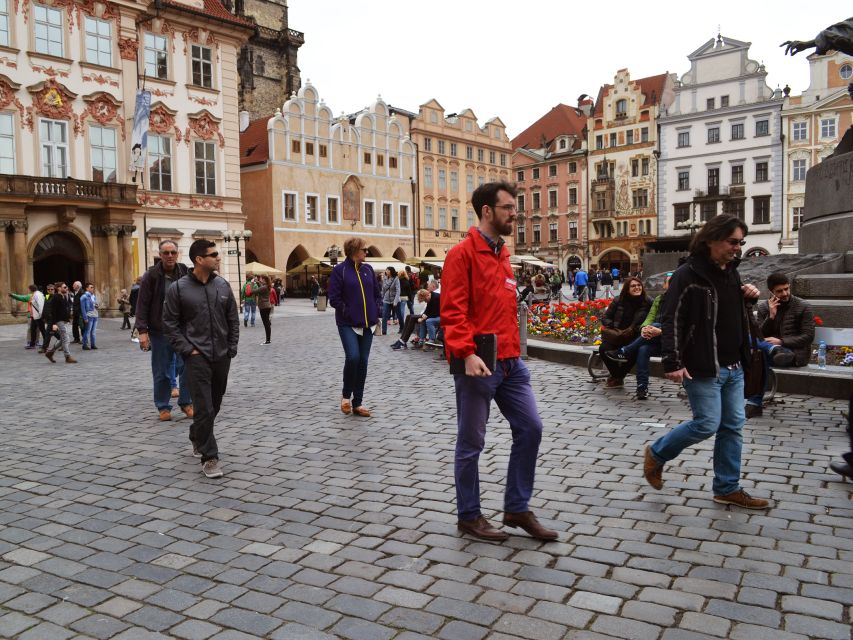
The Estates Theatre, or Stavovské divadlo, brings the tour into Prague’s theater district. Its 18th-century façade is worth a pause, but the larger point is the city’s long connection with music, performance, and public culture.
The guide uses the building to explain Prague’s cultural development and its links with wider Central European life. This is also the kind of stop where a good guide can make the city feel more personal. Several guides associated with this tour, including Allen, Radek, Dana, and Martin, are described as using stories, humor, and extra visual material to explain the city.
Guide quality can vary because you are not guaranteed a particular person. If you are assigned someone such as Allen, who has been noted for clear explanations of Prague’s long history and good restaurant suggestions, you may get extra local advice along the way. Names connected with the tour also include Krystoff, Radek, Dana, and Martin.
House of the Black Madonna and St. James
The House of the Black Madonna is a striking architectural stop. The building is associated with Prague’s Cubist style, and its unusual exterior gives you a break from the more familiar medieval and Baroque façades.
The Church of St. James follows as another reminder of how much religious architecture is concentrated in the Old Town. You will hear about the building from outside, with the guide explaining its place in Prague’s religious and artistic story.
These stops are valuable because they widen the visual range of the walk. You are not seeing only the headline monuments. You are also noticing how different periods sit close together in the same few streets. On a two-hour tour, that variety keeps the route lively.
Entering Josefov, Prague’s former Jewish Ghetto
The move into Josefov changes the mood. This small quarter is surrounded by the Old Town, but its history is distinct. The guide explains the cramped conditions that shaped life in the former Jewish Ghetto and describes how much of the area was destroyed and rebuilt in the early 20th century.
That background is essential. Without it, the surviving synagogues can seem like isolated historic buildings. With it, you understand that Josefov is a small remnant of a much larger Jewish community and a neighborhood that experienced severe restrictions and overcrowding.
The walk includes the exteriors of several important sites:
- Maisel Synagogue: A major stop in the story of Prague’s Jewish community.
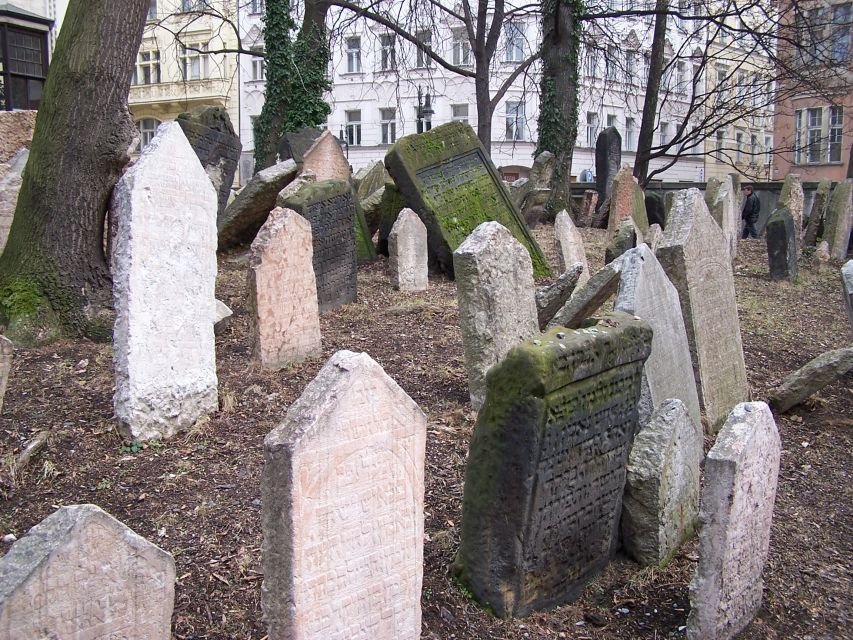
- Old Jewish Cemetery: A powerful place to discuss limited space and the crowded conditions of the old quarter.
- Klausen Synagogue: One of the surviving synagogue buildings in Josefov.
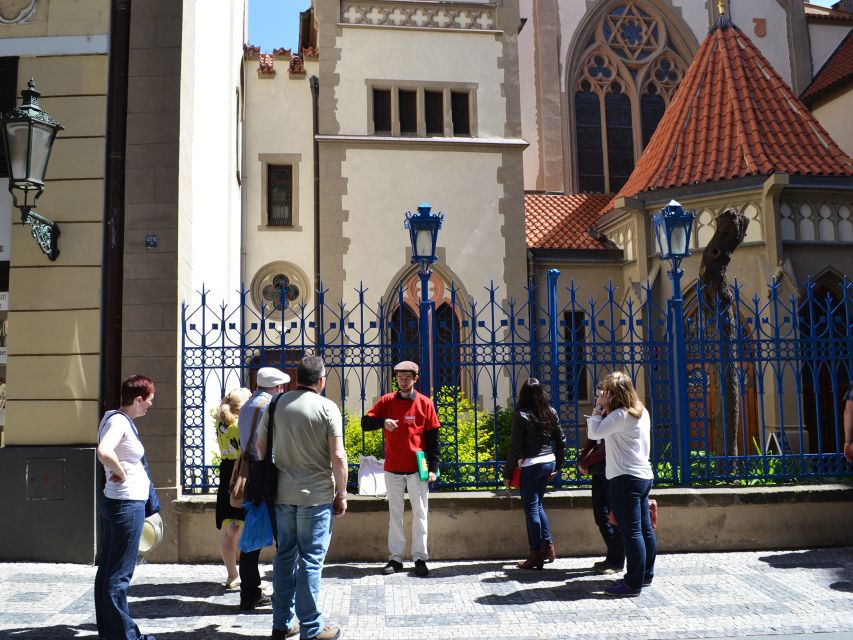
- Old-New Synagogue: One of Prague’s best-known Jewish landmarks, linked with long-standing legends about the Golem.
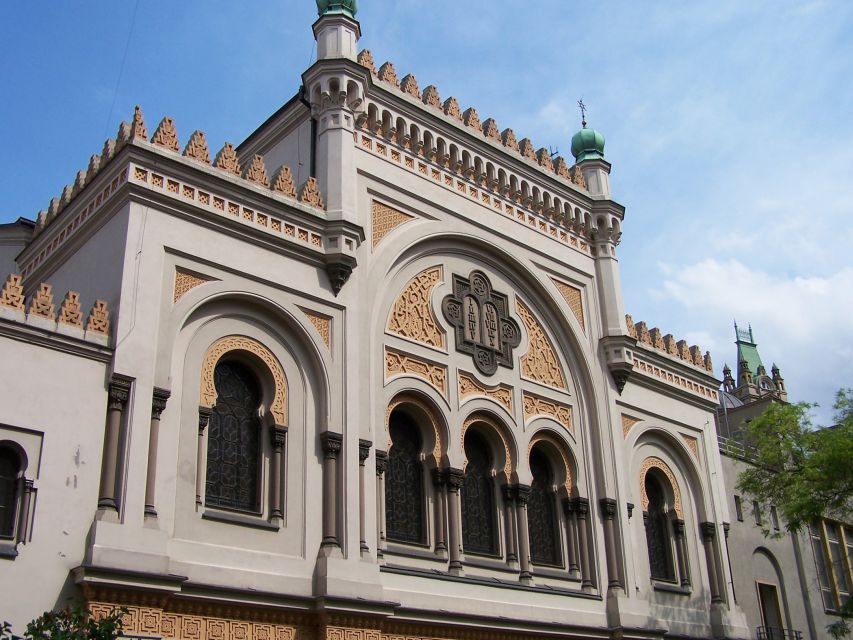
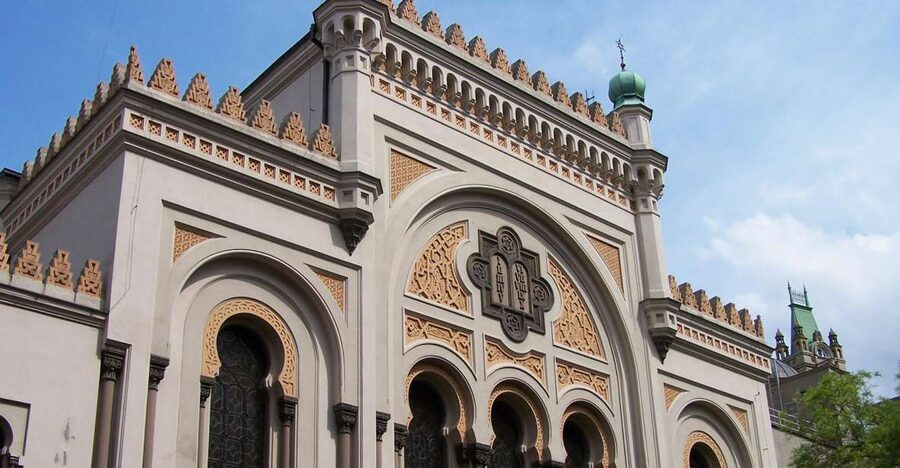
- Spanish Synagogue: An ornate building that completes the group of major synagogue exteriors on the route.
The cemetery and synagogue stops are especially strong for travelers who want historical context before paying for the Jewish Museum complex. But remember, entrance to the interiors is not part of this walk. If you want to see exhibitions, religious objects, or the cemetery closely, plan a separate visit and allow more time.
Kafka, legends, and Prague’s layered identity
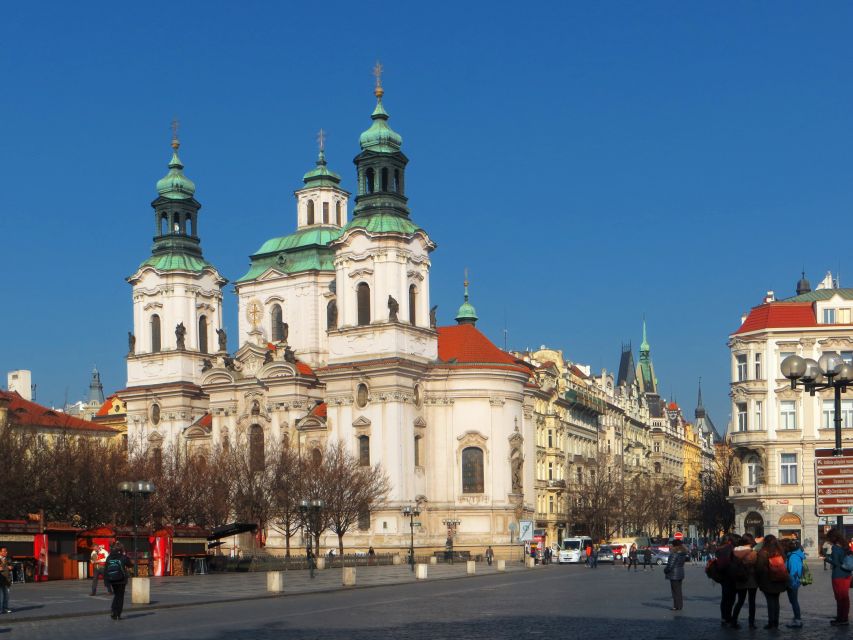
The route includes the birthplace associated with Franz Kafka and ends with the Franz Kafka Monument. Kafka’s connection gives the walk a modern literary thread after its long focus on medieval and early modern Prague.
The guide also explains some of Prague’s local legends, including the Golem story associated with Jewish Prague. Such stories can be entertaining, but the best use of them is as a way into the city’s memory and imagination. The tour presents them alongside documented history, so you can distinguish between what is known and what belongs to legend.
This blend is one of the walk’s strengths. You hear about Jan Hus, Charles University, synagogues, Kafka, architecture, and local stories in one compact route. It gives you several ways to understand Prague, even if it cannot explore any one subject at length.
What the guide adds to the walk
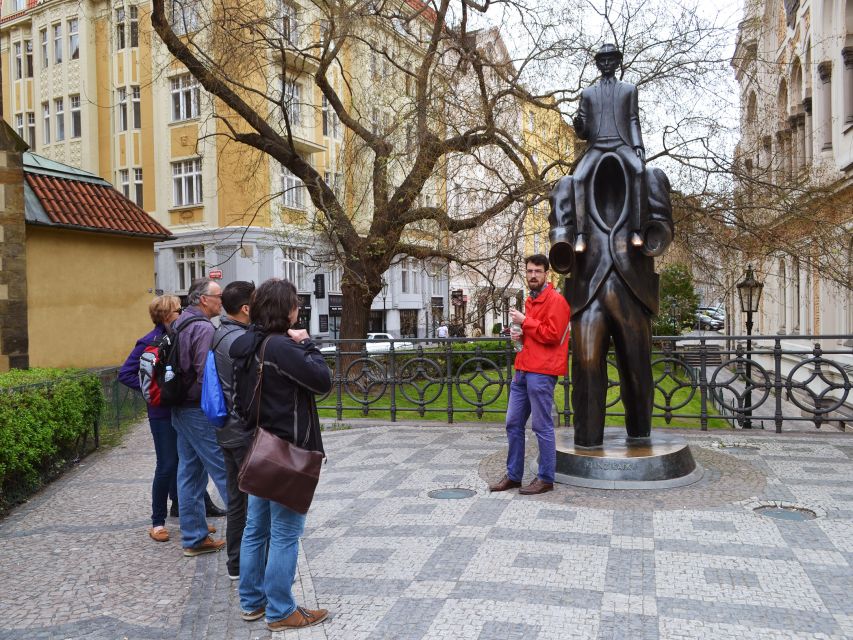
The guide is the main reason to book this experience. The route itself is easy to find on a map, but the connections are not. A strong guide can explain why Jan Hus matters, decode the Astronomical Clock, place Charles University in European history, and make sense of Josefov’s surviving buildings.
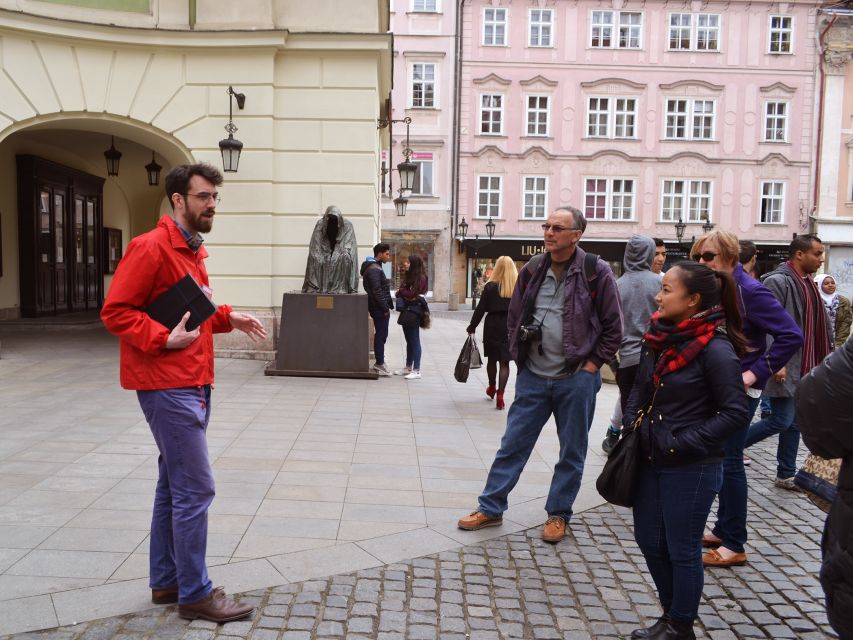
English is the tour language. The group limit is 15 people, which is small enough for a more personal feel without promising a private experience. Private groups are also available if you want more control over the pace or a more direct exchange with the guide.
Past guides connected with the experience include Krystoff, Allen, Radek, Dana, and Martin. The descriptions of their guiding styles point to friendly delivery, humor, clear explanations, and strong local history. Martin is also associated with using maps, photographs, and notes to make difficult subjects easier to follow. You cannot assume which guide you will receive, but these examples show the type of help the tour aims to provide.
Timing, pace, and practical limits
Two hours is enough for an overview, but the schedule will feel full. You will walk between many stops, listen to short explanations, and take photographs along the way. Wear comfortable shoes and keep your attention on the guide, especially in the busy center.
The tour does not include hotel pickup, so you make your own way to the meeting point. It also does not include interior visits. That keeps the price down and makes the route possible in two hours, but it means you should not book this expecting a synagogue tour or museum admission.
The walk finishes at Old Town Square. That is useful because you can continue exploring from there, return to a site that caught your interest, or ask the guide for food suggestions. One guide, Allen, is specifically associated with offering restaurant recommendations, so it is worth asking if you need help choosing where to eat afterward.
You can cancel up to 24 hours before the tour for a full refund, and the reserve-now, pay-later option gives you some flexibility. Starting times vary, so check availability when booking.
Who should book this Old Town and Josefov walk?
I would choose this tour for a first or second day in Prague, especially if you want historical bearings before exploring museums on your own. It suits curious adults, older children who can manage a brisk walk, and anyone who prefers a story-led introduction to architecture.
It is also a good fit if you have only a short stay. You see many of the city center’s main monuments and get a meaningful introduction to Josefov without spending an entire afternoon.
I would skip it if you have already taken a detailed Prague history tour or spent substantial time in the Jewish Museum. One past assessment of the experience described it as an introductory tour for people new to Prague, not an advanced walk. That is a fair way to judge it.
Should you book it?
Book this $23 tour if you want a compact, clearly organized introduction to Prague’s Old Town and Jewish quarter. Its best features are the strong range of subjects, the small maximum group size, and the way it links famous sights with less obvious history.
Do not book it as your only Josefov experience if you want to enter the synagogues or cemetery. Use it to understand the city’s layout and story, then return to the places that interest you most. For a first look, the combination of Jan Hus, the Astronomical Clock, Charles University, Kafka, and the surviving synagogues offers a lot for two hours.
FAQ
How long is the Prague Old Town and Jewish Ghetto tour?
The walking tour lasts two hours.
What language is the tour conducted in?
The live tour guide speaks English.
How much does the tour cost?
The listed price is $23 per person.
Where does the tour begin?
It begins at 7, Týnská 627/7. When you stand behind Týn Cathedral, look for the large wooden door at building number 7.
Where does the tour finish?
The walk finishes at Staroměstské náměstí, or Old Town Square, in Prague’s Old Town.
Does the tour include synagogue or museum admission?
No. Interior visits are not included, so the tour focuses on guided sightseeing from outside the buildings.
What sights are included on the route?
The route includes the House at the Stone Bell, Jan Hus Monument, Astronomical Clock, Charles University, Estates Theatre, House of the Black Madonna, Church of St. James, Maisel Synagogue, Old Jewish Cemetery, Klausen Synagogue, Old-New Synagogue, Spanish Synagogue, Franz Kafka Monument, and Old Town.
How large is the group?
The maximum group size is 15 people. Private groups are available.
Just added in Prague
- World War II 4WD Tour from Prague with Lunch★ 4.4 · 3 reviews
- WWII and Communism History in Prague’s Old Town Private Tour★ 5.0 · 4 reviews
- Prague: Historical Walking Tour with Focus on World War 2★ 4.3 · 12 reviews
- Unique salt cave in Prague★ 4.9 · 10 reviews
- Walking tour of Prague in french: Old Town & Charles Bridge★ 4.9 · 62 reviews
- Prague: Market Tour and Traditional Czech Cooking Class★ 4.7 · 19 reviews
- Ultimate Unlimited Beer Pong with Czech Beer★ 4.6 · 5 reviews
- Walking tour of Prague in French : Nové Město★ 4.9 · 16 reviews
Old Town & Jewish Quarter Tours, compared.
3-Hour Walking Tour of Old Town & Prague Castle
Read our review →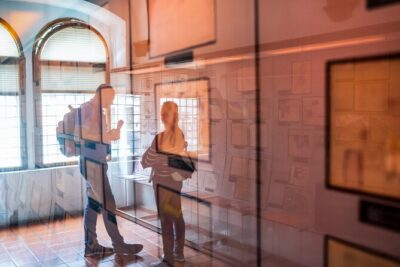
Jewish Quarter Walking Tour with Admission Tickets
Read our review →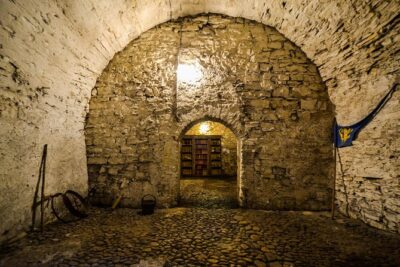
Prague Old Town, Medieval Underground and Dungeon Historical Tour
Read our review →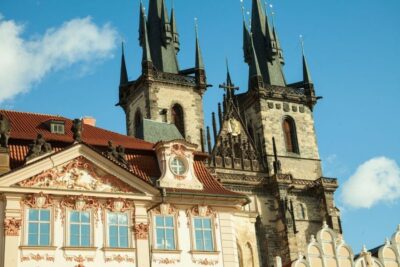
Old Town and Jewish Quarter Guided Tour in German
Read our review →
Ghosts and Legends of the Old Town Evening Tour
Read our review →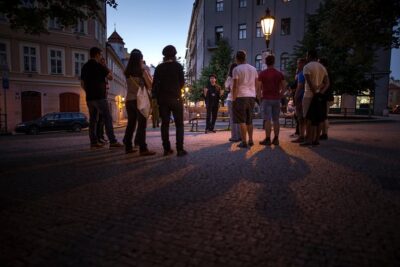
Prague Ghost and Legend of Old Town Walking Tour
Read our review →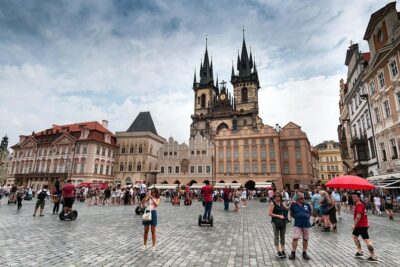
Browse the lists this tour appears in