
Reviewed · COMMUNISM & WWII HISTORY TOURS
Prague Cold War Walking Tour
Prague’s Communist past is easiest to understand when you connect the grand monuments with the human stories behind them. This small-group walk does exactly that, taking you from Cold War bomb-shelter corridors and Klement Gottwald’s embalming laboratory to the square where the Velvet Revolution gathered force. I especially like the focus on specific places and political symbols, rather than a lecture detached from the city. I also like the historian-led format and the maximum of eight people, which should leave room for questions and a more thoughtful discussion. The main drawback is the steep 20 to 30 minute climb to Vitkov Hill, which can be tiring and is not a good fit for everyone.
Key points to know before booking
- See Gottwald’s former mausoleum: The National Monument at Vitkov preserves one of the most unsettling physical reminders of Communist power in Czechoslovakia.
- Walk through Cold War infrastructure: Locked doors in the Karlin-Zizkov pedestrian tunnel lead toward nuclear-shelter corridors that are still maintained.
- Connect politics with public art: The route explains the giant Stalin statue once planned for Letna, the Red Army decorations, and the ironic upside-down Wenceslas sculpture.
- Follow the road to the Velvet Revolution: Wenceslas Square and the National Assembly help explain how Communist rule ended in 1989.
- Expect a small, serious group: The tour accepts no more than eight people and is offered in English with a historian guide.
- Budget for one extra admission: Tram tickets are included, but admission to the National Monument at Vitkov is not.
Why Prague’s Communist story works best on foot
Many Prague tours concentrate on Gothic churches, royal palaces, and pretty lanes. This one looks at a less polished city, where monuments were built to shape public memory and public behavior.
The subject is not limited to the forty years after the Communist takeover. You also hear about Czech nationalism, the Soviet connection, the political theater of military parades, and the protests that eventually brought the regime down. That wider frame matters. Communist rule did not exist in a vacuum, and the guide uses Prague’s streets to show how older national symbols were folded into new political messages.
I would choose this walk if you want more than dates and slogans. The guide is a historian, and Vadim is one of the named guides associated with the tour. One particularly strong description of his guiding style calls for a sophisticated, intellectual discussion of Communism in the Czech lands. That is a useful clue about the tone: expect serious conversation and historical interpretation, not a fast parade of photo stops.
The three-hour length is sensible. It gives the guide time to explain the sites without turning the day into a full academic seminar. Still, the route covers a lot of ground and includes a demanding hill. Wear comfortable shoes, bring water, and do not schedule a rushed appointment immediately afterward.
More recent history in Prague:
- Prague: Communism History and Nuclear Bunker Guided Tour
★ 4.7 · 2,417 reviews - Prague Communism History and Nuclear Bunker Tour
★ 5.0 · 1,742 reviews - Communism & Nuclear Bunker Tour + 70s Canteen Lunch (own expense)
★ 5.0 · 1,036 reviews
From the Karlin-Zizkov tunnel to Cold War shelter doors
The walk begins at the published meeting point at Náměstí Republiky 1077/2 in New Town, with the listed departure at 2:00 pm. The tour description also identifies St. Joseph Church as the beginning of the specially designed route, so I would check the final meeting instructions carefully after booking.
The first listed stop is the pedestrian tunnel connecting Karlin and Zizkov. At first glance, this may seem like a simple urban shortcut. The important detail is behind the locked doors: corridors linked to nuclear bomb shelters built during the Cold War and still maintained.
You do not enter the shelter corridors, but seeing the doors gives the subject a physical edge. It is one thing to hear that nuclear war shaped daily thinking in Communist Europe. It is another to look at the sealed infrastructure built for that possibility. The stop lasts about ten minutes, so it is brief, but it sets the mood for the rest of the walk.
This is also a good example of the tour’s approach. Instead of showing only official monuments, the guide points out less obvious traces of state planning and fear. You are not simply looking at old architecture. You are asking what the city was designed to protect, control, and remember.
The long climb to Vitkov and Gottwald’s mausoleum
The largest block of time goes to the National Monument at Vitkov, where you should expect about an hour. Getting there requires a steep uphill climb of roughly 20 to 30 minutes. This is the tour’s clearest physical challenge, and the operator specifically recommends a private alternative that leaves out Vitkov for anyone who has difficulty climbing.
The monument itself commemorates Czech and Slovak warriors of the First World War. That older national story became useful to Communist leaders, who linked the state’s present political order with heroic images of Czech and Slovak sacrifice. The guide explains how nationalism fit into local Communist rule, a subject that can be missed if you think of the period only as Soviet control imposed from outside.
Inside, the Hall of the Soviet Soldier and the former mausoleum of Klement Gottwald give the site its darker force. Gottwald was the first chairman of the Communist Party of Czechoslovakia and later the party’s general secretary and chairman. His mummified corpse was displayed here as part of the regime’s political theater.
The adjoining laboratory, where his body was embalmed, makes the story even more striking. A mausoleum is not just a tomb in this setting. It was a public display intended to turn a political leader into an enduring symbol. The laboratory shows the practical work behind that image and reminds you that Communist power relied on ceremony as well as policing and propaganda.
The monument also contains distinctive statuary and decorations in the Hall of the Red Army. These were created after the 1948 Communist takeover, sometimes called the elegant coup because the party gained control without the kind of open fighting associated with a traditional revolution. The guide discusses Communist Party propaganda and politics while you examine the setting.
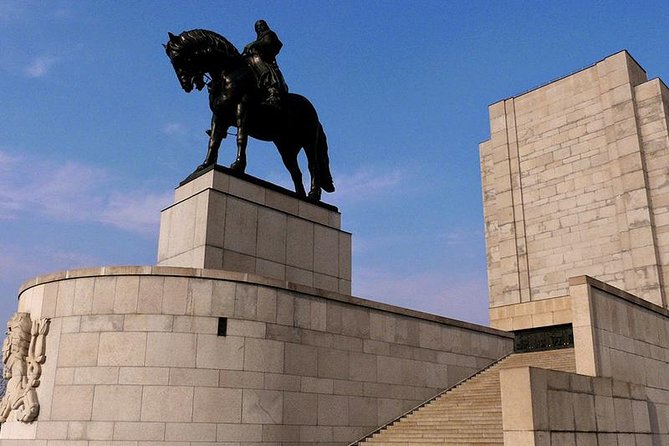
Vitkov’s other major landmark is the Jan Zizka monument, described as the third-largest bronze equestrian statue in the world. The tour materials also refer to it as the largest equestrian statue in the world, so exact rankings vary by source and definition. The important point is its scale. This is a huge image of military strength, and it gives the guide a natural place to explain how older national heroes were used in a modern political message.
The climb is a real trade-off. You gain the tour’s most unusual location and its strongest connection to Communist ceremony, but you need enough stamina to enjoy it. If you prefer an easier day, the private city-center alternative may be the better choice.
The Zizkov Television Tower and the view of Brutalism
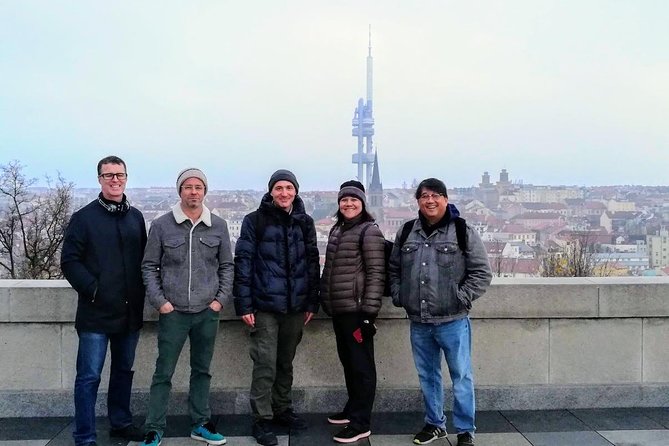
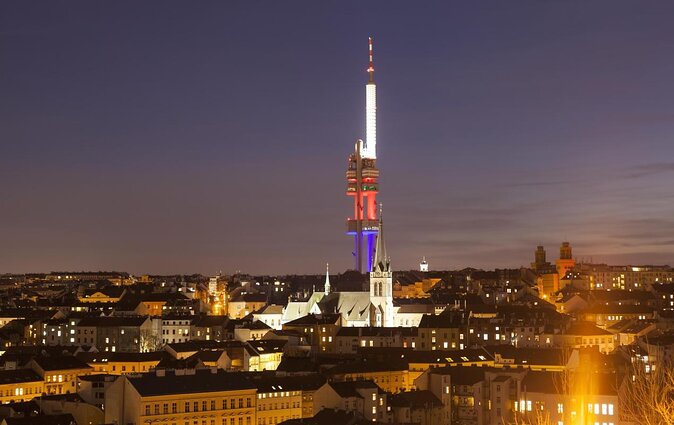
After Vitkov, the route includes a short stop with a view of the Zizkov Television Tower. The stop lasts about five minutes and does not require an admission ticket.
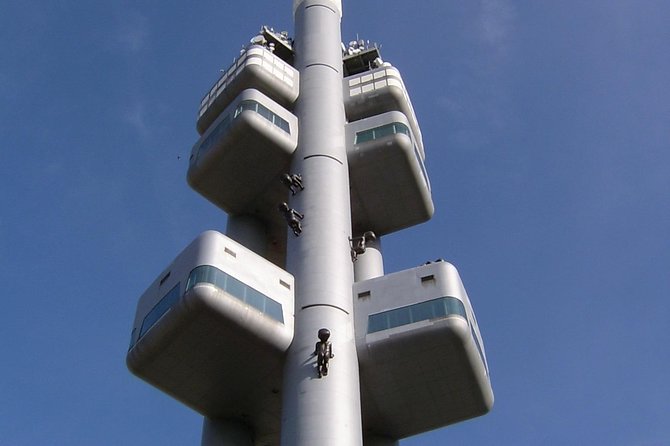
The tower is useful here because it adds a later Communist-era structure to the story. Its stark form is a familiar example of Brutalist design, a style that favored heavy concrete, strong geometry, and practical mass over decorative charm. You may not love the tower visually, but it helps show how Prague’s 20th-century architecture differs from the medieval center most people come to see.
This is a quick stop, not a tower visit. You are viewing the building from the route, so do not expect an ascent or a separate observation-deck ticket as part of this tour.
More walking routes in Prague:
- Prague: 3-Hour Walking Tour of Old Town & Prague Castle
★ 4.7 · 5,696 reviews - Prague: Ghost Walking Tour Where Legends Come To Life
★ 4.4 · 5,253 reviews - Prague: Jewish Quarter Walking Tour with Admission Tickets
★ 4.7 · 3,729 reviews - Prague Guided Walking Tour and Cruise with Authentic Czech Lunch
★ 5.0 · 3,627 reviews
Letna Hill, Stalin’s statue, and the cost of political art
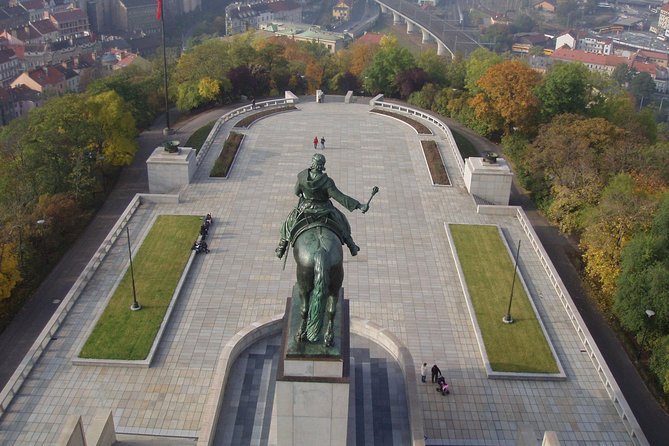
The route also takes in Letna Hill, former site of an enormous statue of Joseph Stalin. The statue was once one of the clearest public statements of Soviet influence in Prague. Its removal changed the site, but the story remains important because it shows how quickly official symbols can lose their power.
The guide also tells the tragic story of the sculptor. That personal angle keeps the discussion from becoming a simple account of a statue being built and later removed. Monumental art carries political consequences for the people ordered to create it, not only for the politicians who commission it.
Letna adds another useful contrast to Vitkov. At Vitkov, the state worked with Czech and Slovak military memory. At Letna, the message was more openly tied to Stalin and the Soviet model. Seeing both locations helps you compare the different ways Communist authority presented itself.
Wenceslas Square and the moment the regime began to crack
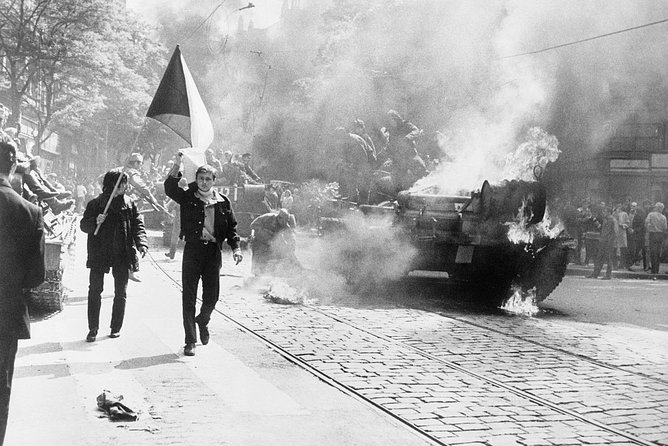
Wenceslas Square is one of the route’s most important public spaces. The guide traces its story from its founding in the 14th century through military parades by occupying powers, the Prague Spring, and the mass gatherings of the Velvet Revolution.
The square is broad and urban, not a quiet memorial. That makes it an effective place to discuss public power. Armies have crossed it, governments have used it for ceremony, and ordinary people have gathered there to demand change. The same open space can serve an authoritarian state one year and a popular movement later.
The Prague Spring is especially important to the tour’s wider story. The reform movement of 1968 and its suppression showed the limits of political change under Soviet dominance. In 1989, the Velvet Revolution produced a very different result. The tour explains how events gathered momentum and how the Communist government lost its grip.
The route also passes the National Assembly building, which served as the seat of the Communist government. This is a practical stop for understanding how power operated through institutions. A revolution is not only a crowd in a square. It also involves the buildings where laws are made, authority is claimed, and political control is formalized.
Lennon Wall and the language of protest
The John Lennon Wall adds a more personal and artistic side to the story. It became an important site of political protest, giving people a place to express ideas that official channels did not welcome.
The wall is not presented as a substitute for the larger political history. Its value is that it shows how protest could appear through songs, messages, and images as well as speeches and demonstrations. After the formal monuments and government buildings, this is a welcome change of scale.
You should expect the guide to connect the wall to political expression and the atmosphere that preceded the Velvet Revolution. The stop also helps explain why public space mattered so much in Communist Prague. A message on a wall could be small, but its existence challenged the idea that the state controlled all public speech.
The upside-down Wenceslas and Prague after Communism
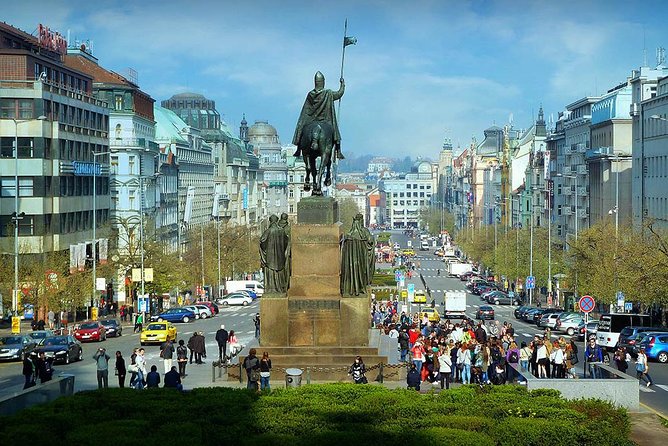
The tour ends near a contemporary ironic sculpture of King Wenceslas riding an upside-down dead horse. It is a sharp change from the solemn National Monument and the official symbols of Stalin-era power.
The sculpture asks you to consider how Central Europe views political authority after the Communist period. It is playful, but not harmlessly decorative. Its humor questions the health of national symbols and the people who use them.
This ending is valuable because it does not suggest that the Velvet Revolution finished every political argument. Instead, it points to the continuing echoes of the past in the modern Czech Republic. You leave with the idea that monuments can be challenged, reused, or mocked once the political system behind them has collapsed.
What the $126.43 price gets you
At $126.43 per person, this is not a budget walking tour. The price makes more sense if you place value on the historian guide, the small group, the specialist route, and the time spent explaining political context.
A group capped at eight is a real advantage for this subject. You can ask about confusing points, pause at the sites, and hear the guide without the strain of a large crowd. Tram tickets are included, which removes one small transport cost and keeps the route moving.
The National Monument at Vitkov is not included, so budget for that admission separately. Food, drinks, and hotel pickup and drop-off are also excluded. The tour is offered in English, with a choice of morning or afternoon departure, although the listed start time is 2:00 pm. Confirm your preferred departure when booking.
The tour is often reserved far ahead, with an average booking time of 195 days in advance. That does not guarantee every date will sell out, but it suggests that advance planning is wise, especially if you have fixed dates in Prague.
Who should book this Communist Prague walk?
I would recommend it to you if you enjoy political history, modern European history, architecture, or tours led by a specialist. It is particularly useful if you have already seen Prague’s famous medieval sights and want to understand the city’s 20th-century scars and symbols.
It suits an active visitor who can manage a long uphill climb. The tour requires a moderate level of physical fitness, and Vitkov is not a minor incline. If that sounds uncomfortable, ask about the private option that leaves out the hill while focusing on Cold War sites in the city center.
I would not choose it if you want a relaxed sightseeing stroll, frequent café breaks, or a tour centered on picturesque streets. The subject is serious, the pace is purposeful, and much of the value comes from listening closely to the guide.
Should you book it?
Book this tour if you want Prague’s Communist past explained through real locations, from shelter doors and propaganda halls to protest walls and revolutionary squares. The small group and historian guide make the $126.43 price easier to justify, especially for visitors who want a focused and thoughtful discussion.
Think twice if the Vitkov climb is a concern. For everyone else, this is a strong choice for understanding how Communism shaped Prague, how the Velvet Revolution changed the city, and why those old symbols still matter.
FAQ
How long does the Prague Cold War Walking Tour last?
The tour lasts approximately three hours.
What language is the tour offered in?
The tour is offered in English.
How many people can join the group?
The maximum group size is eight people.
Are tram tickets included?
Yes. Tram tickets are included in the tour price.
Is admission to the National Monument at Vitkov included?
No. Admission to the National Monument at Vitkov is not included.
Can I cancel for a full refund?
Yes. You can cancel up to 24 hours before the experience starts for a full refund. Changes or cancellations made less than 24 hours before the start time are not accepted for a refund.
Just added in Prague
- World War II 4WD Tour from Prague with Lunch★ 4.4 · 3 reviews
- WWII and Communism History in Prague’s Old Town Private Tour★ 5.0 · 4 reviews
- Prague: Historical Walking Tour with Focus on World War 2★ 4.3 · 12 reviews
- Unique salt cave in Prague★ 4.9 · 10 reviews
- Walking tour of Prague in french: Old Town & Charles Bridge★ 4.9 · 62 reviews
- Prague: Market Tour and Traditional Czech Cooking Class★ 4.7 · 19 reviews
- Ultimate Unlimited Beer Pong with Czech Beer★ 4.6 · 5 reviews
- Walking tour of Prague in French : Nové Město★ 4.9 · 16 reviews
Communism & WWII History Tours, compared.
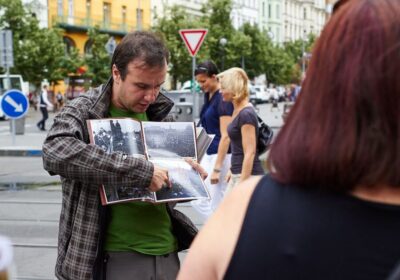
Communism History and Nuclear Bunker Guided Tour
Read our review →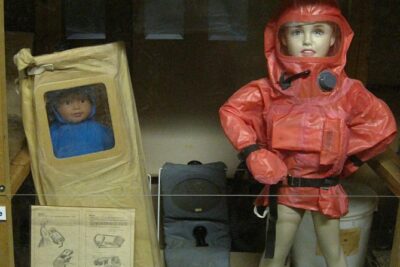
Prague Communism History and Nuclear Bunker Tour
Read our review →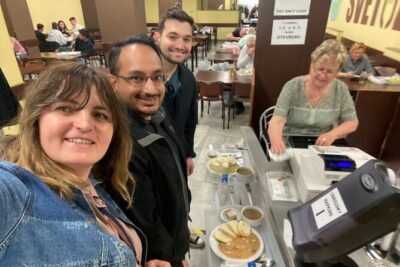
Communism & Nuclear Bunker Tour + 70s Canteen Lunch (own expense)
Read our review →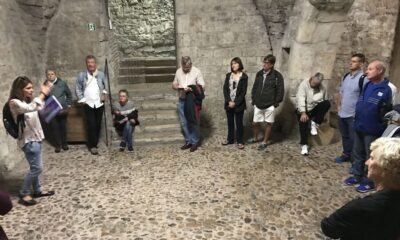
WWII Guided Tour & The Crypt of Operation Anthropoid
Read our review →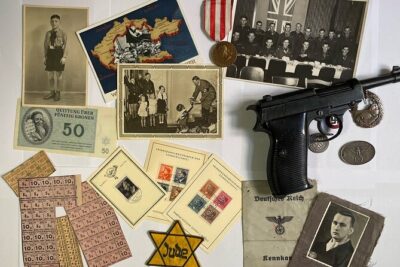
WWII in Prague Tour & The Crypt of Operation Anthropoid
Read our review →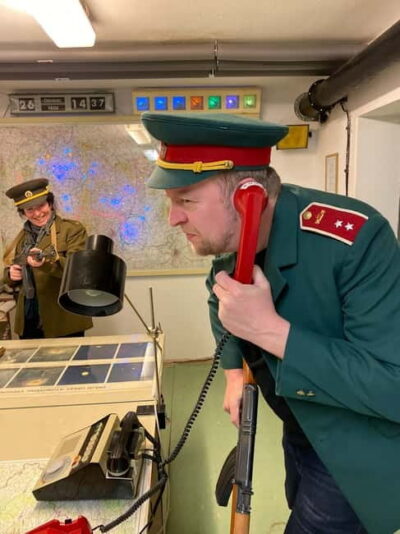
Communism and Bunker Tour with 70s Canteen Lunch
Read our review →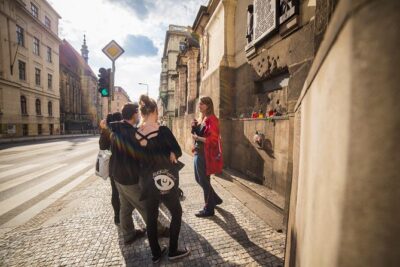
Small-Group World War 2 & Operation Anthropoid Tour in Prague
Read our review →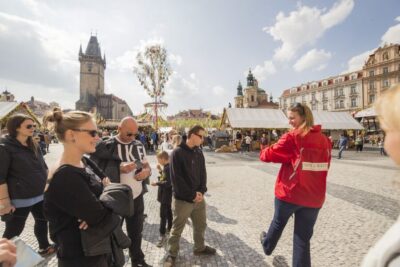
World War 2 and Operation Anthropoid Walking Tour
Read our review →Browse the lists this tour appears in