Reviewed · TOURS IN PRAGUE
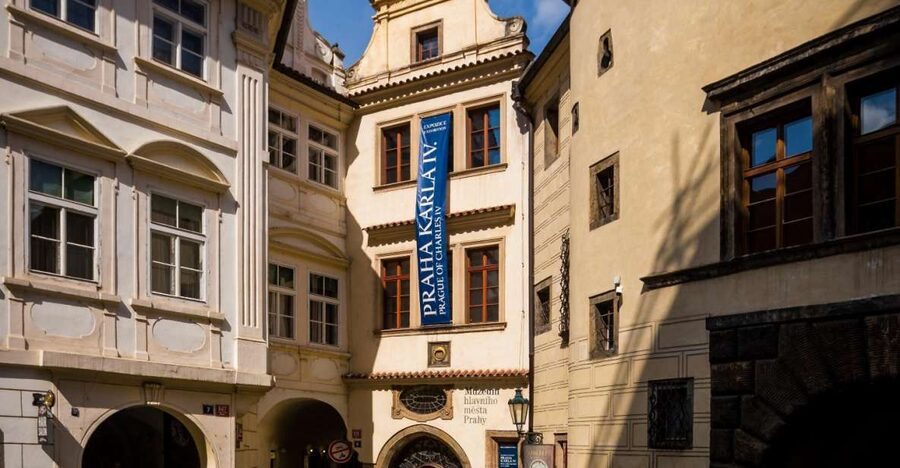
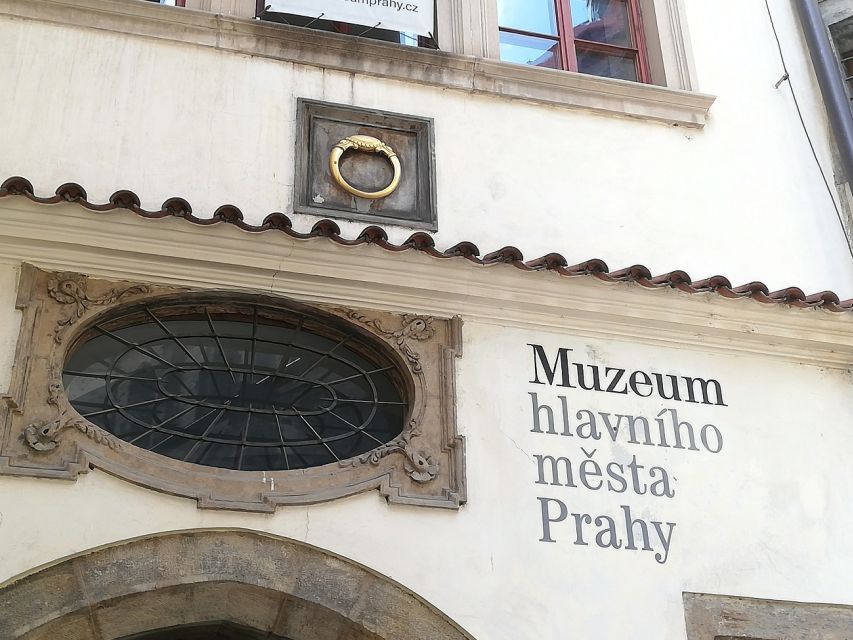
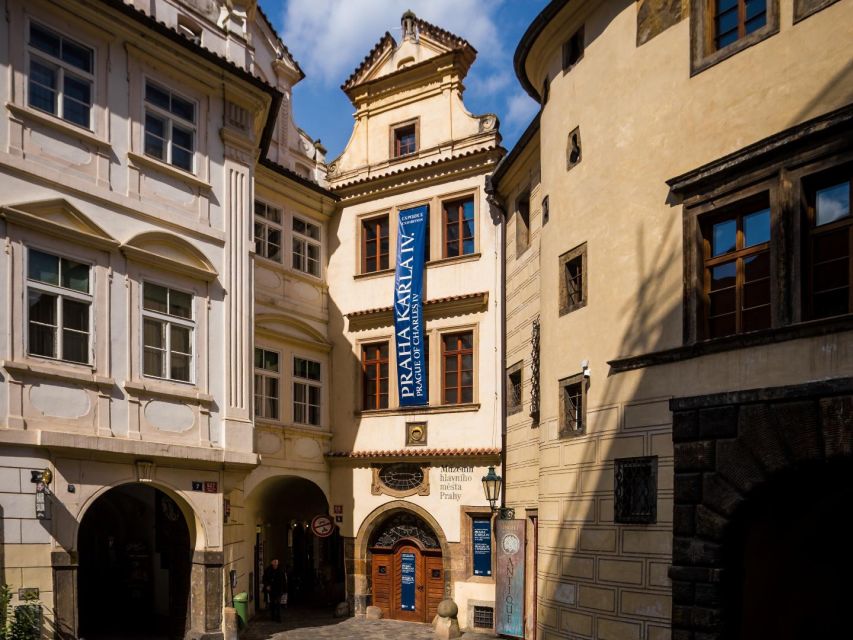
Prague: House at the Golden Ring Entry Ticket
Prague’s House at the Golden Ring turns city history into something you can see moving, changing, and taking shape. You’ll follow the medieval town under Charles IV, then watch Rudolf II’s Prague come alive in a nine-metre animation filled with people, streets, and daily scenes. The models of Prague Castle, Vyšehrad, and St Vitus Cathedral give the city a clear visual frame.
I like the mix of original objects and digital displays, since you are not left with rows of labels and little else to do. I also like the low price and flexible visit length: at $8, you can spend 90 minutes here or stay for two hours without making the museum the main event of your day. The main caution is that the experience may feel slow if medieval history does not hold your attention, and the multimedia material is in English rather than French.
Key points at a glance
- Charles IV’s Prague in models and video mapping: See how the 14th-century town grew around Prague Castle, Vyšehrad, Charles Square, and the stone bridge.
- A nine-metre view of Rudolf II’s city: Watch Prague’s streets fill with scenes from the Rudolfine era.
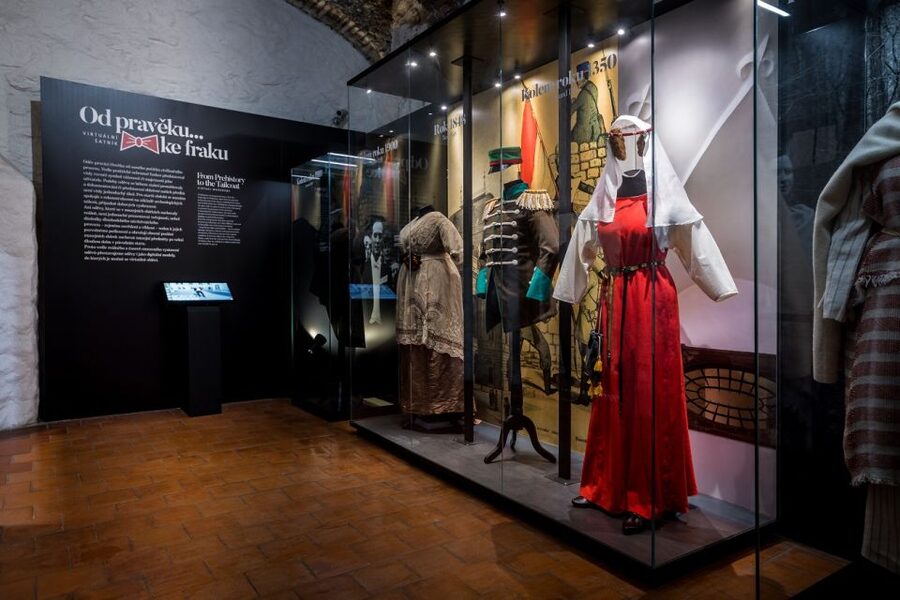
- Three exhibitions in one ticket: Entry covers The Medieval Town, Multimedia View of Prague During the Rule of Rudolf II, and From Prehistory to the Tailcoat.
- A good budget stop: The $8 admission gives you enough material for roughly 1.5 to 2 hours.
- English multimedia content: The instructor language is English, and the exhibition dialogue is also presented in English.
- Best for curious history fans: Families and visitors who prefer models, video, and visual displays may enjoy it more than a label-heavy museum.
Why the House at the Golden Ring makes Prague easier to understand
Prague can be confusing when you first look at its old streets. A church appears here, a tower there, and a grand square somewhere else, but the city’s growth is not always easy to read from ground level. This museum gives you a useful bird’s-eye view.
The focus begins with medieval Prague during the rule of Charles IV and the Luxembourg dynasty. You see how the settlement developed into a larger urban area, how important buildings served religious and state purposes, and how bridges and public spaces helped connect the city.
I find this especially useful before or after visiting Prague Castle, St Vitus Cathedral, or Charles Square. The exhibits give those places a wider setting. Instead of treating each monument as a separate sight, you can see how they fitted into the city Charles IV was reshaping.
The museum is not a guided walking tour, and no individual guide names are provided for the visit. It works more like a self-directed exhibition with English presentations and displays. That gives you freedom to move at your own speed, but you will need to read, watch, and make the connections yourself.
A few more things to do in Prague worth a look
- Prague: Skip-the-line Castle Ticket and Optional AudioGuide
★ 4.3 · 11,121 reviews - Prague: Castle Tour with Local Guide and Entry Ticket
★ 4.6 · 10,422 reviews - Prague Castle 2.5-Hour Tour Including Admission Ticket
★ 4.7 · 8,927 reviews
Charles IV’s Prague through models and moving images
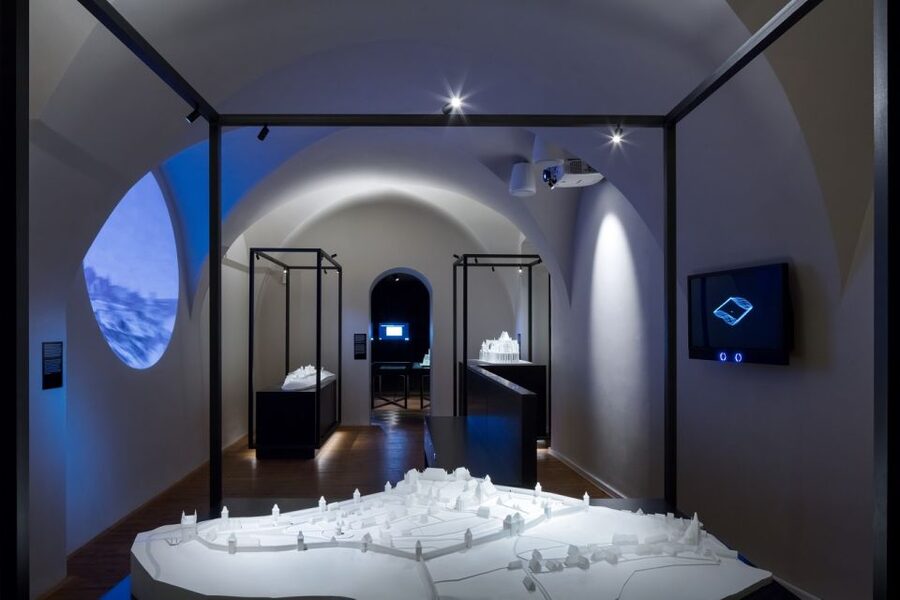
The Medieval Town exhibition is the central part of the visit. It uses physical models, virtual presentations, objects, and projections to show Prague during the 14th century.
One of the strongest ideas here is urban growth. You can see the housing development within the wider town and how the city changed under Charles IV and later rulers. The point is not only that Prague gained impressive monuments. It is that rulers changed the structure of the whole city by adding institutions, streets, bridges, and spaces for public life.
The model of Vyšehrad helps show the importance of the hilltop settlement. Prague Castle and St Vitus Cathedral appear as religious and political centers. These are not simply pretty models. They explain how power and worship were arranged in the medieval city.
You also see virtual and physical models of buildings founded or developed under Charles IV. A model can reveal a city in a way a surviving building cannot. It lets you see relationships between neighborhoods, walls, squares, and major landmarks all at once.
The video mapping of the Prague conurbation is another useful feature. It traces building and urban development during the 14th century, with special attention to Charles Square and its surroundings. If you have walked through the area, the display can help you understand why the square mattered and how its setting changed.
I would give this section time rather than rushing from screen to screen. The value comes from comparing the models with the Prague you see outside. Look for the way the river, castle, old town, and major religious buildings relate to one another.
The stone bridge and the mechanics of a medieval city
A town is not only churches and royal buildings. It also needs roads, administration, housing, markets, and bridges. The House at the Golden Ring gives these practical subjects room.
A virtual presentation explains medieval bridge construction. This is a good change of pace from the grand city models because it shows the work behind Prague’s growth. A bridge can alter trade, movement, and access across a river. Here, you are encouraged to think about construction as part of city planning rather than as a separate engineering story.
Another presentation explains the system of town administration. That detail matters because medieval cities did not grow by accident. Officials, rules, land, building projects, and civic responsibilities all shaped daily life.
Dramatic stops also recall major moments connected with Charles IV: his birth, his arrival in Prague in 1333, his coronation, and his burial. These scenes give the exhibition a human sequence. You are not only watching a city expand. You are following the life of a ruler whose decisions changed its appearance.
Some visitors may find the theatrical elements more engaging than written panels. Others may prefer the original objects. The museum gives you both, which is one reason the admission price feels fair.
Original objects and ordinary medieval life
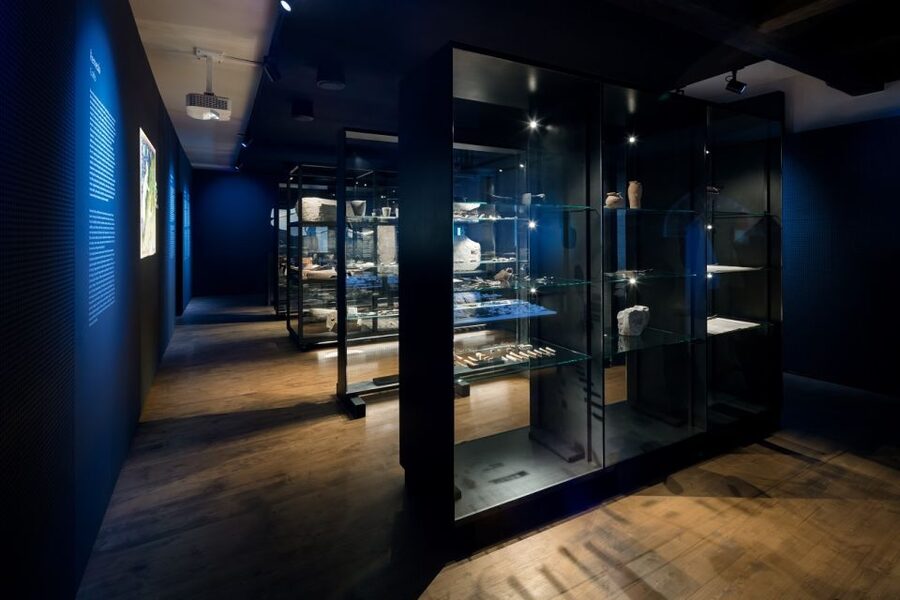
The archaeological finds are important because they move the exhibition away from royal history. The objects come from collections connected with the Prague City Museum, the National Heritage Institute’s regional office in Prague, and other institutions.
The supplied information does not provide a full item-by-item catalogue, so you should not expect a particular artifact list. What you can expect is a selection of archaeological findings and original objects used to illustrate everyday life in Prague under the Luxembourgs.
That ordinary scale is valuable. A model of a cathedral tells you about power and belief. A household or archaeological object can tell you how people lived within that system. Together, the two approaches give you a clearer picture of the town and its inhabitants.
I would pay attention to how the original pieces sit beside the digital material. The contrast helps you remember that the animated streets and grand models are interpretations based on evidence. The objects provide a physical link to the people who used the city.
This part may appeal most to visitors who enjoy seeing things rather than reading long blocks of text. Still, you need some patience. One visitor described the museum as boring without a strong interest in history, and that is a fair warning. The exhibition asks you to connect details rather than simply collect spectacular views.
Same streets, a different kind of outing:
- Prague: 50-Minute Sightseeing Evening Cruise
★ 4.2 · 33,780 reviews - Prague: Medieval Dinner with Unlimited Drinks
★ 4.4 · 19,847 reviews - Prague: Oldtown, Medieval Underground & Dungeon History Tour
★ 4.2 · 8,244 reviews - Prague: Vltava River Night Cruise with Buffet
★ 4.3 · 7,338 reviews
Rudolf II’s Prague in a nine-metre animation
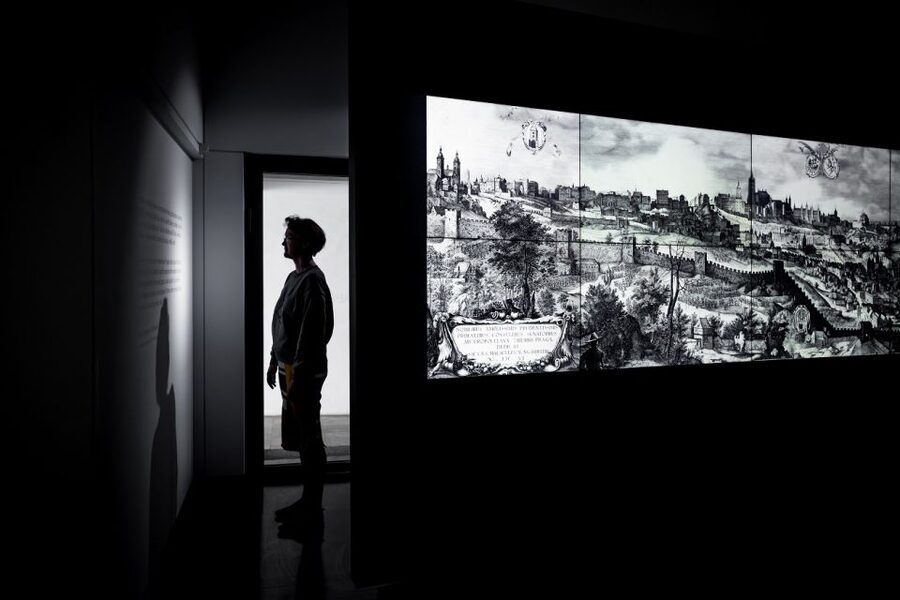
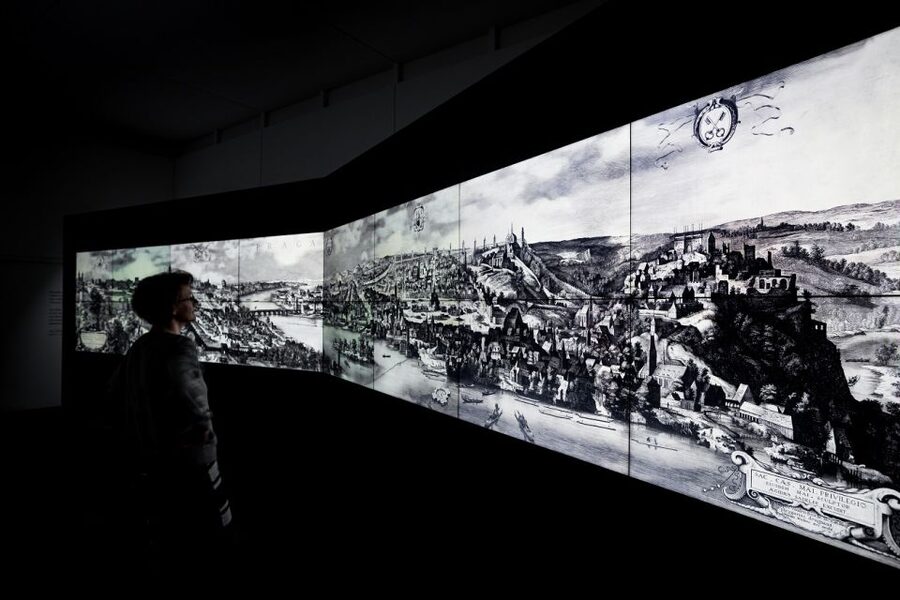
The Multimedia View of Prague During the Rule of Rudolf II shifts the focus from the 14th century to the Rudolfine era. Its main feature is a nine-metre animation based on the Sadeler Prospect.
The scale matters. A small screen can show a scene, but a nine-metre presentation gives you a broad view of the city and its people. The animation presents Prague as a living place, with people going about their lives, facing ordinary worries, and enjoying ordinary pleasures.
This is not just a portrait of palaces and rulers. The aim is to show a city filled with human activity. You may find yourself watching the smaller details rather than focusing only on the royal setting.
The Sadeler Prospect is the result of work by historians and technology specialists. That combination is useful here because the display needs both historical grounding and modern presentation. You receive a visual idea of Prague in Rudolf II’s time without relying only on a modern street plan.
This section may be the museum’s easiest entry point for children and visitors who tire of traditional displays. The moving image gives you something immediate to follow. It also provides a contrast with the Charles IV material, allowing you to see Prague at two different moments in its development.
Keep in mind that the exhibition still depends on English dialogue and explanations. If you prefer a quiet museum with no digital presentation, this room may not suit your taste. For many people, though, the large-scale animation is the feature that makes the visit memorable.
The third exhibition, from prehistory to the tailcoat
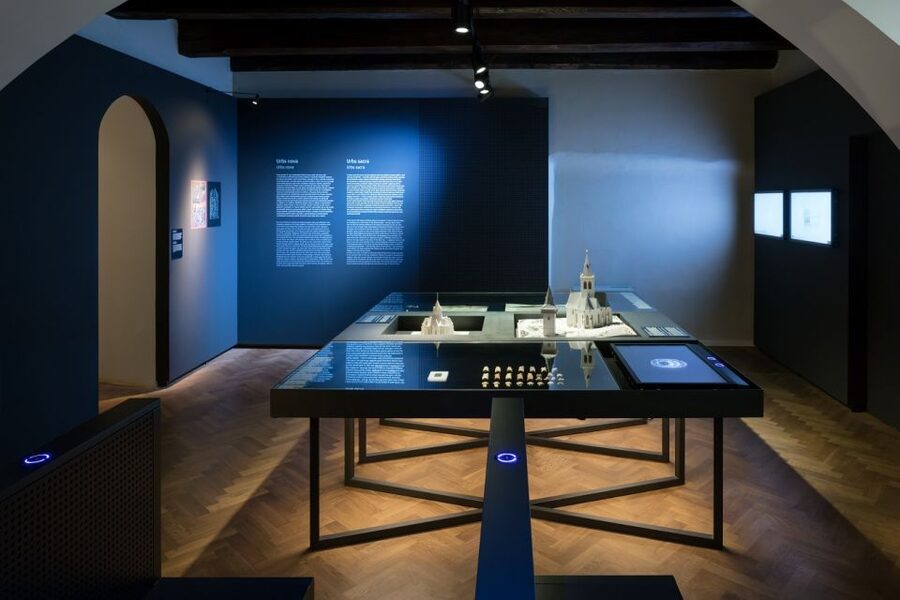
Your ticket also includes From Prehistory to the Tailcoat. The title signals a much wider time span than the medieval and Rudolfine displays.
The available information does not list every gallery or object in this exhibition, so I would treat it as a supporting part of the visit rather than plan your day around a specific item. Its role is to extend the story beyond Charles IV and Rudolf II and place Prague’s development within a longer sequence.
The title also suggests a focus on changes in clothing and society. That can be useful because clothes reveal how people lived, worked, and presented themselves. It gives you another way to view the city’s past, beyond buildings and rulers.
If you have about two hours, you should have time to see all three exhibitions at a comfortable pace. One visitor allowed around 90 minutes for the complete visit, while others spent closer to two hours. Your timing will depend on how long you pause at the projections, models, and original objects.
How long to allow and how to use the visit
The ticket is valid for one day, with starting times dependent on availability. The visit is not described as a fixed-length guided tour, so you can set your own pace inside the exhibitions.
I would allow at least 90 minutes. That gives you time to see the main medieval models, watch the Rudolf II animation, and pass through the third exhibition without racing. If you enjoy urban history, archaeology, or digital displays, plan on two hours.
A practical order would be:
- Begin with The Medieval Town, while you are fresh enough to follow the urban story.
- Spend extra time with the Charles IV models and the Charles Square video mapping.
- Watch the presentations about town administration and bridge construction.
- Move to the Rudolf II display and give the nine-metre animation time to unfold.
- Finish with From Prehistory to the Tailcoat.
You do not need to treat this as a serious, silent museum visit. The displays are built around different forms of media, so stop when something catches your eye and move on when it does not.
The English presentation is helpful for many international visitors. If you need French dialogue, however, this may be a limitation. One French-speaking visitor specifically found the lack of French material disappointing.
Is $8 good value?
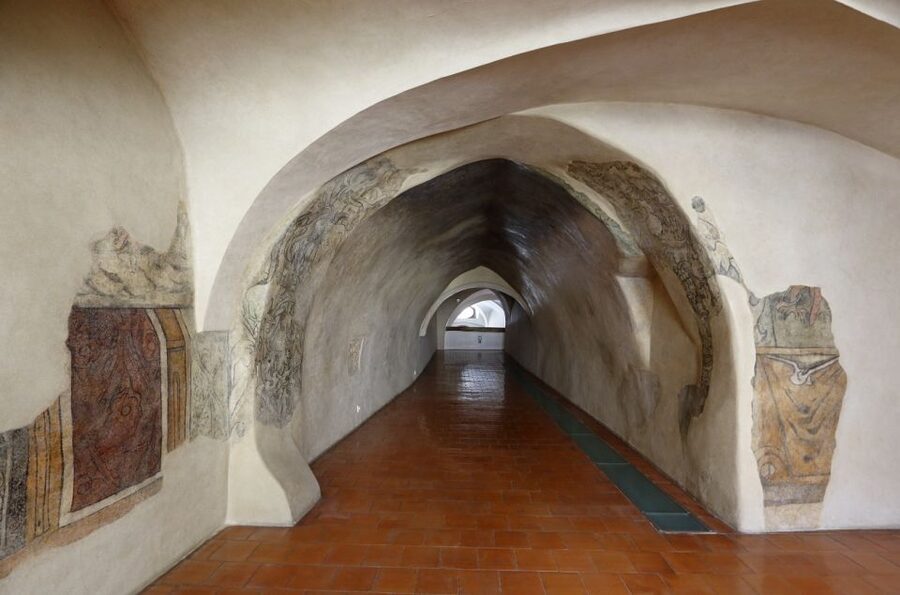
At $8 per person, the ticket is inexpensive for a central Prague cultural stop. The price is especially good if you use the full 1.5 to 2 hours and view all three exhibitions.
Value here comes from variety. You are not paying only to see a few objects in glass cases. The ticket includes physical models, archaeological finds, video mapping, virtual presentations, an interactive digital costume exhibition, and the large Rudolf II animation.
That does not mean the museum will suit everyone. If you want famous masterpieces, grand interiors, or a quick collection of iconic objects, another Prague museum may be a better choice. The House at the Golden Ring rewards curiosity about how a city works and changes.
The cost also makes it a low-risk addition to your schedule. You do not have to build an entire day around it. If you have a spare morning or afternoon, it offers a substantial indoor activity without the price of a major attraction.
The free cancellation policy adds useful flexibility. You can cancel up to 24 hours before the visit for a full refund, and the reserve-now, pay-later option means you do not pay at the time of booking. These terms matter if your Prague plans are still shifting, though they do not change the quality of the museum itself.
Who will enjoy this museum most?
I would recommend the House at the Golden Ring to you if you like seeing historical ideas represented through models, moving images, and objects. It is also a good choice if you want context for Prague Castle, Vyšehrad, St Vitus Cathedral, and Charles Square.
Families may find the digital displays easier to approach than a museum made entirely of text. The visual material gives younger visitors something to watch, while the models provide clear talking points about how the city developed.
History fans should have plenty to occupy them for two hours. The exhibition covers rulers, buildings, city administration, bridge building, archaeology, clothing, and everyday life.
You may want to skip it if your interest in Prague is limited to art, music, or famous interiors. The displays can feel boring when you have little interest in medieval or early modern city life. It is also not the best fit if you need French audio or dialogue, since the material is presented in English.
Should you book the House at the Golden Ring?
Book it if you want an affordable, visually varied way to understand Prague’s growth. The strongest reasons are the Charles IV city models, the video mapping around Charles Square, and the nine-metre Rudolf II animation. At $8, the visit offers good value, especially if you stay for two hours.
Skip it if your schedule is packed with major monuments or if you know you do not enjoy historical exhibits. This is not a quick photo stop. It asks you to pay attention to how Prague was built, administered, and lived in.
For most visitors with a free afternoon, I would include it. Pair the museum with a walk through the historic center, then use what you saw indoors to read the streets outside with sharper eyes.
FAQ
How much does entry to the House at the Golden Ring cost?
Entry costs $8 per person.
How long does a visit take?
You can see the exhibitions in about 1.5 hours, though allowing two hours gives you more time with the models, animations, and original objects.
What exhibitions are included?
The ticket includes The Medieval Town, Multimedia View of Prague During the Rule of Rudolf II, and From Prehistory to the Tailcoat.
Is the experience available in English?
Yes. The instructor language is English, and the exhibition dialogue is presented in English.
What can I see about Charles IV?
You can see virtual and physical models of buildings connected with Charles IV, including models of Vyšehrad, Prague Castle, and St Vitus Cathedral. Displays also cover town administration, medieval bridge construction, Charles Square, and major events in Charles IV’s life.
Can I cancel the booking?
Yes. You can cancel up to 24 hours in advance for a full refund. The reserve-now, pay-later option lets you keep your plans flexible.
Just added in Prague
- World War II 4WD Tour from Prague with Lunch★ 4.4 · 3 reviews
- WWII and Communism History in Prague’s Old Town Private Tour★ 5.0 · 4 reviews
- Prague: Historical Walking Tour with Focus on World War 2★ 4.3 · 12 reviews
- Unique salt cave in Prague★ 4.9 · 10 reviews
- Walking tour of Prague in french: Old Town & Charles Bridge★ 4.9 · 62 reviews
- Prague: Market Tour and Traditional Czech Cooking Class★ 4.7 · 19 reviews
- Ultimate Unlimited Beer Pong with Czech Beer★ 4.6 · 5 reviews
- Walking tour of Prague in French : Nové Město★ 4.9 · 16 reviews
Tours in Prague, compared.

Castle Tour with Local Guide and Entry Ticket
Read our review →
Prague Castle 2.5-Hour Tour Including Admission Ticket
Read our review →
Oldtown, Medieval Underground & Dungeon History Tour
Read our review →