
Reviewed · WALKING TOURS
Prague: Immersive History Walking Tour and VR
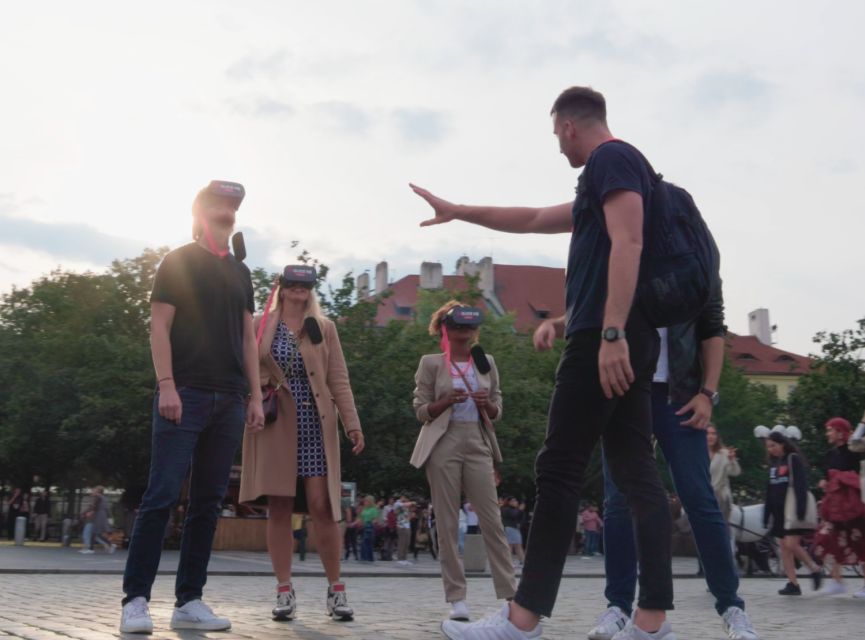
Prague’s past becomes much easier to grasp when you can stand in today’s street and then see the same place as it looked decades or centuries ago. This two-hour walking tour with six VR scenes links Old Town and New Town with stories of wars, political upheaval, and Operation Anthropoid.
I like the way the tour connects each headset scene to the exact place beneath your feet, and I like the compact route, which covers several major sights without taking up half a day. Guides such as Marco and Gaby are praised for clear explanations, warmth, humor, and extra details about statues and buildings along the way.
The main consideration is that VR is a visual aid, not a full museum visit. You will spend only a short time at each location, and wearing the headset can make you look a little odd to passing pedestrians. Also, the route does not include Charles Bridge or Prague Castle.
Key points at a glance
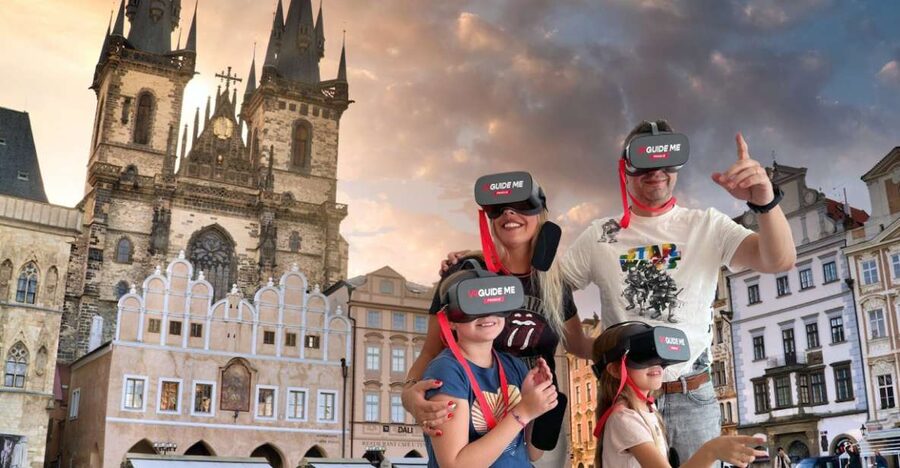
- Six historical VR scenes: See Prague as it looked in earlier periods while standing in the modern city.
- A route through Old and New Town: Visit Old Town Square, Wenceslas Square, the National Museum, New Town Hall, and Saints Cyril and Methodius Cathedral.
- Strong guide-led storytelling: Guides including Marco and Gaby add context, humor, and details beyond the headset scenes.
- A useful history lesson: The tour covers more than 700 years, including medieval conflict, the Prague Spring, and Operation Anthropoid.
- Good use of two hours: The route ends at the Dancing House beside a scenic Vltava River promenade.
- Flexible language choices: Live guiding is in English, with audio available in German, English, Czech, French, Spanish, Italian, and Russian.
Why the VR works better than a normal city walk
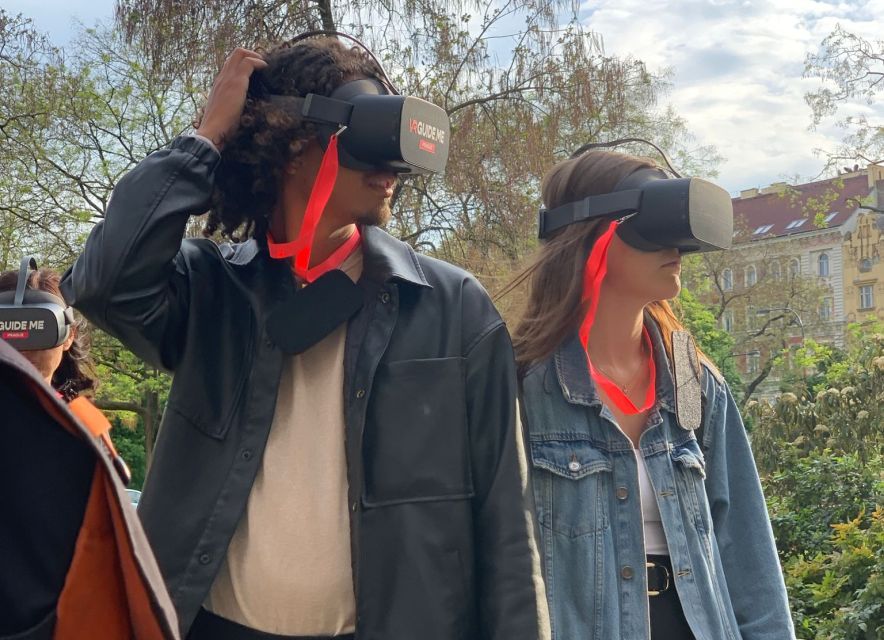
Virtual reality can be a gimmick. Here, it has a clear job: it lets you compare the Prague in front of you with the Prague that once occupied the same spot.
You might look across a square, put on the headset, and see an earlier version of the buildings around you. One scene shows the square about 120 years ago. Other scenes place you near major events, including medieval conflict, the arrival of Soviet tanks during the Prague Spring, and Operation Anthropoid.
That last part matters. A guide can explain an event in dates and names, but seeing the setting while you are standing there gives the story a stronger sense of place. When you remove the headset, the contrast between the old scene and the present-day street helps you notice how much Prague has changed.
The VR does not replace the guide. The guide explains what you are about to see, gives the historical setting, and helps connect one scene to the next. That balance is important, since the headset alone would offer pictures without much meaning.
More walking routes in Prague:
- Prague: 3-Hour Walking Tour of Old Town & Prague Castle
★ 4.7 · 5,696 reviews - Prague: Ghost Walking Tour Where Legends Come To Life
★ 4.4 · 5,253 reviews - Prague: Jewish Quarter Walking Tour with Admission Tickets
★ 4.7 · 3,729 reviews
Meeting at Panská 1 near Hamleys
The tour begins at Prague Tour Info, at Panská 1 beside Hamleys. This is a practical central meeting point, though you should allow enough time to find the exact office before the start.
The activity lasts about two hours. Since the route is on foot and includes several stops, wear comfortable shoes. The supplied information does not give a specific walking distance or group size, so do not assume this is a private tour. Group size may vary by departure.
The tour is suitable for all ages. If you wear glasses, you can still use the VR equipment. That is useful to know before booking, since the headset is the main feature rather than an optional extra.
Live guiding is offered in English. Audio is available in English, German, Czech, French, Spanish, Italian, and Russian. The language arrangement is worth checking carefully at booking, especially if you need a language other than English.
Old Town Square and Prague’s changing face
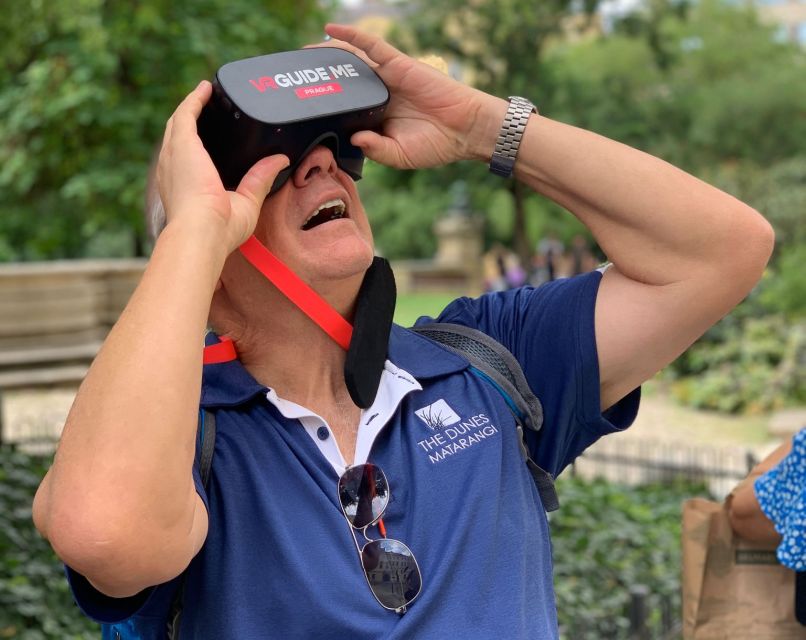
Old Town Square is the natural first major stop. It is one of Prague’s essential sights, but this tour uses it for more than a quick photo.
The VR scene helps you see how the square looked around 120 years ago. That comparison gives you a useful visual lesson in urban change. The buildings may seem familiar, but the older scene shows a different city, with a different rhythm and appearance.
Your guide sets up the scene before you put on the headset. That preparation keeps the technology from feeling random. You know what period you are viewing and why the location matters.
This is also one of the better places to understand the tour’s method. You look at Prague in front of you, view a historical version through the headset, and then look again with fresh attention. I like that simple pattern because it turns sightseeing into comparison rather than passive listening.
Wenceslas Square and the National Museum
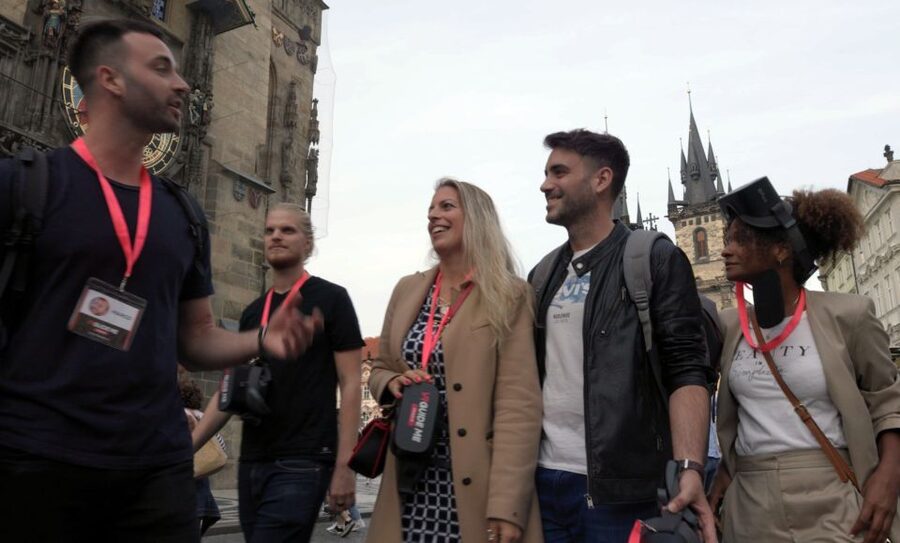
The route continues toward Wenceslas Square and the Prague National Museum. These locations are tied to major public events and political changes, so they help shift the tour from architecture to modern Czech history.
Wenceslas Square is especially useful for understanding Prague as a place where national life has played out in public. The square has witnessed political gatherings and moments of crisis. The tour’s historical scenes include the Soviet tanks entering Prague during the Prague Spring, one of the most powerful moments covered during the walk.
The VR view gives you a visual sense of that event while the guide explains what happened. You are not simply looking at a historical photograph in a gallery. You are standing in the city and seeing how the location connects to the event.
The National Museum adds another major landmark to the route. You should not expect an interior museum visit as part of this activity. Instead, the museum serves as an important exterior stop and a reference point in the story of modern Prague.
This part of the tour can be moving, but it may also feel dense. The guide covers many periods in only two hours, so listen for the main ideas rather than trying to memorize every date.
A few more things to do in Prague worth a look
- Prague: Oldtown, Medieval Underground & Dungeon History Tour
★ 4.2 · 8,244 reviews - Prague Old Town, Medieval Underground and Dungeon Historical Tour
★ 4.5 · 3,227 reviews - Prague: Communism History and Nuclear Bunker Guided Tour
★ 4.7 · 2,417 reviews - Prague: Historic City Center Bus Tour with Top Sights
★ 4.4 · 2,360 reviews
New Town Hall and the medieval chapters
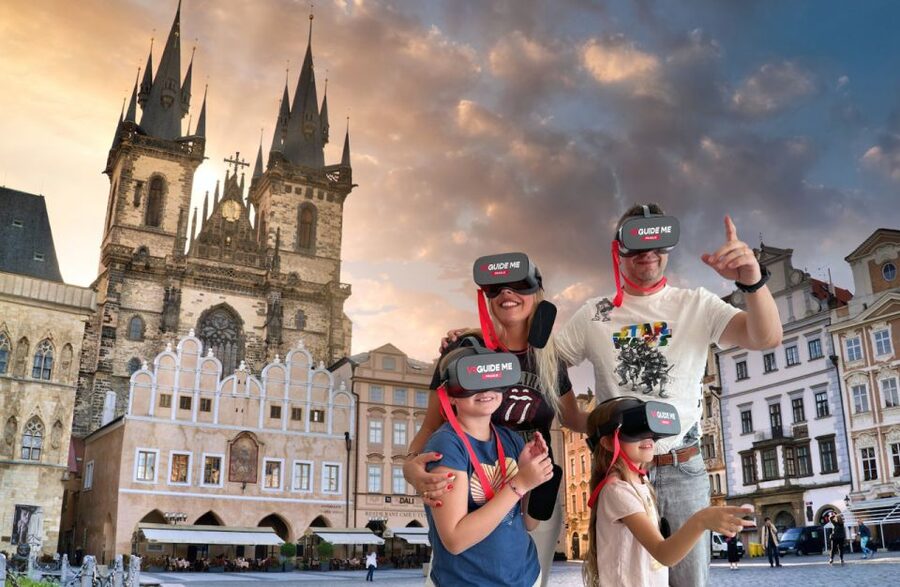
New Town Hall brings the route back to earlier periods of Prague’s story. The tour covers more than 700 years, including the causes of great wars in the Middle Ages.
That broad time span is one of the tour’s strengths and one of its limits. You get a wide overview of Czech history, but no single period receives the treatment of a full museum tour or a dedicated history walk.
The VR scenes make the medieval material easier to picture. Instead of hearing only about political tension or military conflict, you get a visual reconstruction linked to a real Prague location. The guide then fills in the parts that a short scene cannot explain.
If you are new to Prague, this overview can help you organize what you see during the rest of your stay. If you already know Czech history well, you may find the tour moves quickly, but the location-based comparisons still add something useful.
Saints Cyril and Methodius Cathedral and Operation Anthropoid
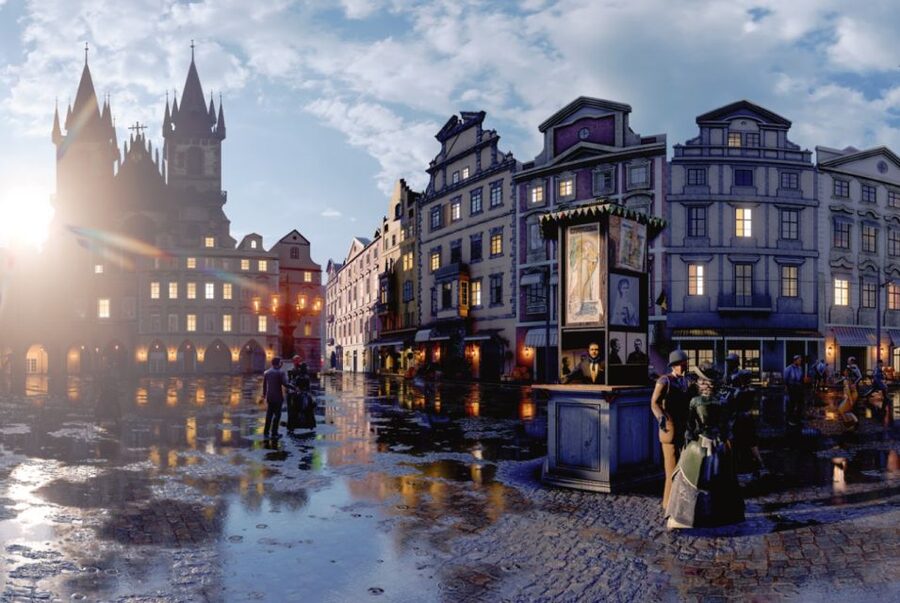
Saints Cyril and Methodius Cathedral is one of the most serious stops on the route. It is connected with Operation Anthropoid, the Second World War mission against Reinhard Heydrich.
The tour uses VR to place you closer to that historical moment. The exact staging gives the event a setting and atmosphere that a standard spoken explanation may lack. Your guide provides the context, while the headset helps you picture the location during the period being discussed.
This stop requires a respectful attitude. The material is not presented as light entertainment, even though the tour uses modern technology. The contrast between a headset and a difficult wartime story may seem unusual, but it can make the subject more immediate.
For many people, this will be the most memorable part of the walk. It shows the wider purpose of the experience: not just showing old buildings, but helping you understand what happened in the places you are visiting.
The walk ends at the Dancing House
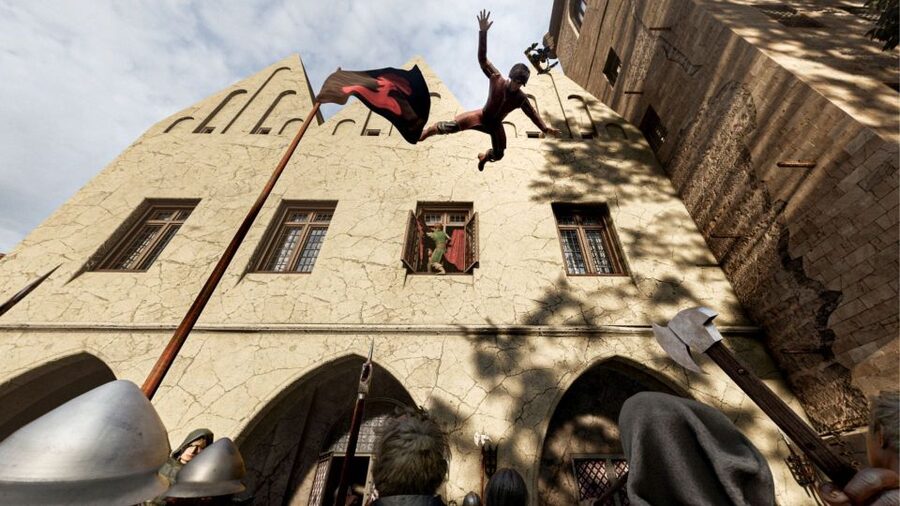
The final stop is the Dancing House, beside one of Prague’s attractive promenades along the Vltava River. It is a change of mood after the more serious historical sections.
The building is one of the city’s modern architectural landmarks, and it gives the tour a clear ending point. You finish with a contemporary Prague view rather than another medieval monument.
The riverside setting is also useful for continuing your day. You can stop for a walk along the Vltava, take photos of the Dancing House, or use the area as a starting point for your next plan. The tour does not return you to Panská 1, so keep that in mind when arranging lunch, transport, or another appointment.
The end point also reinforces the tour’s central idea: Prague is not a preserved museum city. Old, modern, political, and everyday Prague all occupy the same streets.
How the guides shape the experience
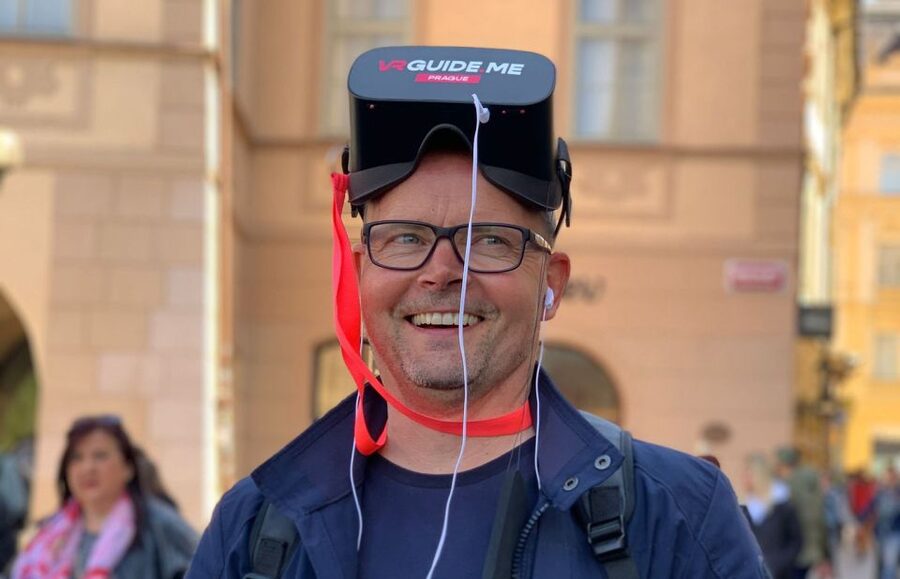
The guide matters more here than on a simple sightseeing walk. The technology creates the visual scenes, but the guide decides how useful they become.
Marco and Gaby are two guides associated with especially strong experiences. Marco is described as warm, humorous, and very well informed about the city. He also points out lesser-known details along the way, which helps the walk feel broader than a fixed list of major landmarks.
Gaby is praised for enthusiasm and for adding information about objects and statues encountered between the main stops. That extra commentary is valuable because the route includes more than the six VR moments.
You may also receive candid photos while using the headset. This was a thoughtful personal touch on some tours, but it should not be treated as a guaranteed inclusion. The supplied information confirms the guide, headset, and optional audio, not photography.
The guides speak English for the live tour. If you choose an audio language, you may have less direct interaction with the guide, so check the arrangement before booking if live commentary is important to you.
Is $33 good value for two hours?
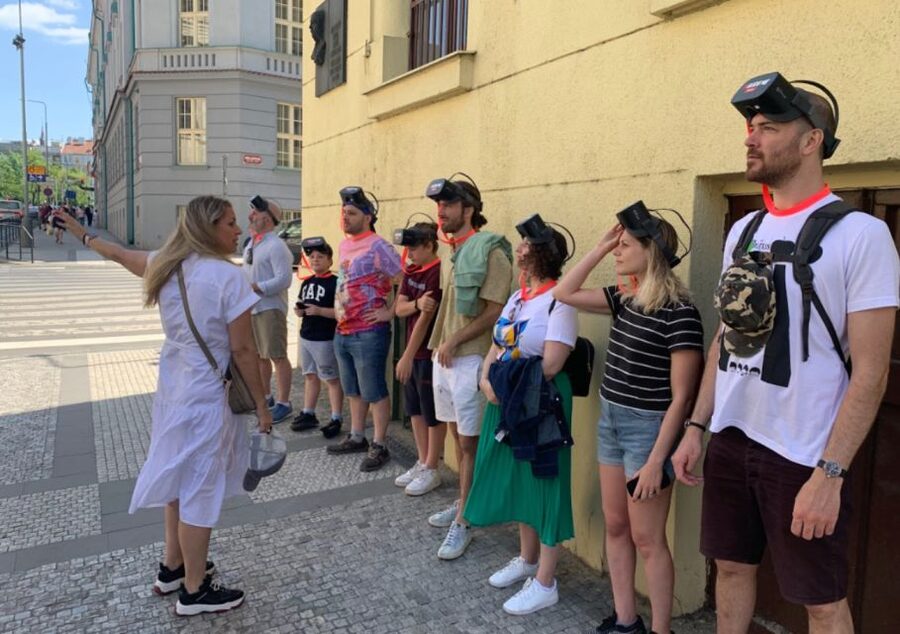
At $33 per person, this is not the cheapest way to stroll around Prague. You can see Old Town Square, Wenceslas Square, and the Dancing House without paying for a tour.
The value comes from the combination of a live guide, a planned route, and six VR scenes. You are paying for interpretation and historical reconstruction, not just transport between landmarks. The price is easier to justify if you want an introduction to Prague and prefer an active experience over a traditional museum visit.
I find the two-hour length sensible. It is long enough to cover several central locations and major historical themes, but short enough to fit around other plans. It also works well early in a Prague visit, since the route gives you orientation in both Old and New Town.
The tour is less useful if you want extended time inside monuments, detailed art history, or a broad sweep of every famous Prague sight. Charles Bridge, Prague Castle, and St. Vitus Cathedral are not part of this route. Plan a separate visit for those.
Free cancellation up to 24 hours before the activity and the reserve-now, pay-later option give you some planning flexibility. Starting times vary, so check availability for your chosen date.
Who should book this Prague VR tour?
I would choose this experience for first-time visitors who want a quick orientation with more substance than a basic photo walk. It also suits families, since the headset adds a hands-on element and the activity is suitable for all ages.
History fans will get the most from the route, especially those interested in the Prague Spring, the Second World War, and the political changes that shaped modern Czech life. The tour is also a good match for visitors with limited time who want a compact introduction to central Prague.
Solo visitors can fit in easily, and a small group may receive especially direct conversation with the guide. At the same time, you should not book it expecting a guaranteed private tour. The supplied information does not promise a private group.
You may want to skip it if VR makes you uncomfortable, if you prefer quiet independent sightseeing, or if you want to spend your time inside Prague’s major monuments. The headset is central to the experience, so it is not an optional extra you can ignore without losing much of the tour’s purpose.
My verdict: book it for history with a visual edge
Book this tour if you want Prague’s history tied to real streets and shown in a way that is easy to remember. The strongest features are the six location-based VR scenes, the thoughtful route through Old and New Town, and guides such as Marco and Gaby who add context beyond the programmed material.
I would not use it as your only Prague sightseeing tour. Instead, pair it with a separate visit to Charles Bridge, Prague Castle, and St. Vitus Cathedral. For $33 and two hours, it offers a focused history lesson, a few major landmarks, and a memorable way to compare past and present.
FAQ
How long does the Prague VR walking tour last?
The tour lasts two hours.
Where does the tour begin?
Your guide meets you at Prague Tour Info, Panská 1, next to Hamleys.
Where does the tour end?
It ends at the Dancing House, beside a promenade along the Vltava River.
Which Prague sights are included?
The route includes Old Town Square, Wenceslas Square, the Prague National Museum, New Town Hall, Saints Cyril and Methodius Cathedral, and the Dancing House.
How many VR scenes are included?
The experience includes six virtual reality scenes at different locations.
What historical periods and events are covered?
The tour covers more than 700 years of Czech history, including medieval wars, Prague around 120 years ago, the Soviet tanks entering Prague during the Prague Spring, and Operation Anthropoid.
Is the tour guided in English?
Yes. The live tour guide speaks English.
Are other languages available?
Audio is available in German, English, Czech, French, Spanish, Italian, and Russian.
Can people who wear glasses use the VR headset?
Yes. People who wear glasses can take part in the activity.
Is cancellation allowed?
You can cancel up to 24 hours in advance for a full refund. You can also reserve now and pay later.
Just added in Prague
- World War II 4WD Tour from Prague with Lunch★ 4.4 · 3 reviews
- WWII and Communism History in Prague’s Old Town Private Tour★ 5.0 · 4 reviews
- Prague: Historical Walking Tour with Focus on World War 2★ 4.3 · 12 reviews
- Unique salt cave in Prague★ 4.9 · 10 reviews
- Walking tour of Prague in french: Old Town & Charles Bridge★ 4.9 · 62 reviews
- Prague: Market Tour and Traditional Czech Cooking Class★ 4.7 · 19 reviews
- Ultimate Unlimited Beer Pong with Czech Beer★ 4.6 · 5 reviews
- Walking tour of Prague in French : Nové Město★ 4.9 · 16 reviews
Walking Tours, compared.
3-Hour Walking Tour of Old Town & Prague Castle
Read our review →
Ghost Walking Tour Where Legends Come To Life
Read our review →
Jewish Quarter Walking Tour with Admission Tickets
Read our review →
Prague Guided Walking Tour and Cruise with Authentic Czech Lunch
Read our review →
Old Town and Jewish Quarter Guided Walking Tour
Read our review →
Prague Ghost and Legend of Old Town Walking Tour
Read our review →
Prague 3-hour Afternoon Walking Tour including Prague Castle
Read our review →
Ghosts and Legends Nighttime Guided Walking Tour
Read our review →Browse the lists this tour appears in