
Reviewed · WALKING TOURS
Prague Renaissance and Baroque Gardens Walking Tour
Prague’s palace gardens tell a quieter story than its castles. On this three-hour walk, you follow the city’s shift from medieval herb plots to Italian Renaissance design and theatrical Baroque spaces. I like the Singing Fountain, which makes a faint ringing sound as water falls into its bronze bowl, and the chance to see figs, oranges, lemons, and almonds linked to the first Mediterranean plantings in Central Europe.
I also like the Wallenstein Garden’s albino peacocks and the high views from Vrtba Garden. The main drawback is physical: the route includes narrow, steep, and sometimes uneven stairs, while the admission fees for the Prague Castle gardens and Vrtba Garden are extra.
Key points at a glance
- Italian design in Prague: Learn how Emperor Ferdinand I imported Italian gardeners and architects in the 1500s.
- The Singing Fountain: See the 1564 bronze fountain whose falling water causes the bowl to resonate.
- Useful garden history: Visit the Fig House and Orangery, tied to the first cultivation of several Mediterranean fruits in Central Europe.
- Wallenstein’s grand setting: Find albino peacocks, Mannerist statues, fountains, and a grotto wall in one of Prague’s most dramatic gardens.
- Vrtba Garden views: Climb through a compact Baroque garden to its marine-themed grotto and city panorama.
- A stair-heavy route: Choose a private tour if steep or narrow stairs may limit your comfort.
Why Prague’s gardens are worth your time
Prague is famous for churches, bridges, and royal buildings, but its gardens explain how power and taste changed over the centuries. A garden was not just a pleasant place to walk. It could display wealth, announce political ambition, provide food and medicine, or imitate an ideal world built from classical myths.
The earliest medieval gardens in Prague were practical. Herbs served cooking and medicine, and small cultivated plots survived in certain Gothic cloisters. Vineyards on the hills around the city also reach back before the reign of Charles IV.
The grand palace garden arrived later, in the 1500s. Emperor Ferdinand I favored the formal style of the Italian Renaissance, with ordered paths, ornamental plants, fountains, and pleasure buildings. He brought Italian gardeners and architects to Bohemia, helping introduce classicism north of the Alps.
That background gives this walk a clear purpose. You are not simply moving from one pretty courtyard to another. You are watching Prague’s rulers use plants, water, architecture, and views to express status and ideas.
More walking routes in Prague:
- Prague: 3-Hour Walking Tour of Old Town & Prague Castle
★ 4.7 · 5,696 reviews - Prague: Ghost Walking Tour Where Legends Come To Life
★ 4.4 · 5,253 reviews - Prague: Jewish Quarter Walking Tour with Admission Tickets
★ 4.7 · 3,729 reviews
Starting near Malá Strana
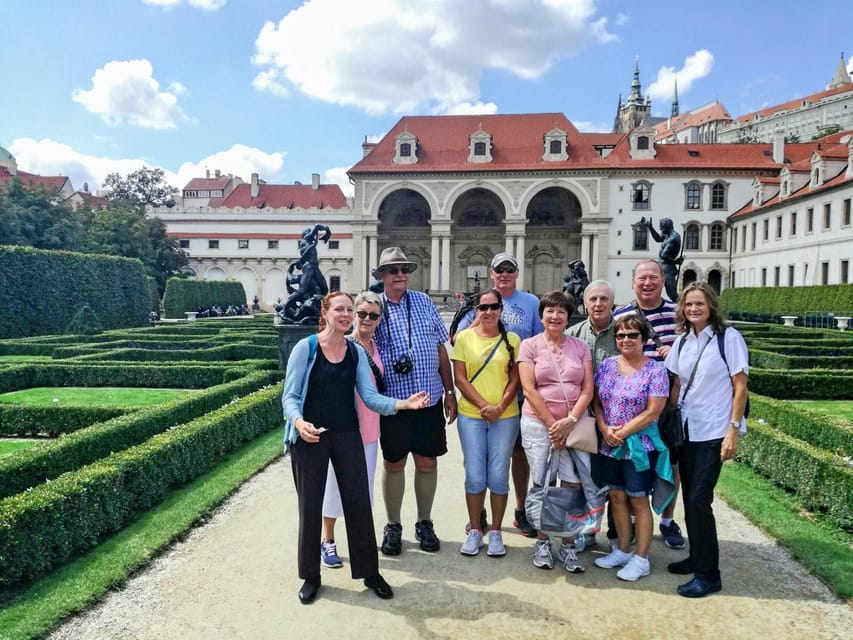
The meeting point is at the door of Bagel Lounge Malostranska. From there, the route heads toward the gardens below and around Prague Castle, then continues downhill toward Wallenstein Garden and ends at Vrtba Garden in Malá Strana.
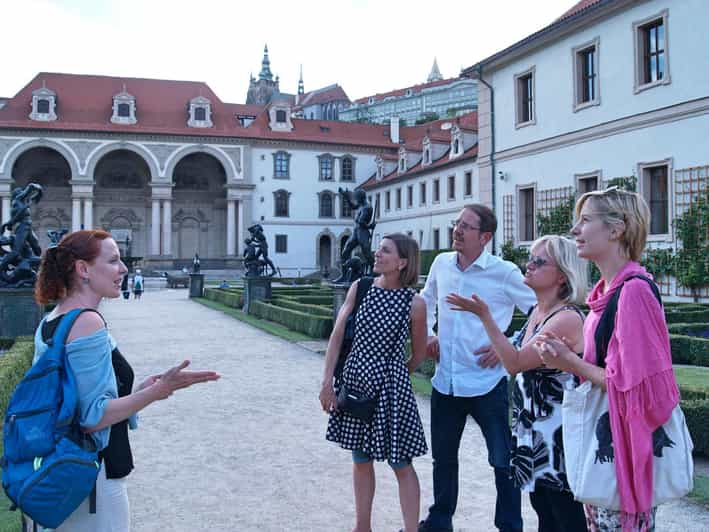
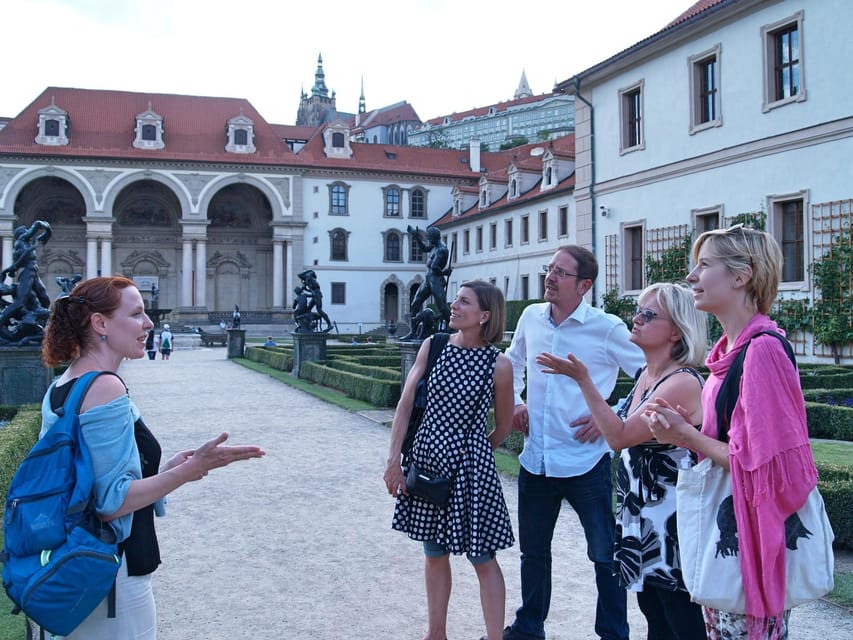
The tour lasts three hours and is offered in English with a historian guide. Private and small-group options are available, which matters here because a smaller group makes it easier to hear explanations in courtyards and easier for the guide to adjust the walking pace.
The route is not a flat city stroll. You will use stairs, including some narrow or steep sections, and the overall direction includes climbing and descending. If your knees, balance, or stamina are a concern, a private booking gives the guide more scope to tailor the route, skip selected sites, or spend more time in easier areas.
One guide named in the feedback is Miriam, who was praised for an informative and relaxed manner. A separate 2017 comment names Bonita Rhoads. Guide assignments can change, so treat those names as useful background rather than a promise of who will lead your tour.
Ferdinand I and the Royal Gardens
The Prague Castle gardens provide the historical starting point. Ferdinand I commissioned the Belvedere Summer Palace as a gift for his wife, Queen Anne, although she died before it was completed.
The building was designed by the Italian architect Paola della Stella. It is often described as the finest Renaissance structure outside Italy, and the setting helps explain why. The palace sits beside a formal garden, with architectural decoration that connects royal affection, classical style, and imperial display.
One relief shows Ferdinand presenting his wife with a flower from the Royal Gardens. That small detail gives the site a human touch. Behind the formal program of empire and architecture was also a husband trying to honor his queen.
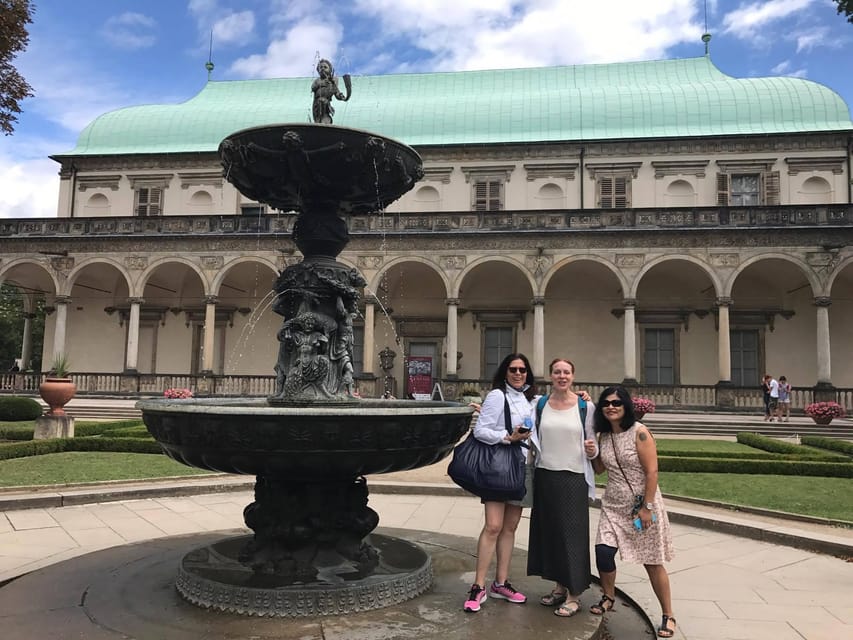
In front of the palace is a small Giardinetto, or pleasure garden, with the Singing Fountain. Cast in bell bronze in 1564, it produces a ringing effect when water drops strike the bowl.
The sound is subtle rather than theatrical. You need to pay attention, and your guide can help you understand what to listen for. This is a good example of why the walk benefits from historical interpretation: without context, you might see an old fountain; with context, you understand it as a carefully engineered Renaissance object designed to delight both the eye and ear.
The Fig House and Orangery
The tour continues to the Fig House and Orangery. These structures are tied to the first cultivation of figs, almonds, oranges, and lemons in Central Europe.
The point is not simply that exotic plants once grew here. It shows the work and expense required to bring Mediterranean horticulture into a colder climate. An orangery was both a garden building and a sign of wealth, since delicate plants needed protection, careful tending, and suitable conditions.
For you, this is one of the more distinctive stops. Prague’s major churches and palaces are easy to find on any standard sightseeing route. A historic structure connected to citrus growing offers a less familiar view of royal life.
The guide also explains how tulips reached the Royal Gardens as an exotic gift from the Sultan of Constantinople. The story places Prague within a wider exchange of plants, gifts, and prestige between Europe and the Ottoman world.
Do not expect a modern botanical garden with a large collection of labeled specimens. The value here lies in the story of how plants moved, who had access to them, and why an imported flower could carry political and social meaning.
Same streets, a different kind of outing:
- Prague: 50-Minute Sightseeing Evening Cruise
★ 4.2 · 33,780 reviews - Prague: Medieval Dinner with Unlimited Drinks
★ 4.4 · 19,847 reviews - Prague: Skip-the-line Castle Ticket and Optional AudioGuide
★ 4.3 · 11,121 reviews - Prague: Castle Tour with Local Guide and Entry Ticket
★ 4.6 · 10,422 reviews
From the Stag Moat to the South Gardens
Near the western end of the Royal Gardens, the walk takes in the stag moat before passing through a castle courtyard. You then descend the Bull Stairs toward the South Gardens.
These transitions matter because they connect royal defenses, palace access, and garden design. The route does not treat the gardens as isolated parks. It shows how they were attached to the castle complex and how people moved between public authority, private pleasure, and controlled spaces.
The South Gardens include the Garden of Paradise and the Garden on the Bulwark. Their names alone reveal the symbolic language of historic garden design. A paradise garden suggested order and ideal beauty, while a garden on a defensive structure turned a practical military edge into a place for leisure and views.
You will also move down through several terraced gardens below the castle. The terraces are an important part of the experience, but they are also where the physical demands become more obvious.
Wear sturdy shoes and expect a genuine walking tour, not a sequence of stops reached by vehicle. The activity information does not specify transport between sites, and the route description makes clear that walking and stairs are central to the experience.
Wallenstein Garden and the politics of Baroque style

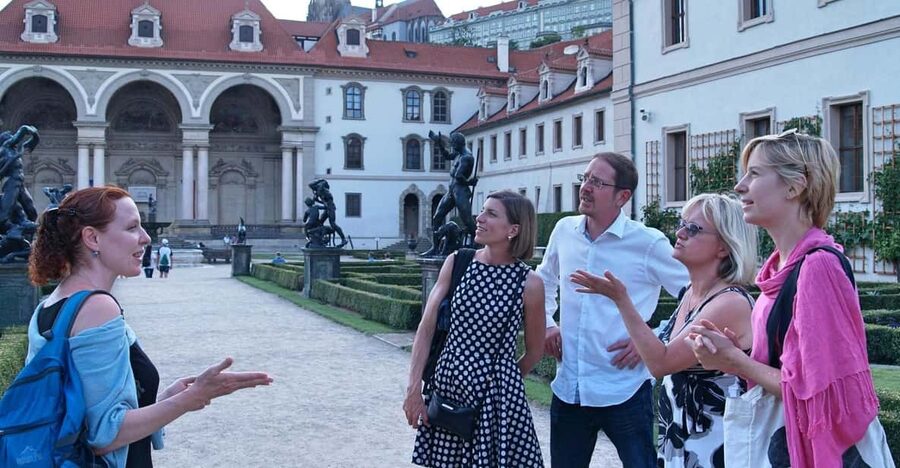
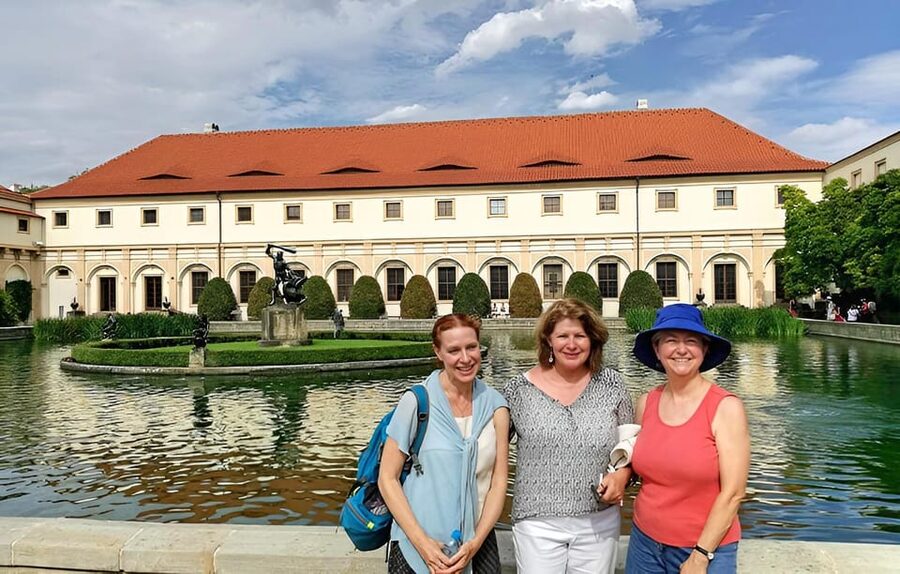
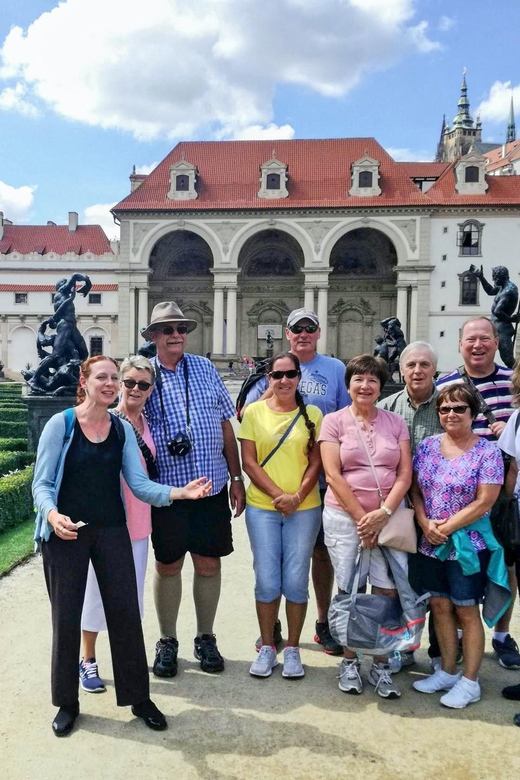
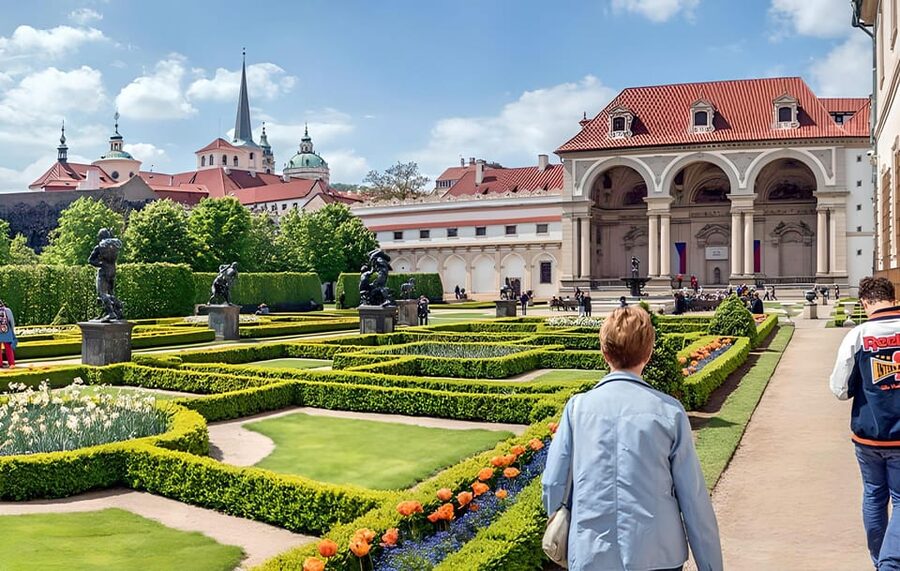
At the bottom of the hill, the mood changes at Wallenstein Garden. This grand garden includes albino peacocks, Mannerist statues, a grotto wall, and fountains based on mythological subjects.
The garden was commissioned by Albrecht von Wallenstein, one of the most powerful and dramatic figures of the period. His story helps explain the scale and ambition of the setting. The garden was not merely a retreat. It projected rank, influence, and a carefully controlled image of power.
Here, your guide discusses the move from Renaissance classicism to Baroque ideas. Renaissance design favored balance, order, and a return to classical forms. Baroque design could be more theatrical, emotional, and forceful, using movement, surprise, myth, and visual tricks to impress the viewer.
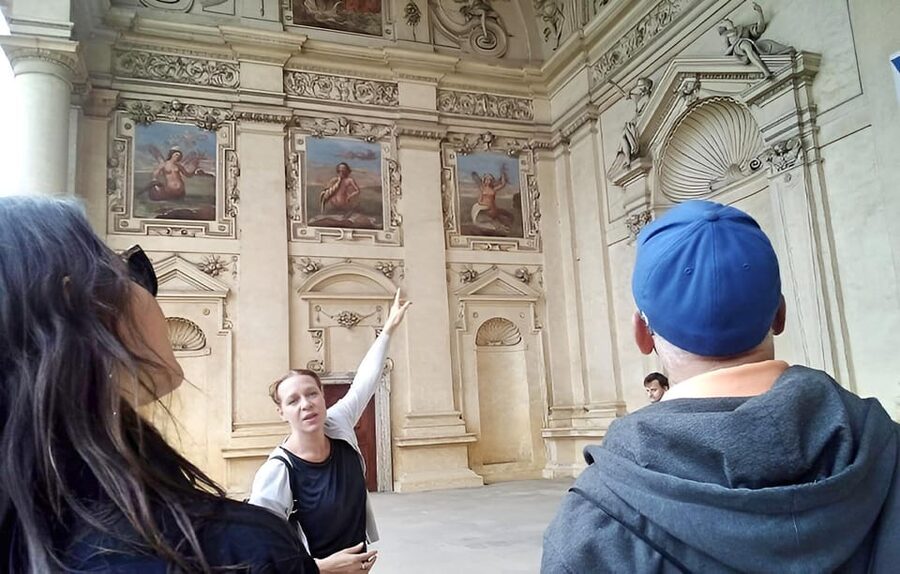
The grotto wall is especially useful for understanding that change. Its rough, artificial rock surface contrasts with the clean geometry of formal garden elements. The combination creates a setting that feels part palace, part stage set.
The albino peacocks are a memorable touch, though they should not be the sole reason to book the tour. Their presence adds life to the garden, while the statues and fountains carry the larger story about noble display and Baroque taste.
Wallenstein Garden is also a welcome change in rhythm. After the castle gardens and their royal associations, this space gives you a more concentrated look at one patron’s ambition. The guide’s explanation of Wallenstein’s dramatic life helps connect the art to the man who paid for it.
Vrtba Garden and the final city view
The final stop is Vrtba Garden, a compact Baroque garden dating from 1720 in Malá Strana. It is walled, intimate, and easy to miss if you are exploring Prague without a guide.
This is where the tour shifts from imperial Renaissance planning to 18th-century noble taste. The garden offers a glimpse into how a noble household could use a small urban site for ceremony, display, and private enjoyment.
The climb through the garden leads to the top courtyard and a marine-themed grotto. The reward is a broad view across Prague’s cityscape.
That view gives the tour a strong ending because it lets you see the city from the garden’s point of view. The buildings, roofs, and hills are no longer just scenery behind a palace. They become part of the garden’s design, framed and displayed for the people who climbed to this upper level.
Vrtba Garden is also one of the strongest reasons to book this particular route. Many city walks pass through Malá Strana without entering this walled space. Here, the extra admission fee buys access to a place that feels separate from the main tourist flow, even though it is in a central district.
The garden is not huge, so you should not expect hours of wandering. Its appeal comes from the arrangement of terraces, the grotto, the Baroque decoration, and the view. The guide helps you read those elements as a complete design rather than as unrelated features.
What the $123 price really covers
The price is $123 per person for three hours. That is a serious amount for a walking tour, especially since admission to the gardens under Prague Castle and Vrtba Garden is not included.
The value depends on what you want from a guide. If you only want to look around the gardens, you can likely find individual entry options and explore at your own pace. If you want the links between Ferdinand I, Italian design, imported plants, Wallenstein, Baroque symbolism, and Vrtba’s noble setting, the historian guide is the main reason to pay more.
The tour also covers several separate garden areas in one route. That saves you from working out how the sites connect and gives the experience a clear historical arc.
A private or small-group booking may make the price easier to justify if you care about questions, pacing, or mobility adjustments. For a larger group, the narrow spaces and outdoor acoustics could make personal interaction less consistent, though the exact group size is not specified.
Remember to budget for the two admission fees. Since those costs are separate and not stated here, check the current amounts before booking rather than treating the $123 as the final total.
Who will enjoy this walk most
I would choose this tour if you have already seen Prague’s headline sights and want a more focused subject. It suits anyone interested in architecture, garden design, royal life, plant history, or the way political power is expressed through space.
It also works well for visitors who prefer a historian’s explanation to a general sightseeing route. The tour is not built around shopping, food, or transport. Its rewards come from close observation and context.
You should think twice if stairs are difficult for you or if you want a slow, leisurely garden visit with lots of unscheduled time. The route covers several areas in three hours, so the pace needs to keep moving.
The private option is the sensible choice for anyone with mobility limits. The regular route includes steep and narrow stairs, but a private guide can adjust the plan, leave out selected sites, and focus on sections that work better for you.
The available feedback is small but strongly positive. Miriam received particular praise for being both informative and relaxed, a useful combination for a tour with plenty of historical detail. Another comment calls Bonita Rhoads an excellent guide, though you should not assume either guide will lead your departure.
Should you book it?
Book this tour if you want Prague’s gardens explained as living history rather than treated as decorative backdrops. The Singing Fountain, Fig House, Orangery, Wallenstein Garden, and Vrtba Garden each offer something different, and together they show how Prague moved from medieval practicality to Renaissance order and Baroque spectacle.
Skip it if your main goal is to avoid stairs, keep costs low, or spend a full afternoon in one garden. For everyone else, the route offers a thoughtful look at parts of Prague that are easy to pass without understanding, provided you are comfortable paying extra admission and walking uphill and down again.
FAQ
How long does the Prague Renaissance and Baroque Gardens Walking Tour last?
The tour lasts three hours.
What language is the tour offered in?
The tour is offered in English with a live guide.
Where is the meeting point?
Meet at the door of Bagel Lounge Malostranska.
Is a historian guide included?
Yes. The experience includes a three-hour guided history walk with a historian guide.
Are garden admission fees included in the price?
No. Admission to the gardens under Prague Castle and admission to Vrtba Garden are not included.
Is the tour private or shared?
Private and small-group options are available.
Can I cancel for a full refund?
Yes. You can cancel up to 24 hours in advance for a full refund.
Do I have to pay when I book?
No. A reserve-now, pay-later option is available.
Is the route suitable for people with mobility issues?
The regular route includes narrow and sometimes steep stairs. If you expect difficulties, a private tour is recommended so the guide can adjust the route, omit selected sites, and match your personal pace.
Just added in Prague
- World War II 4WD Tour from Prague with Lunch★ 4.4 · 3 reviews
- WWII and Communism History in Prague’s Old Town Private Tour★ 5.0 · 4 reviews
- Prague: Historical Walking Tour with Focus on World War 2★ 4.3 · 12 reviews
- Unique salt cave in Prague★ 4.9 · 10 reviews
- Walking tour of Prague in french: Old Town & Charles Bridge★ 4.9 · 62 reviews
- Walking tour of Prague in French : Nové Město★ 4.9 · 16 reviews
- Prague: Market Tour and Traditional Czech Cooking Class★ 4.7 · 19 reviews
- Ultimate Unlimited Beer Pong with Czech Beer★ 4.6 · 5 reviews
Walking Tours, compared.

3-Hour Walking Tour of Old Town & Prague Castle
Read our review →
Ghost Walking Tour Where Legends Come To Life
Read our review →
Jewish Quarter Walking Tour with Admission Tickets
Read our review →
Prague Guided Walking Tour and Cruise with Authentic Czech Lunch
Read our review →
Old Town and Jewish Quarter Guided Walking Tour
Read our review →
Prague Ghost and Legend of Old Town Walking Tour
Read our review →
Prague 3-hour Afternoon Walking Tour including Prague Castle
Read our review →
Ghosts and Legends Nighttime Guided Walking Tour
Read our review →Browse the lists this tour appears in